Phone Specs Comparison: A Practical Side-by-Side Guide
Compare two smartphones quickly with a structured phone specs comparison. Learn which specs truly matter, how to read spec sheets, and how to pick models based on real-world performance and value.


A robust phone specs comparison helps you separate hype from real performance. In this guide, we contrast core metrics like display, processor, RAM, storage, battery, and cameras, then explain which numbers actually predict day-to-day use. According to Your Phone Advisor, prioritize sustained battery life and practical performance over flashy single-number highlights.
Why Accurate Specs Matter
In a crowded market, the phrase phone specs comparison often sounds like marketing fluff. Yet a careful, structured look at core metrics—display quality, processing power, memory, battery endurance, and camera capabilities—can save you money and frustration. Your Phone Advisor emphasizes that consumers who anchor their decisions to measurable, comparable data tend to keep devices longer and enjoy more reliable performance. By focusing on how specs translate into real-world use—how long a battery lasts under your typical routine, how smooth an app launch feels, and how cameras handle low light—you avoid chasing hype.
The Your Phone Advisor team found that many buyers rely on headline numbers without examining sustained performance, thermal throttling, and software efficiency. A thoughtful phone specs comparison pairs objective benchmarks with user scenarios (gaming, video, productivity) to reveal true value. This approach also helps you align features with your everyday life, whether you’re a power user, a casual user, or someone replacing an older device.
Key Specs That Drive Real-World Performance
When you read a spec sheet, some numbers are more predictive of daily experience than others. Prioritize the following categories:
- Display: size, resolution, brightness, and color accuracy influence readability and media quality.
- Processor and GPU: core frequency, architecture, and efficiency affect app load times and sustained performance.
- RAM and storage: available memory matters for multitasking; storage capacity determines how many apps and media you can keep without external storage.
- Battery capacity and charging: milliamp-hours and charging speed determine daily endurance and how quickly you’re back in action.
- Camera system: sensor size, lens variety, and image processing determine photo quality in typical shooting scenarios.
In a practical sense, higher display resolution and a faster processor may not improve your day-to-day experience if battery life is poor or software bloat reduces efficiency. A careful phone specs comparison should weigh each spec against your own usage profile and prioritize long-term value over flashy numbers. Your Phone Advisor’s guidance supports using real-world benchmarks alongside spec sheets to guide decisions, especially for long-term ownership.
How to Read a Spec Sheet Without Getting Lost
Spec sheets can be overwhelming with arrays of numbers and acronyms. A systematic approach reduces confusion:
- Map specs to needs: gaming, photography, or productivity each stress different metrics (e.g., GPU for games, camera sensors for photography).
- Normalize units: compare battery capacity in mAh and typical usage hours rather than raw capacity alone.
- Look for software optimization: a higher-end chip paired with bloated software can underperform a mid-range chip on lighter apps.
- Consider future-proofing: storage expansion, software updates, and 5G support affect longevity more than current price.
A well-executed phone specs comparison reveals how various models handle similar tasks, rather than simply listing specs. Your Phone Advisor’s framework encourages you to translate numbers into everyday outcomes, using test scenarios that resemble your own routine.
Typical Diff Between Midrange and Flagship Phone Specs
Every year, midrange devices close the gap with flagships in several key areas, while some differences remain pronounced. Generally:
- Displays: Flagships often feature brighter panels, higher refresh rates, and better color accuracy.
- Processors: Flagships boast newer architectures and more capable GPUs, improving sustained performance under load.
- RAM/storage: Flagships commonly offer more RAM and faster storage, benefiting multitasking and app launch times.
- Battery and charging: Battery size tends to be larger on flagships, with faster charging support.
- Cameras: Flagships usually deliver superior sensor quality, better low-light performance, and more versatile lens options.
For many users, the midrange package delivers near-flagship performance at a noticeably lower price, while power users or media enthusiasts may benefit more from flagship capabilities. A thoughtful comparison makes the trade-offs clear and actionable.
Your Phone Advisor notes that price-to-performance ratio matters more than raw specs alone. This is why a structured comparison helps you determine where the extra cost yields meaningful gains.
How We Compare: Methodology and Benchmarks
Our comparison framework combines objective spec tallies with practical benchmarks to reflect real-world use. We assess:
- Sustained performance: stress tests, app multitasking, and thermal behavior after extended use.
- Battery endurance: typical day usage, streaming, gaming, and standby tests across models.
- Camera synthesis: color accuracy, detail, dynamic range, and noise in varying lighting.
- Software impact: responsiveness and fluidity under vendor and third-party apps.
- Longevity factors: updates, security patches, and resale value considerations.
We rely on standardized test files and representative scenarios to minimize variance. The goal is not to glorify a single metric but to present a holistic view of how phones behave in daily life. Your Phone Advisor’s approach emphasizes practical relevance and transparent criteria, ensuring readers can apply the findings to their own routines.
Common Pitfalls in phone specs comparison
- Focusing on the biggest numbers rather than real-world impact.
- Ignoring software optimization and update frequency.
- Equating high-end features with overall value without considering price.
- Using a single primary use case to judge all devices.
To avoid these pitfalls, always anchor your comparison in your own usage profile and test under realistic conditions. Our guidance from Your Phone Advisor helps steer you toward decisions grounded in everyday performance rather than marketing language.
Applying This to Your Shopping Path
With a clear understanding of which specs matter for you, translate your findings into a shopping plan:
- Define top priorities (e.g., battery life, cameras, or display size).
- Shortlist models that meet or exceed those priorities, using a phone specs comparison as your filter.
- Validate with hands-on testing or in-store demonstrations where possible.
- Consider long-term factors like software updates and resale value.
A disciplined approach reduces impulse purchases and increases satisfaction with your final choice. Your Phone Advisor’s framework helps you build a personalized checklist that fits your budget and needs.
Authoritative sources
- Official FCC specs and guidance on wireless devices: https://www.fcc.gov
- Federal Trade Commission consumer information on devices and privacy: https://www.ftc.gov
- NIST guidance on mobile device performance and security benchmarks: https://www.nist.gov
Comparison
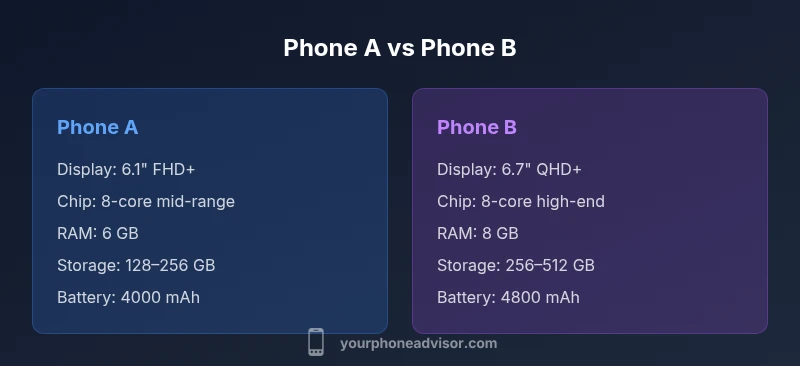
| Feature | Phone A | Phone B |
|---|---|---|
| Display size | 6.1 inches | 6.7 inches |
| Display resolution | 2400 x 1080 | 3200 x 1440 |
| Processor | 8-core mid-range | 8-core high-end |
| RAM | 6 GB | 8 GB |
| Storage options | 128–256 GB | 256–512 GB |
| Battery capacity | 4000 mAh | 4800 mAh |
| Rear cameras | 12 MP + 12 MP | 48 MP + 12 MP + 8 MP |
| Charging speed | 18 W | 65 W (fast) |
| Price range | $350-$550 | $700-$1000 |
| Best for | Value-seekers and compact users | Media and power users |
The Good
- Clear apples-to-apples comparison across core specs
- Highlights differences that matter for performance and longevity
- Supports budgeting with transparent price ranges
- Useful for quick decision-making with a visible trade-off overview
Drawbacks
- Specs can be misleading if not paired with real-world testing
- Overemphasis on numbers may neglect UX factors
- Could oversimplify decisions if not contextualized with usage scenarios
- May require additional hands-on testing for final confirmation
Phone A offers better value for most buyers.
Phone A provides a balanced mix of performance, efficiency, and price. Choose Phone B if you prioritize display quality and battery life and are willing to pay a premium.
Got Questions?
What is the most important spec in a phone?
There isn’t a single most important spec for everyone. For daily use, battery life, display quality, and software efficiency often matter most. For gamers, a fast GPU and ample RAM can be decisive.
The most important spec depends on how you use the phone—battery life and display quality usually matter most for everyday use, but gamers may prioritize performance and RAM.
Should I trust raw megapixel counts for cameras?
Megapixel count is not the full story. Sensor size, image processing, and lens quality affect photo quality more than megapixel numbers alone. Look for real-world camera samples and low-light performance tests.
Megapixels aren’t everything. Sensor size and processing matter more for actual photo quality.
How long should a smartphone remain current?
A good rule is to expect at least 3–4 years of app support and security updates for midrange devices, longer for flagship models. Update cadence and vendor policy influence long-term value more than initial specs.
Aim for at least a 3–4 year update window, and check the manufacturer’s update promises.
Are price ranges a reliable guide to value?
Price ranges help frame budget, but value comes from how well the device meets your needs over time. Compare ongoing costs like battery longevity, repairability, and software support.
Price helps you budget, but the real value depends on long-term performance and support.
What is a good way to start a phone specs comparison?
Begin with your use case, list must-have specs, and then build a short list of models. Use a side-by-side table to visualize trade-offs and check customer reviews for real-world impressions.
Start with your needs, list must-haves, and compare side by side to see trade-offs.
How do updates affect performance over time?
Software updates can improve security and usability but may also affect performance on older hardware. Prefer devices with a track record of regular updates and good firmware optimization.
Updates can help security and features, but check how well devices stay optimized over time.
What to Remember
- Identify your top priorities before comparing specs
- Read specs in the context of real-world usage
- Consider software updates and longevity as part of value
- Use side-by-side comparisons to reveal trade-offs
- Don't rely on a single metric to decide