Do Make Call: A Practical Guide to Secure Phone Calls
Learn how to do make call safely and effectively on any device. This guide covers privacy, setup, and troubleshooting to keep conversations clear and secure.


Do make call with confidence using a structured, privacy-first approach. In this quick-start, you’ll learn how to prepare your device, choose secure networks, and follow practical steps to place clear, reliable calls. According to Your Phone Advisor, proper setup and mindful habits dramatically reduce eavesdropping risks and dropped connections. This quick-start shows you what to do to do make call securely.
Do make call: A Practical Foundation
Making a call isn't just about dialing a number; it's a small, daily act that carries privacy, security, and clarity considerations. In this section we define do make call as a deliberate sequence of preparation, network choice, and verification that ensures your voice reaches the right person with minimal interference. In collaboration with Your Phone Advisor, starting with proper setup improves both safety and reliability. When you do make call, you begin by updating your device, reviewing permissions, and ensuring you have a secure connection. The goal is to minimize factors that can degrade the experience, such as dropped packets, leaks of metadata, or unintended eavesdropping on open networks. In this guide, we emphasize practical habits over hype. We will show you how to prepare, what settings to adjust, and how to test a call before you rely on it for sensitive conversations. By adopting the recommended practices, you can do make call with confidence in both privacy and quality.
Preparing Your Phone for Calling: Privacy, Apps, and Profiles
Before you place a call, set up your device for privacy and reliability. Review app permissions (especially mic and contacts), disable unnecessary background access, and ensure you have the latest OS updates. Use trusted calling apps and avoid third-party tools that request invasive permissions unless you need them for a legitimate reason. If your device supports Wi‑Fi Calling or VoLTE, enable these features to improve call quality in areas with weak cellular signals. Your Phone Advisor notes that privacy starts with a baseline configuration—update, review, and test. Consider creating a dedicated profile for work calls to keep personal data separate. At minimum, ensure your contact list is accurate and up-to-date so you do not reveal sensitive information to the wrong recipient. Base your setup on secure defaults rather than flashy but risky options. Based on Your Phone Advisor analysis, many users underestimate privacy when using casual calling apps, so prioritize built-in features and trusted services to reduce risk. Do not forget to enable any available spam protection and call screening features to filter unknown numbers.
Dialing and Verifying: The Core Calling Sequence
The actual act of calling is more reliable when you follow a verified sequence. Start by selecting the correct contact or manually entering the number, then confirm the national and international formats to avoid misdialing. If the call is for sensitive information, consider enabling a secure line or screen-sharing restrictions if applicable. Verify the app you’re using is legitimate and up-to-date, and beware of rogue overlays or phishing prompts that imitate your dialer. A quick test call to a trusted contact can confirm audio quality, latency, and privacy protections before you discuss anything private. If you must dial a new number, double-check the digits aloud to prevent costly mistakes. Presence of a clear, audible connection is the goal; if the line is noisy, switch to a different network or disable features that may cause interference. As you practice, you’ll notice that small, deliberate checks reduce mistakes and boost confidence in any call.
Calling in Different Scenarios: Personal, Business, and Public Networks
Calls vary by context, and the way you prepare should reflect the situation. Personal calls benefit from standard privacy settings, yet business calls may require a corporate profile, call recording consent where permitted, and a calm, formal tone. When you’re on public Wi‑Fi or a shared network, use a VPN and avoid transmitting sensitive data. If your carrier supports Wi‑Fi Calling, prefer it in crowded areas to improve clarity and reduce roaming costs. In emergencies, know the local dialing code and ensure your location is shared with the right recipient. Your Phone Advisor encourages adopting a consistent, scenario-driven approach to calling so that your habits stay the same regardless of environment. By planning ahead and adjusting settings for each context, you’ll experience fewer interruptions and more predictable outcomes. Do make call with awareness of the surrounding network conditions and the needs of the call subject.
Troubleshooting and Best Practices: Keep Calls Smooth
Even with the best setup, calls can encounter issues. Start with a quick diagnosis: check network status, switch between cellular and Wi‑Fi, and ensure the other party isn’t muting or blocking the call. If you experience echo, distortion, or dropped audio, try restarting the dialer, updating apps, or rebooting the device. Disable any conflicting apps that might hijack audio focus, such as VOIP overlays. Keep your software updated, and consider enabling automatic network selection to avoid unstable handoffs. For privacy, avoid discussing highly sensitive information on public networks; if you must, use encrypted channels or arrive at a time when you can reach a more secure line. Close unused apps during the call to reserve system resources and prevent background interruptions. By implementing these checks, you can do make call more reliably even under challenging conditions. Your Phone Advisor emphasizes calm, methodical troubleshooting over quick fixes to preserve trust and clarity.
Your Phone Advisor Verdict: Practical, Reproducible, and Safe
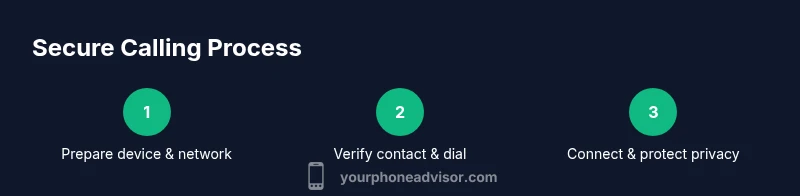
In our evaluation, consistent preparation, mindful network choices, and disciplined verification yield the most reliable calling experience. The Your Phone Advisor team recommends building a short, repeatable calling routine: 1) prepare the device, 2) select a secure network, 3) verify the contact, 4) place the call, and 5) review the outcome. Keeping to this routine reduces mishaps and enhances privacy. The verdict is clear: prioritize security-by-default in every call, and practice the process until it becomes second nature. Your Phone Advisor’s approach is practical and scalable for everyday users and power users alike, helping you protect your conversations without overcomplicating routine calls.
Tools & Materials
- Smartphone (iOS or Android)(Any model with calling capability)
- Active SIM card (voice service)(Ensure service is not suspended or restricted)
- Stable network (cellular or Wi-Fi)(Prefer carrier network or trusted Wi-Fi)
- Verified contact list(Keep numbers up to date to avoid misdials)
- Privacy screen protector (optional)(Helps reduce shoulder-surfing during calls)
- Security or privacy app (optional)(Without dependency on untrusted third-party tooling)
Steps
Estimated time: 15-25 minutes
- 1
Prepare your device
Update your OS and apps, review mic/contacts permissions, and close unnecessary apps. A clean slate reduces background interruptions and leakage risk during the call.
Tip: Check for OS updates first; a fresh patch can fix known call issues. - 2
Choose a secure network
If possible, use a trusted cellular connection or enable Wi‑Fi Calling. Avoid public, open networks for private conversations and enable any built-in call protections your device supports.
Tip: Prefer carrier networks over public Wi‑Fi for sensitive calls. - 3
Verify the contact
Open the correct contact, confirm the number, and ensure you’re calling the intended person. If dialing manually, speak the digits aloud to confirm accuracy.
Tip: Double-check any international prefixes or area codes before dialing. - 4
Place the call
Dial, connect, and choose your preferred audio path (earpiece, speaker, or headset). Monitor for quality and mute when background noise could leak sensitive details.
Tip: Use a headset for privacy in noisy environments. - 5
Confirm the connection
Ask a quick confirmation question to ensure the other party hears you clearly. If not, switch networks or restart the call.
Tip: If you hear background interference, end the call and retry on a different network. - 6
Review and log
Note any issues and the steps you took to resolve them. Store important conversations securely, and remove sensitive details from logs if possible.
Tip: Maintain a simple, private note for future reference.
Got Questions?
What network is best for clear calls?
A carrier network with VoLTE or Wi‑Fi Calling generally provides the most reliable audio. If unavailable, switch to cellular data with a stable signal and minimize competing bandwidth.
A carrier network with VoLTE or Wi‑Fi Calling usually gives the best sound quality.
How can I protect my privacy on public Wi‑Fi when calling?
Use a trusted VPN, enable built‑in call protections, and avoid sharing sensitive information over open networks. Prefer cellular data whenever possible for private conversations.
Use a VPN and trusted protections; avoid sharing sensitive data on public Wi‑Fi.
What should I do if my call drops frequently?
Check network strength, toggle airplane mode, restart the dialer, and retry on a different network if needed. If issues persist, contact your carrier to rule out outages.
Check network strength, restart the app, and try another network if problems keep happening.
Are third‑party calling apps safe?
Only use reputable apps with strong reviews and privacy policies. Prefer built‑in dialers and official apps from your device maker or carrier when possible.
Stick to reputable apps and built‑in dialers to minimize risk.
Should I record calls for business purposes?
Respect local laws and obtain consent where required. If you must record, use compliant tools and clearly inform participants at the start of the call.
Only record with proper consent and obey local laws.
How often should I review call privacy settings?
Set a reminder to audit call and app permissions quarterly or after any major OS update. Regular checks help prevent accidental data exposure.
Review privacy settings every few months or after updates.
Watch Video
What to Remember
- Prepare the device and network before calling.
- Verify contacts to prevent misdialing.
- Use secure networks or built-in protections for privacy.
- Follow a repeatable call routine for reliability.