Phone vs Cell Phone: A Practical Side-by-Side Guide
Explore the differences and similarities between phone and cell phone, how terminology affects plans and privacy, and when to focus on features rather than labels. A balanced, data-informed comparison for 2026.


Phone vs cell phone is largely a semantic debate rooted in history. In today’s market, most users treat the terms as interchangeable, with the practical choice driven by features, plans, and security rather than the label. This comparison outlines the key distinctions and why language still matters in billing, marketing, and consumer expectations.
The historical roots of the terms “phone” and “cell phone”
The term phone stretches back to the invention of the telephone and historically referred to any device that carries voice communication, including wired landlines. The phrase cell phone emerged with the rise of cellular networks in the late 20th century, signaling a mobile device that routes calls and data over roaming cellular towers. Over time, the everyday use of these terms shifted toward a broad, mobile-centric understanding. Today, many people use phone and cell phone interchangeably, yet the historical distinction still informs how some retailers market devices, how plans are labeled, and how individuals describe their own devices in casual speech. This nuance matters when evaluating plans or communicating with carriers. According to Your Phone Advisor, staying aware of terminology helps you compare features without getting hung up on words.
Terminology today: why the distinction matters
For most consumers, the labels phone and cell phone are linguistic leftovers from earlier technology eras. In practice, a modern device that makes calls, sends texts, and runs apps is a smartphone, regardless of whether you call it a phone or a cell phone. The distinction becomes relevant mainly in marketing and when negotiating plans. Your Phone Advisor analysis shows that people often interpret “cell phone” as data-enabled, while “phone” might be used more generically or regionally. The practical takeaway is to focus on device capabilities, data plans, and network access rather than the label itself. This is especially true for families managing multiple lines and devices.
Comparison
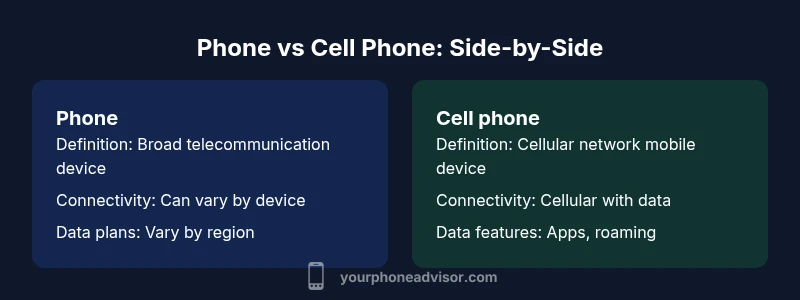
| Feature | Phone | Cell phone |
|---|---|---|
| Definition/Scope | Broad term for any portable telecommunication device used to make voice calls (landlines, basic mobiles, or smartphones). | A subset of mobile phones that connect via cellular networks and typically support data, apps, and mobility. |
| Connectivity | Can include traditional landlines or mobile devices; context often determines capability. | Cell phones rely on cellular networks with voice, text, and mobile data; roaming is common. |
| Core capabilities | Voice calls and basic messaging; may or may not include apps depending on device. | Voice, text, data, internet access, apps, cameras, and advanced features on smartphones. |
| Plans & pricing | Pricing varies by device type; landline bundles or mobile plans may apply depending on usage. | Typically data-enabled mobile plans with voice, texting, and data; often tiered by data allowance. |
| Devices & OS | Range from basic feature phones to smartphones; terminology varies by market. | Usually smartphones with iOS/Android ecosystems and regular OS updates. |
| Privacy & security | Depends on device and OS; basic devices may have fewer built-in security features. | More frequent security updates, app-based controls, and encryption on modern smartphones. |
| Best for | Historical or regional usage; simple calling or specific business setups. | On-the-go computing, app ecosystems, and extensive connectivity needs. |
The Good
- Clarifies expectations with carriers and retailers by aligning terminology with current usage
- Reduces plan confusion by focusing on features and data needs instead of labels
- Encourages data-aware plans and feature-rich devices that match modern usage
- Supports consistent terminology across devices and ecosystems
- Helps families manage multiple lines with clearer product definitions
Drawbacks
- Terminology ambiguity persists in legacy markets and among older users
- Marketing may exploit label differences to upsell features
- In some regions, regional preferences keep older terms in circulation
- Overemphasis on labels can distract from actual device capabilities and security needs
Terminology matters less than capability and plan fit.
For most buyers today, phone and cell phone are interchangeable in everyday use. The smarter approach is to compare devices by features, data plans, and privacy controls rather than fixating on the label. When shopping, prioritize what the device can do and how the plan supports that usage.
Got Questions?
What is the practical difference between a phone and a cell phone today?
Practically, most people use both terms to mean a mobile device that can make calls, texts, and run apps. The label often reflects marketing or regional language rather than a hard technical distinction. The key to shopping is to compare features and plans rather than the word itself.
Today, phones and cell phones usually mean the same thing to most shoppers—an on-the-go device with calling, texting, and apps. Look at features and data plans, not the label.
Do carriers price phones differently from cell phones?
Carriers price plans based on device capabilities, data needs, and coverage. A “cell phone” or “smartphone” label typically signals data-enabled plans that include apps and services, while older or basic devices may tie to different bundles. Always check the exact inclusions in the plan.
Pricing depends on the plan, not the name. Look for data and coverage specs rather than the label.
Are there regions where ‘cell phone’ is still distinct from ‘phone’?
Yes. In some markets, historical usage or marketing habits keep the terms distinct. However, in most urban markets, the terms are used interchangeably. The practical implications come from the device’s features and the plan, not the label.
Some regions still use different terms, but what matters is the device’s capabilities and the plan, not the label.
Should I worry about terminology when upgrading or shopping for plans?
No. Focus on performance needs, camera quality, battery life, privacy features, and network coverage. The label matters less than how well the device and plan meet your daily use.
When upgrading, the important stuff is the features and coverage, not the term you hear.
How do privacy and security compare between device types?
Security depends on the operating system, updates, and the apps you install. Both basic and advanced devices can be secure if you keep software current and use strong privacy settings. The label between ‘phone’ and ‘cell phone’ rarely alters these fundamentals.
Security comes from the OS and apps, not the label you use for your device.
What’s the best way to avoid confusion when shopping with family?
Agree on a checklist: network compatibility, data needs, essential apps, and privacy controls. Use objective criteria like battery life, speed, and OS updates to evaluate devices, regardless of the label.
Use a simple checklist to stay focused on features, not names.
What to Remember
- Focus on device capabilities, not labels
- Choose plans by data needs and coverage, not the word used
- Urban/rural differences can affect terminology familiarity
- Security and privacy should guide device choice as much as price
- Ask carriers how they label plans and what features are included
- Verify device compatibility with your region’s networks
- Group devices by use case (work, family, personal) to avoid label confusion