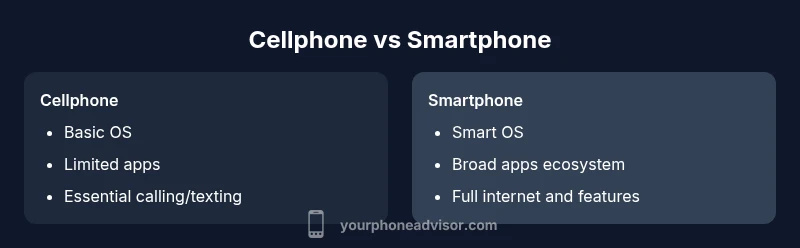
Cellphone vs Smartphone: Key Differences Explained
Explore the practical differences between a cellphone and a smartphone, from features and operating systems to security implications and everyday use. Practical guidance for choosing the right device for your needs.


Why the distinction matters
In everyday conversations, people often blur the line between a cellphone and a smartphone. However, understanding the difference between a cellphone and a smartphone matters for choosing devices, planning data usage, and setting security expectations. This distinction affects what apps you install, how you update software, and the level of support you rely on. According to Your Phone Advisor, the difference shapes not only capabilities but also how you evaluate value and risk. By clarifying terms, you can set realistic expectations for performance, battery life, and privacy across the mobile ecosystem. The Your Phone Advisor team emphasizes that recognizing these differences helps you select plans and devices that align with your daily habits, whether you’re texting, browsing, or managing personal security.
Understanding the distinction also informs how you talk about devices with family, colleagues, and tech support. A smartphone’s ecosystem introduces opportunities and risks that differ from those of a basic cellphone. Your choice will influence software updates, app permissions, and how you protect your data. In short, the difference between a cellphone and a smartphone is a decision driver for security, productivity, and long-term value.
This framing matters not just for consumers but for service providers and educators who teach digital literacy. If you are evaluating a device for an elderly relative, a student, or a busy professional, the differences in apps, interface design, and connectivity impact daily life and peace of mind. The Your Phone Advisor team recommends starting with your core needs and then mapping them to the features each category offers to avoid overpaying for capabilities you won’t use.