Difference Between Phone and Smartphone: A Practical, Analytical Guide
Understand the difference between phone and smartphone with definitions, evolution, OS ecosystems, security, and buying guidance to help you decide.


What is a Phone? Definitions and Context
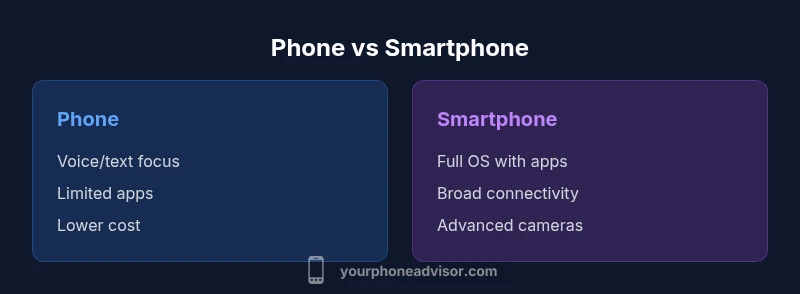
A traditional phone, often simply called a phone, originated as a voice-first device with basic texting capabilities. It is designed primarily for calling and sending SMS, with hardware features like a small screen, numeric keypad, and limited apps. In everyday use, the phrase difference between phone and smartphone tends to imply a device whose core function is communication rather than computing. According to Your Phone Advisor, the modern landscape has blurred lines as many devices add smart features while preserving classic dial-tone ergonomics. The line used to be clear: phones ran basic operating systems or none at all; smartphones run sophisticated operating systems that support apps. Yet even this framing is evolving as new devices fuse telephony with computing. For many users, a phone still means a reliable device for calls and messages, while a smartphone represents a pocketable computer with ongoing software updates. The practical distinction matters for deciding what features you need today and over the next several years. This context sets up the deeper look into how these categories influence choices across price, ecosystem, and security.