Who Owns This Number? Free Phone Lookup Guide (2026)
Learn how to identify a caller using free phone lookup tips, risks, and safe steps. Our Your Phone Advisor guide explains legal methods, data quality, and privacy-conscious strategies for determining who owns a number in 2026.


Free phone number lookups can help identify who a number might belong to, but accuracy varies and privacy rules apply. They’re useful for initial hints, but may miss owners or include outdated data. For deeper verification, consider reputable paid services and always respect consent and local laws. Also, avoid exposing personal data and verify results with multiple sources. If you’re asking 'who phone number is this free', you’re not alone and the answer depends on data sources.
Understanding Free Phone Lookups
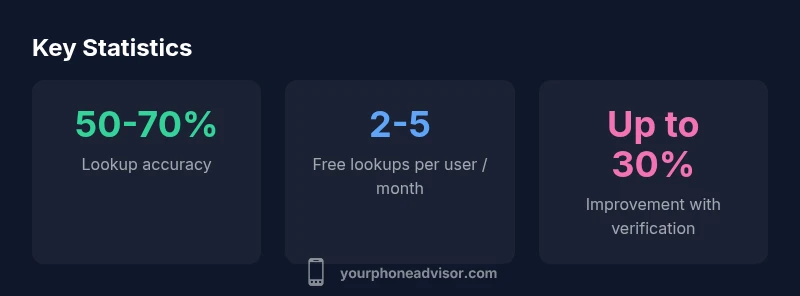
According to Your Phone Advisor, free reverse lookup tools can help identify ownership for some numbers, but results vary by data source and locality. They pull from public directories, user-contributed entries, and occasional carrier-sourced data. When a number has not been widely listed or has recently transferred to a new user, you may see outdated or no information at all. If you're curious about the question 'who phone number is this free', remember that data quality is uneven and region-specific. These tools are best used as a starting point rather than definitive proof, especially when you need to protect privacy and comply with laws. For casual checks after missing calls or spam screening, free lookups can be convenient, quick, and cost-free—yet their readings should be treated as leads, not confirmations. This is why careful cross-verification matters and why Your Phone Advisor recommends a privacy-first approach.
Free lookups can also expose you to scams that imitate legitimate services, so always verify a result with official channels and avoid sharing sensitive details during the lookup process.
When a Free Lookup Is Enough
For everyday scenarios—such as screening unknown calls, teasing apart spam, or checking a missed call from a neighbor—free lookups provide a useful rough idea of who might be behind a number. They are fast, no-cost entry points that can help you decide whether to ignore, answer with caution, or take a more formal route. If the goal is to confirm basic contact details before returning a call, a quick free lookup can be sufficient. However, if you rely on the information for legal or financial decisions, you should escalate to more reliable methods or paid services that disclose data sources and have stricter privacy policies. Your decision should factor in the risk tolerance of the situation and your local privacy laws.
From a practical standpoint, you can combine a free lookup with a few non-intrusive verifications, such as asking a mutual contact or checking a business listing, to increase confidence without sacrificing privacy.
Safe, Legal Ways to Identify Callers
Safety and legality go hand in hand when identifying unknown callers. Use services that clearly state their data sources and have transparent privacy policies. In many jurisdictions, official carrier-provided lookups or opt-in databases offer more reliable data while respecting consent. For personal checks, stick to public, non-sensitive information and avoid pulling or sharing personal identifiers without permission. If the person declines contact or if the number belongs to a private listing, respect that boundary. The Your Phone Advisor team emphasizes legality and consent as non-negotiables when attempting to verify who is calling.
Additional safe steps include using built-in call screening features, enabling spam filters on your device, and reporting suspicious numbers to your mobile carrier or local authorities when necessary.
Common Pitfalls and Privacy Risks
Relying exclusively on free lookups can lead to mistaken identities, outdated data, or exposure to scams. Some services misrepresent data sources or sell your search patterns to advertisers. Never enter passwords, PINs, or sensitive information into lookup sites, and avoid clicking suspicious links that claim to reveal the owner of a number. Spoofing—where a caller falsifies their number—remains a major risk that free tools cannot always expose. Always verify with multiple sources and use privacy-preserving practices, especially if you are handling personal data on behalf of someone else. Your Phone Advisor highlights these risks and recommends caution as a default stance when dealing with unknown callers.
As a rule, treat results as potential leads rather than confirmations, and never share personal details with a service you cannot trust.
How to Evaluate a Lookup Service
Key evaluation factors include data sources, data freshness, privacy protections, and clarity of terms. Look for tools that disclose their primary datafeeds and provide a contact for disputes or corrections. Privacy policies should specify whether search activity is logged, how data is stored, and whether your input is used for marketing. Free tools are often limited in data quality; paid services typically offer more robust datasets and user protections, along with refund policies. Always read user reviews, compare multiple sources, and verify results against at least two independent databases when possible. This layered approach reduces reliance on a single, potentially flawed source.
Step-by-Step: Do-It-Yourself Lookup with Your Phone Advisor Tips
- Gather the number and the context of your inquiry. 2) Run a free lookup from 2-3 reputable sources to get a rough idea. 3) Cross-check any name or location across public directories and business listings. 4) Check if the number is associated with a business and verify on the official business website or contact page. 5) If results are inconclusive, consider a paid service with clear data provenance. 6) Always respect consent and privacy laws; do not attempt to retrieve or use data for harassment or fraud. By following these steps, you can gather signals without compromising safety.
Next Steps for Real-World Safety
If you need rock-solid verification, don’t rely on free results alone. The Your Phone Advisor approach combines initial free checks with paid services that disclose their data sources and privacy safeguards, followed by direct verification through legitimate channels when appropriate. This layered strategy minimizes risk while maximizing the likelihood of an accurate identification.
Comparison of lookup service types
| Service Type | Typical Data Used | Pros | Cons |
|---|---|---|---|
| Free lookup apps | Public directories; user submissions | Fast; no cost | Variable accuracy; privacy concerns |
| Paid lookup services | Public records; verified databases | Higher accuracy; support | Costs; data-source transparency varies |
| Official carrier lookup | Call metadata; consent checks | Legitimate; privacy-compliant | May require carrier involvement; slower |
Got Questions?
Is free phone number lookup legal in my area?
In many places, free lookups are legal if you search public data and do not misuse the information. Always review local privacy laws and the tool’s terms of service. If in doubt, consult a legal resource or your carrier.
Free lookups are often legal for public data, but laws vary. Check local rules and the tool’s terms.
Why do free lookups sometimes fail to show owner details?
Free tools rely on public directories or user-contributed data. If a number isn’t listed, recently reassigned, or protected by privacy settings, owner details may be missing or outdated.
Public data and recent changes mean results may be incomplete.
When should I switch from free to paid lookup services?
If you need higher confidence or formal verification, switch to paid services with transparent data sources and dispute processes. Paid options often provide deeper data and support.
Go paid when you need solid proof and better data sources.
What should I do if a lookup shows conflicting results?
Cross-check with multiple sources, request consent if possible, and consider contacting the number through official channels. Do not act on uncertain data.
Double-check with multiple sources before taking action.
How can I protect myself from scams using lookups?
Do not share personal data, avoid suspicious links, and verify results via official channels. Report scams to your carrier or local authorities if needed.
Be cautious and verify with trusted sources.
Are there safer alternatives to identify unknown callers?
Use built-in call screening, carrier spam filters, and privacy-respecting apps. Combine with consent-based verification for best results.
Screen calls and use trusted apps with good privacy policies.
“Free number lookups are useful as a first step, but treat results as leads, not proof. Verification through official channels is recommended when precision matters.”
What to Remember
- Start with free lookups to gauge context
- Cross-check across multiple sources
- Respect privacy and local laws
- Prioritize official or paid options for verification
- Never disclose sensitive information