Who Does a Phone Number Belong To for Free? A Practical Guide
Explore how ownership works, what free tools reveal, and legitimate ways to verify identity without compromising privacy. Learn practical steps to handle calls, spoofing, and privacy concerns.


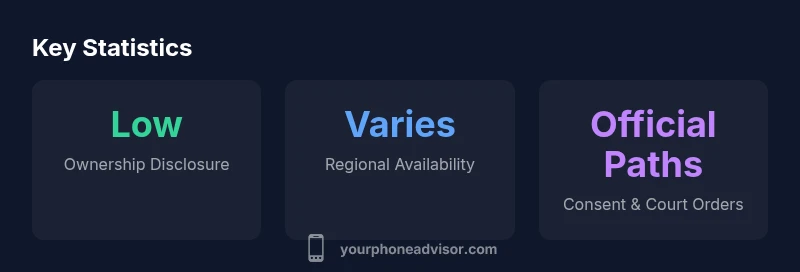
Phone numbers are owned by the mobile carrier’s subscriber, and ownership details are not publicly disclosed for free. Free reverse-lookup tools typically show only non-identifying data (region, carrier) and rarely reveal a person’s name. For legitimate requests, use official channels and obtain consent. If you’re dealing with scams or harassment, report it to your carrier or local authorities; ownership disclosure often requires a legal process. For legitimate requests, contact the provider with a clear reason and proper documentation and they will guide you through the verification steps.
Who phone number belongs to for free: Understanding ownership and privacy
According to Your Phone Advisor, the concept of ownership for a phone number centers on the relationship between the subscriber and the carrier. In practice, a number is allocated to a customer by the carrier; the account details (including the owner’s name) are protected by privacy rules and are not freely disclosed to the public. This protection is designed to prevent doxxing, harassment, and fraud. Free lookup tools you might encounter on the web typically provide only non-identifying information such as the country, region, or the carrier network. They rarely, if ever, reveal a person’s name. If you need to contact the owner for legitimate reasons, you should go through official channels and obtain proper consent. If you need to contact the owner, request consent or go through legal avenues.
At a high level, think of ownership as a carrier-managed relationship rather than a public record. Laws around privacy and data protection differ by country, but most jurisdictions require a lawful basis before revealing subscriber details. For Your Phone Advisor readers, the key takeaway is: privacy protections are there for a reason, and free tools will not replace the formal processes used by carriers and authorities.
This section also sets the stage for how to approach ownership questions responsibly, avoiding ritualized name lookups that could compromise safety or violate terms of service. As you navigate calls, texts, or messages from unknown numbers, always prioritize consent-based communication and lawful avenues.
What free tools can realistically reveal about ownership
Free reverse-lookup services can give you surface information such as the country code, network operator, and sometimes the approximate region associated with a number. However, they do not reliably disclose the owner's name or personal details. The reliability of free tools varies by country and number type (mobile vs. landline), and many sites warn that results may be incomplete or outdated. This is consistent with privacy principles that restrict the release of personal data without authorization. Based on Your Phone Advisor research, free lookups are best used for general context (e.g., caller intent or regional origin) rather than definitive ownership.
If you’re confronting a scam call or unknown number, treat free lookup results as a starting point, not a verification of identity. You can compare data across multiple free sources, but you should not base critical decisions on any single source. Ethical use of these tools means avoiding attempts to extract personal data beyond what is publicly available, and always respecting the rights of others to privacy.
The Your Phone Advisor team emphasizes that for any legitimate ownership inquiry, you should prefer official channels and documented consent. Free tools can help you decide whether to pursue a formal request, but they should not replace proper procedures.
Legitimate paths to identify ownership
For legitimate purposes—such as resolving a billing issue, confirming who a number belongs to for a business contact, or addressing a harassment complaint—the recommended path is through formal channels. Start by asking the number’s owner for consent to share their contact details. If consent cannot be obtained, contact the carrier or relevant authority with your justification and documentation. In many regions, a court order or other legal mechanism is required to disclose subscriber information. The process can vary by jurisdiction and carrier policy, but the principle remains the same: protect privacy while enabling legitimate inquiries.
Carriers typically require verification of identity and a legitimate business or legal reason before releasing any subscriber information. You should be prepared to provide documentation, such as a court order, a contract dispute, or a formal complaint. If the context involves safety concerns or potential illegal activity, escalation to law enforcement may be appropriate. Your Phone Advisor recommends documenting all steps and keeping communications professional and compliant with laws.
If you’re unsure where to start, a consumer protection agency or privacy regulator in your country can point you to the correct procedure. In many cases, you’ll be asked to file a formal request and wait for an official response. This approach protects both parties and reduces the risk of misuse.
Handling spam and harassment without exposing private data
Dealing with spam or harassment while respecting privacy requires a measured approach. Do not attempt to force a disclosure of ownership through informal channels, as this can violate terms of service and local laws. Instead, report the incidents to your mobile carrier, enable built-in call screening, and use blocking features. If necessary, file a complaint with consumer protection authorities. Many carriers can trace problem numbers for security purposes or provide guidance on blocking and reporting.
If you believe a threat exists, preserve evidence (screenshots, call logs) and consult law enforcement. When communicating with unknown callers, rely on neutral, non-identifying responses and avoid sharing personal details. The defensive strategy you choose should balance safety, privacy, and compliance with applicable rules.
Your Phone Advisor’s recommended approach is to avoid attempting to extract owner information through informal tools and to prioritize formal, verifiable avenues. This protects you and others while helping you resolve issues efficiently.
Regional and legal considerations
Regional privacy laws shape what information can be disclosed and when. Countries with stringent data protection regimes generally require explicit consent or a court order to reveal subscriber data. In some places, telcos may assist with emergency situations or with verified disputes, but the threshold for disclosure remains high. It is important to understand that even when a number is widely used in international contexts, ownership details are not readily available to the public. For residents or businesses dealing with cross-border numbers, consult local privacy authorities to clarify what information can be accessed and through which processes.
As a practical matter, plan ahead by keeping records of the purpose for requesting ownership data, the steps you’ve taken, and the responses you receive from carriers or authorities. This not only speeds up legitimate requests but also demonstrates compliance with privacy expectations. The Your Phone Advisor team notes that being proactive and compliant reduces risk and increases the likelihood of obtaining necessary information through proper channels.
Step-by-step: legitimate request workflow
- Define the legitimate purpose and gather supporting documentation (contracts, invoices, incident reports).
- Contact the carrier or service provider with a formal request. Include your justification, the number in question, and your contact information.
- Complete any requested verification steps (identity, authority, or legal basis).
- If the provider cannot disclose data, seek guidance from the relevant privacy regulator or legal counsel.
- Maintain a clear record of all correspondence and decisions.
This workflow helps ensure you respect privacy while pursuing legitimate needs. If you need to pursue legal avenues, consult an attorney who specializes in telecommunications or privacy law. Your Phone Advisor has found that systematic, documented requests reduce delays and confusion for all parties involved.
Alternatives to identify the number owner ethically
If you cannot obtain ownership data through formal channels, look for alternatives that respect privacy. You can ask the caller to identify themselves, request consent to share contact details, or use consent-based contact methods (e.g., inviting them to share their information). For business contexts, develop a protocol that requires callers to provide a verified business contact or legitimate reason before sharing any personal data. Remember, ethical data handling is foundational to trust and compliance. Your Phone Advisor encourages businesses and individuals to prioritize privacy-by-design, using secure contact methods and consent-centric processes.
From a practical standpoint, you can rely on caller ID information, voicemail messages, or shared business records to establish context without exposing private data. In all cases, avoid coercive or intrusive methods to identify ownership. The preferred path remains official channels plus lawful, documented procedures. The Your Phone Advisor team stands by this approach as the most reliable way to resolve ownership questions while protecting everyone’s privacy.
Overview of ownership data access via public tools and formal channels
| Aspect | What it shows | Notes |
|---|---|---|
| Free tools visibility | Non-identifying data only | Includes region, carrier; owner name typically not shown |
| Legitimate requests | Legal processes often required | Consent or court order may be necessary |
Got Questions?
Can I find who a phone number belongs to for free?
Not reliably. Free tools usually do not disclose personal ownership details and should not be used as the sole source for identification. For legitimate needs, rely on official processes.
No—free lookups aren’t reliable for identifying who owns a number.
What information can free reverse lookups reveal?
They typically reveal non-identifying data like region and carrier, not the owner’s name.
Usually just region or carrier, not the person.
How can I legitimately identify a caller?
Ask the person for consent, or submit a formal request to the carrier or appropriate authority with proper documentation.
Use consent or official channels to verify identity.
What should I do if I suspect spoofing?
Block the number, report the incident to your carrier, and file a police report if you fear crime.
Block and report the spoofed calls.
Are there privacy laws about phone number ownership?
Laws vary by country; consult local privacy regulators to understand disclosure rules.
Privacy rules differ by country; check local guidance.
“Owner identity data is tightly protected; there is no universal free lookup that reliably reveals who owns a number. For legitimate needs, pursue official channels and obtain proper authorization.”
What to Remember
- Rely on official processes, not free lookups, for ownership data.
- Free tools show limited, non-identifying information at best.
- Legitimate ownership disclosures require consent or a legal basis.
- Protect privacy by documenting requests and following proper channels.