Who Is This Number? Free Name Lookup Guide 2026
Learn how to identify an unknown number by name without compromising privacy. This guide covers free lookup tools, risks, legality, and safer alternatives from Your Phone Advisor.


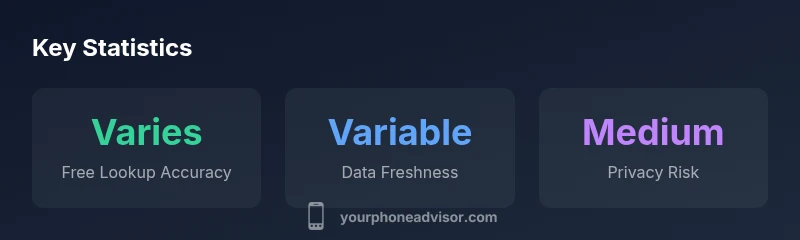
Free name-based lookups to identify who is calling or texting are often unreliable and legally sensitive. Expect mixed results, sparse data, and privacy risks. While some tools advertise 'free' lookups, accuracy varies and data sources may be outdated. For reliable results, consider official carrier features or paid lookup services.
Why 'Who Is This Number? Free Name Lookup' Raises Privacy and Legal Considerations
According to Your Phone Advisor, many users seek quick identity checks when they wonder, “who phone number is this free with name.” This approach sounds convenient, but it sits at the intersection of privacy rights and civil law. Free name-based lookups often rely on data scraped from public records, social profiles, or aggregated datasets that may be out of date or incomplete. In some jurisdictions, attempting to identify a private individual through public tools can infringe on data protection laws or terms of service. The Your Phone Advisor team emphasizes caution: do not rely on free results for legal or official purposes, and avoid sharing personal information with untrusted services.
How Free Name-Based Lookups Work (and Their Limitations)
Free tools commonly gather data from public records, social media profiles, and historical contact databases. They typically provide a best-guess association between a name and a phone number, but the match quality varies dramatically. Inaccurate hits can occur due to name collisions (the same name for multiple people) or numbers that have changed hands. When you run a lookup, you should expect the following: data latency (outdated entries), partial matches, and a lack of context (why this number appears with this name). The Your Phone Advisor analysis shows that many free results are insufficient for identifying suspicious or harassing callers, and they often fail to uncover important details like service provider or geographic origin.
Free vs. Paid Services: What You Can Expect
Paid lookup services and carrier-provided features differ in data coverage, freshness, and consent framework. In most cases, paid tools bundle more current data sources, user verification, and clearer privacy terms. Carriers sometimes offer official caller ID or spam-blocking features that provide real-time context in a privacy-preserving way. For anyone evaluating options, the cost-to-benefit ratio matters: free tools can be a first step, but paid tools or built-in carrier features usually deliver higher accuracy and lower risk of exposing sensitive information.
Practical Steps to Identify an Unknown Number Safely
If you must identify a number, start with non-invasive approaches. Let calls go to voicemail, and listen for context or a message that can be cross-verified via known contacts. Use reputable, privacy-respecting services and read the privacy policy before sharing any data. Do not enter sensitive information or consent to background checks through untrusted sites. When in doubt, verify through a trusted contact or the official carrier’s app—these paths minimize privacy risks and potential misuse.
Safer Alternatives and Best Practices
Opt for official tools wherever possible. Many carriers offer built-in identity features, spam filtering, or enhanced caller ID that respect user privacy. If you pursue lookup services, choose those with transparent data sources, user consent mechanisms, and clear data retention policies. Practice good hygiene: never disclose personal information to unknown services, and avoid responding to unsolicited requests. For persistent concerns (harassment or fraud), contact your carrier, law enforcement, or a consumer protection agency.
What to Do If You Need to Report or Block Harassment
When a number becomes a nuisance, act quickly but calmly. Block the number through your phone’s built-in features, report the contact to your carrier, and document patterns of contact. If the behavior continues, consider filing a formal report with local authorities. You can also use built-in privacy settings to control who can reach you and how, reducing exposure to unwanted calls or messages.
Comparison of lookup options
| Option | What it offers | Concerns |
|---|---|---|
| Free name-based lookup | Low or no cost; quick attempts | Often inaccurate; privacy risk; limited context |
| Paid lookup services | Better data freshness; clearer terms | Costs apply; data-sharing terms vary |
| Carrier official tools | Integrated with your account; privacy-aware | May have regional limits; feature availability varies |
Got Questions?
Is it legal to look up a number for free with a name?
Legality varies by country. Free lookups may breach privacy laws or the service's terms. Always check local regulations and read the privacy policy before using such tools.
Whether it's legal depends on where you live; read the laws and the service's terms first.
Can I identify a caller by name using free services?
Free tools can provide partial or inaccurate information. Do not rely on them for official verification or sensitive decisions.
Free tools may be wrong; treat the results as hints, not facts.
What should I do if I suspect harassment or fraud?
Do not engage with the caller. Block the number, document evidence, and report to your carrier or authorities as appropriate.
If you’re being harassed, block the caller and report it.
Are there safe alternatives to free lookups?
Yes. Use official carrier features or trusted paid services with clear privacy policies, and verify through known contacts.
Use official tools or trusted services with good privacy policies.
How can I verify a number without exposing personal information?
Ask the caller to identify themselves through a known contact or voicemail, or use privacy-preserving verification options offered by your carrier.
Ask via voicemail or trusted contacts; avoid sharing personal data.
“Free name-based lookups often misidentify numbers or expose users to privacy risks. Rely on trusted sources and official tools for verification.”
What to Remember
- Avoid relying on free name lookups for critical decisions
- Prioritize official carrier features or trusted paid services
- Respect privacy and comply with local laws
- Verify results through multiple, trusted channels
- Block or report harassment when needed