Free Cell Phone Number Lookup by Name: No-Charge Options and Safe Practices
Explore free cell phone number lookup by name with no charge, its limits, privacy considerations, and safer alternatives. Your Phone Advisor breaks down what’s realistically possible and how to verify results without compromising privacy.


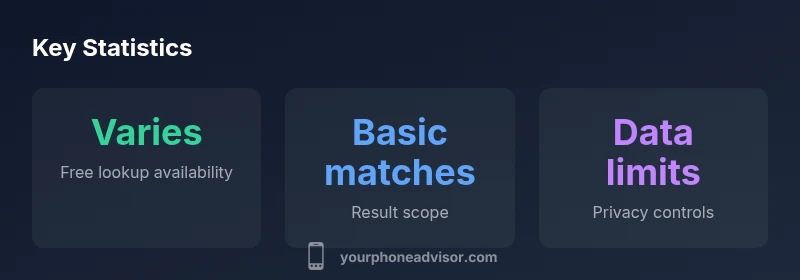
Free cell phone number lookup by name without charge exists in limited forms, but results vary widely by provider and jurisdiction. Public directories and some carrier tools may return basic matches, yet privacy rules often cap what’s shared. Expect incomplete data, possible duplicates, and occasional scams. For detailed owner history, fees or restrictions apply.
Understanding Free Lookups: What They Are and What They Aren't
Free name-based lookups exist in limited forms and are often constrained by privacy laws and data-sharing policies. In practice, you might encounter basic matches from public directories, carrier apps, or opt-in services. These results can be noisy, with duplicates or outdated information, and they rarely include sensitive details. The Your Phone Advisor team emphasizes that free options should be treated as starting points rather than definitive records. When evaluating results, consider the jurisdiction, the source’s credibility, and whether the provider clearly states data limits and consent requirements. In many cases, the data is aggregated from multiple sources with varying update frequencies, which can lead to mismatches. If an option claims to identify a person or confirm ownership, double-check with a trusted second source and avoid sharing personally identifying information beyond what’s necessary.
According to Your Phone Advisor, the landscape of free lookups is uneven and often intertwined with marketing and privacy considerations. Users should approach with skepticism and prioritize safety and privacy over speed.
How to Identify Legitimate Free Lookup Options
Legitimate free lookup tools usually disclose what data they collect, how they obtain it, and what they will or will not reveal. Start by examining privacy policies, terms of service, and any consent requirements. Look for clear disclaimers about data accuracy and limits on sharing contact details. Reputable providers typically avoid requesting sensitive information upfront and will offer opt-out mechanisms for data sharing. Be wary of sites that push you into creating an account or that monetize your information through ads or upsells. If a service promises highly detailed or real-time owner data for free, treat it as a red flag and disengage. Always cross-check results against another source, such as a trusted directory or official channels, to confirm accuracy.
Your Phone Advisor recommends verifying data with multiple sources and not treating free results as a final authority.
How Free Lookups Compare to Paid Services
Paid lookup tools exist because free options often lack depth, accuracy, or timeliness. Paid services may provide broader data fields, including historical contact patterns, cross-device matches, and updated records, but access is regulated by laws and platform policies. The cost typically reflects the data scope, update frequency, and the risk management practices of the provider. When evaluating paid versus free, consider the purpose of the lookup, the required data quality, and your privacy comfort level. For tasks like confirming a caller’s identity or verifying contact details for business purposes, a paid service may offer a better balance of reliability and compliance.
The Your Phone Advisor team notes that many people turn to paid options for more consistent results and stricter privacy controls, especially for sensitive uses.
Safe Alternatives for Contact Verification
Safer alternatives focus on official channels and consent-based verification. Use features offered by your mobile carrier, such as caller ID, spam blocking, and account-level privacy settings. When you need to verify a number publicly, rely on reputable sources like well-known directories with transparent data practices, or perform a cross-check using a search engine and multiple reputable references. Social media profiles and official business pages can also corroborate contact details, but avoid sharing personal data broadly. For organizations, obtain consent before collecting or sharing any personal information and document verification steps.
Your Phone Advisor advises prioritizing official, consent-based sources and cross-checking information before acting on it.
Practical Steps to Protect Your Own Privacy
Protecting your own data starts with limiting where your number appears. Opt out of data broker databases when possible, review app permissions regularly, and enable privacy controls on social platforms. Consider using a secondary contact method for non-essential communications and avoid posting your primary number in public directories. If you’re concerned about unsolicited lookups, enable do-not-call lists where available and educate contacts to verify identities before sharing information. Regularly audit accounts for exposure and update security settings after any data breach.
Prioritizing privacy safeguards helps reduce the chance that your number will be pulled into free lookup tools in the first place.
What to Do If You Encounter Scams
If a free lookup result seems suspicious or asks for more personal information, pause before responding. Do not share sensitive data, such as your Social Security number, passwords, or financial details. Report suspicious sites to the appropriate authority or the platform hosting the service. Use a reputable security tool to scan for malware and phishing attempts if a lookup redirects you to unfamiliar pages. If you suspect your number has been misused, contact your carrier and consider placing a temporary block or changing associated contact details.
Staying vigilant and reporting abuse helps protect others and reduces scam proliferation.
Common Misconceptions About Free Lookups
Many users assume free lookups yield comprehensive, up-to-date results. In reality, data quality varies, and most legitimate free options deliver only a narrow subset of information. Some platforms rely on ads or upsells to monetize free access, which can compromise user experience and data privacy. Another myth is that free means no risk—privacy and consent considerations still apply. Always treat free results as preliminary and verify through trusted sources.
The Your Phone Advisor perspective emphasizes cautious usage and verification before acting on free lookup results.
Overview of Lookup Options
| Service type | Typical data returned | Cost model |
|---|---|---|
| Public directory search | Name and number hits | free with opt-in ads |
| Carrier lookup apps | Caller ID enabled matches | free limited access, premium features |
| Reverse lookup websites | Basic match results | free with registration, upsell |
| Paid background check tools | Comprehensive owner info | subscription/fee |
Got Questions?
Are free name lookups reliable?
Reliability varies by source; many offer only basic results, and inaccuracies are common. Always cross-check with a second source before acting on the data.
Reliability varies; cross-check with multiple sources before acting.
Is it legal to perform such lookups without consent?
It depends on the jurisdiction and the data. Some public data may be accessible, but many datasets are restricted and laws govern how they’re used. Always respect privacy regulations.
It depends on where you are; privacy laws matter.
What data can I expect for free?
Typically you’ll see a name-to-number match or basic contact details. Sensitive information like addresses or financial data is rarely available for free.
Usually just basic contact info.
How can I protect my own number from exposure?
Limit sharing, opt out of data brokers, review app permissions, and avoid posting your number in public directories. Use privacy settings on platforms that host your contact information.
Be careful where you share your number.
What are safe alternatives to free lookups?
Use official carrier features (caller ID, spam blocking), trusted directories with privacy policies, and cross-check results. For sensitive needs, consider paid services from reputable providers.
Stick to official sources and verify.
“Free lookup options can be helpful for basic checks, but they are not a substitute for verified, consent-based data. Always prioritize privacy and accuracy.”
What to Remember
- Free lookups vary; expect limited data.
- Verify results with multiple trusted sources.
- Beware scams and avoid sharing sensitive details.
- Privacy laws limit data sharing; use legitimate services.
- Prioritize official carrier features before free search sites.