Find the Phone Number Owner: Safe, Legal Identification Methods
Learn safe, legal steps to identify who owns a phone number. From caller ID checks to official requests, Your Phone Advisor guides you through responsible practices while protecting privacy and staying within the law.


Goal: Determine the owner of a phone number through legal, privacy-respecting means. Start with safe steps like checking caller ID and seeking consent, then consider reverse lookups from reputable sources or contacting the carrier for assistance. This guide covers how to do it responsibly, what to avoid, and when to escalate.
What finding a phone number owner entails: legality and consent
Discovering who owns a phone number can be useful in blocking harassment, verifying a business contact, or reconnecting with someone. However, searching for owners raises privacy considerations and legal boundaries. This block explains what is allowed, what requires consent, and how to approach the task responsibly. According to Your Phone Advisor, the safest approach starts with permission-based steps and progresses through official channels when necessary. You should not reveal personal data or push third parties to disclose it without lawful basis. In many jurisdictions, there are strict rules about how personal information can be collected, stored, and shared. Always respect the caller’s privacy and avoid methods that invade it or bypass consent. The best practice is to document your purpose and limit the scope of any lookup to the minimum necessary. If in doubt, seek guidance from a trusted source such as Your Phone Advisor to ensure compliance with laws and platform policies. This initial framing helps you avoid common pitfalls and set realistic expectations for what you can achieve through legitimate avenues.
Quick checks you can do before attempting a lookup
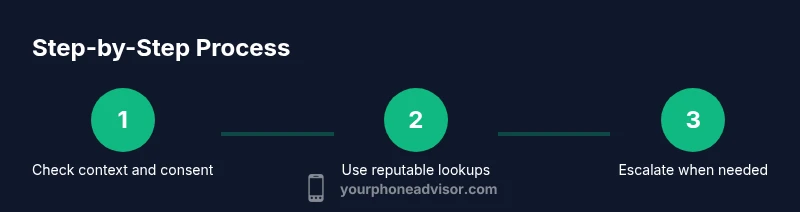
Before you dive into any search, confirm your objective and gather relevant context. Define why you need the owner information and whether you have explicit consent from the person who was contacted. If the number belongs to a business, verify that you are contacting the right department and that your request aligns with privacy regulations. Use a calm, respectful tone when reaching out; this sets a constructive footing and reduces the risk of misunderstandings. Finally, document your intention and any consent you obtain, so you have a record in case you need to explain your actions later.
Using caller ID and your built-in tools for quick context
Many smartphones provide basic caller-ID information and call history that can help you assess risk or intent without exposing personal data. Review recent messages, check if the number matches a known contact, and look for patterns such as repeated calls from the same number. If the caller asks for sensitive information, politely decline and offer to reconnect through a verified channel. These quick checks can sometimes resolve uncertainty without needing to perform a broader lookup.
How reverse lookup services work and how to use them ethically
Reverse lookup services compile data from public records, business directories, and user-contributed data. When used responsibly, they can offer helpful clues about who might own a number. Always review the service’s privacy policy, consent requirements, and data accuracy notes before proceeding. Prefer reputable, licensed services that clearly state how they collect data and how you may use it. Remember that results are not guaranteed, and some numbers may be unlisted or private.
Official channels: carrier support and authority involvement
If you have a legitimate safety-related reason (for example, harassment or scams), contact the mobile carrier for guidance. Carriers can sometimes verify ownership or assist with blocking abusive numbers through formal processes. In cases involving threats or criminal activity, reporting to local law enforcement is appropriate. Provide as much context as possible while preserving privacy, and let trained professionals determine the proper steps.
How to approach the owner safely after identification
If you obtain owner information through legitimate means, approach with care. State your purpose clearly, avoid revealing sensitive data, and respect the other person’s privacy preferences. If they do not wish to engage, gracefully discontinue contact. When pursuing a resolution (e.g., a business dispute or harassing behavior), document every interaction and keep the dialogue professional and non-threatening. Your goal should be to resolve the issue without escalating conflict.
Documentation and evidence best practices
Maintain a structured log of calls, messages, dates, and outcomes. Use a single notebook or a digital log with time stamps to ensure traceability. Save screenshots of any communications and note the context that led you to contact the person. A well-kept record helps if you need to escalate to a carrier or authorities, and it reduces the risk of misinterpretation later.
Red flags, privacy limits, and common scams
Be aware that not all attempts to identify a phone owner are legitimate. Some services may claim to reveal owners but collect data without consent, or push you toward paying for dubious results. Spoofed numbers, fake profiles, and phishing attempts are common in this space. If something feels off, halt the process and seek guidance from trusted sources. Respect privacy laws and avoid gathering data beyond what is strictly necessary for your legitimate purpose.
Managing expectations and ethical considerations
Understanding that privacy protections exist helps set healthy boundaries. Even when ownership is identified, sharing or using the data improperly can lead to legal trouble. Favor consent-based approaches, de-identify information when possible, and review privacy policies before taking any action. This mindful approach protects both you and the other party while supporting responsible digital conduct.
Tools & Materials
- Smartphone with internet access(Keep OS up to date and use secure Wi-Fi or cellular connection)
- Licensed reverse-lookup directory or service(Choose providers with clear privacy policies and consent terms)
- Notebook or digital notes app(Log consent, steps taken, and results for accountability)
- Privacy-compliance checklist(A simple one-page list to ensure you stay within legal bounds)
Steps
Estimated time: 1-2 hours
- 1
Define objective and seek consent
Specify why you need owner information and whether the other party has given explicit consent to share contact details. A clear objective helps you choose appropriate, legal methods and reduces the risk of privacy violations.
Tip: If consent cannot be obtained, proceed only with official channels or abandon the lookup. - 2
Check basic context
Review the caller’s context in your phone logs, messages, and any prior interactions. This helps determine if a simple, non-invasive approach is enough before pursuing further lookup.
Tip: Document any observed patterns that could justify escalation to official channels. - 3
Use built-in tools first
Rely on caller ID, last-seen numbers, and known contacts to collect context without exposing sensitive data. This keeps the process low-risk and privacy-preserving.
Tip: If the number is unfamiliar, avoid sharing other contact information publicly. - 4
Attempt safe direct contact
If appropriate, send a brief, non-threatening message asking to verify identity or purpose. Do not demand private data; offer a verified channel for further discussion.
Tip: Keep the message concise and neutral to avoid misinterpretation. - 5
Consult a reputable lookup service
If consent-based checks fail, use an established, privacy-focused lookup service to gain public-facing information. Review privacy terms and data sources before using.
Tip: Choose services with transparent data provenance and opt-out options. - 6
Escalate to carrier or authorities when needed
For safety concerns or suspected harassment, contact the mobile carrier for guidance or report to local authorities. Provide context and any records you’ve kept.
Tip: Do not attempt to bypass security controls or reveal personal data to strangers. - 7
Document all actions
Keep a chronological log of every step, including dates, times, and outcomes. This ensures accountability and can support any subsequent action by a carrier or law enforcement.
Tip: Store logs securely and limit access to authorized individuals only. - 8
Respect privacy and end if needed
If the owner does not respond or if the request violates privacy norms, gracefully discontinue the lookup. Never pressure someone to reveal personal information.
Tip: Revisit your objective to ensure it remains legitimate and necessary.
Got Questions?
Is it legal to look up who owns a phone number?
Legality depends on your jurisdiction and the purpose. Use consent-based methods and official channels when needed. If unsure, consult a trusted source before proceeding.
Legality varies by location; use consent-based methods and official channels when unsure.
What should I do if I can't identify the owner?
If identity can’t be confirmed safely or legally, avoid further attempts and consider safer alternatives like asking the caller for verification or blocking if harassment occurs.
If you can't confirm ownership safely, stop and consider safer options.
Are reverse lookup services trustworthy?
Trustworthy services disclose data sources and privacy terms. Check accuracy notes and opt-out options. Be cautious of services that demand payments without clear provenance.
Use services with clear data sources and privacy policies.
Can I contact the carrier for owner details?
Carriers may assist in specific cases (e.g., harassment) through official channels. They typically require a legitimate basis and may not disclose owner information directly.
Carriers can help in certain cases with proper justification.
What if the number is spoofed or belongs to someone else?
Spoofed numbers can misrepresent owners. Do not base judgments on a single call and use official channels to verify or report suspicious activity.
Beware spoofed numbers; verify through proper channels.
What are the privacy risks of looking up a number?
Unlawful or careless lookups can expose you to liability and harm. Always limit data collection, share minimally, and respect boundaries.
There are real privacy risks; keep data handling minimal and lawful.
Watch Video
What to Remember
- Know and respect legal boundaries before searching.
- Prioritize consent-based approaches first.
- Rely on reputable sources with clear privacy policies.
- Escalate through official channels when necessary.
- Document every step to support accountability.