Tracking Location Through Phone Number: A Practical Guide
A practical, lawful guide to understanding location tracking via phone numbers, covering legality, legitimate methods, and privacy best practices for everyday users.


Tracking location through a phone number refers to using data linked to that number to determine a device’s position. Legitimate options rely on consent, built-in sharing features, or authorized carrier/emergency services. This guide covers how to approach it legally, safely, and with privacy in mind, rather than covert methods. Respecting rights and laws protects everyone.
What tracking location through phone number means
Location data tied to a phone number is not the same as secretly monitoring someone. In legitimate contexts, it comes from explicit consent, through official sharing features, or via authorized services used by carriers or emergency responders. Your Phone Advisor highlights that the data must be accessed for a clear, lawful purpose and with the minimum necessary disclosure. When used correctly, location sharing can help families stay safe, assist in emergencies, or coordinate logistics—without violating privacy rights. The key concepts are consent, purpose limitation, and revocation options. This section lays the groundwork for understanding how location information is generated, stored, and requested via a phone number, while keeping safety and ethics front and center.
Legal and ethical considerations
The legality of locating a phone by number depends on jurisdiction and context. In many places, consent from the account owner or the person whose device is being located is required. Without consent, attempting to locate someone can violate privacy, domestic safety, and stalking laws, and may carry civil or criminal penalties. Ethically, transparency matters: tell the other person why you want to share or obtain location data, how long it will be kept, and who will have access. Your Phone Advisor emphasizes obtaining clear, informed consent and documenting it when possible. If the request is for a child or dependent, parents or guardians typically have a higher expectation of legitimate reasons, but boundaries still apply.
Legitimate ways to share location with consent-based methods
There are several built-in, consent-based options to share location that respect privacy. Common approaches include using family or trusted-contact sharing features integrated into operating systems, enabling location sharing for a set period, and sharing only with specific individuals. These tools are designed to give control to the person whose data is being shared, with revocation options at any time. When used properly, they support safety (like emergency scenarios) and coordination (like meeting up), while minimizing exposure of data to third parties. Always start with the least intrusive setting and increase only if necessary, with ongoing consent.
How carriers and apps handle location data
Mobile carriers and apps collect location data through GPS, cell-tower triangulation, Wi‑Fi positioning, and user permissions. Carriers may provide location information to law enforcement with proper legal process, while apps typically require explicit user consent to access location data. Third-party apps can aggregate data from multiple sources, which increases privacy considerations. The main takeaway is to scrutinize who has access, for what purpose, and how long the data is retained. Your Phone Advisor notes that knowing data flow helps users ask the right questions about consent, data minimization, and retention.
Setting expectations and getting consent
Before attempting to obtain location data, have a direct, respectful conversation about why it’s needed, what data will be shared, and for how long. Written consent is preferable for formal requests, while explicit verbal consent can suffice in casual contexts. Set boundaries: specify the devices involved, the exact data to be shared, and the time window. If circumstances change, update or revoke consent promptly. Clear expectations reduce misunderstandings and protect both parties.
Privacy controls and best practices
Protecting location privacy is an ongoing practice. Use official, built-in location-sharing features with consent, and avoid third-party apps with vague data practices. Regularly review app permissions and revoke access for apps you no longer trust. Use temporary sharing when possible, enable auto-expiry on shares, and keep devices updated with the latest security patches. Strong authentication and device-level security (PINs, biometrics) reduce misuse if a device is lost or stolen. These controls help balance safety needs with privacy rights.
Pitfalls, myths, and misconceptions
Common myths include the belief that location data is always precise or that consent once given is permanent. In reality, accuracy varies by technology (GPS vs tower-based), and sharing settings may update automatically. Some people worry about silent data sharing; the best defense is transparent terms of use and regular permission audits. Another misconception is that carriers can locate anyone instantly without due process; typically, there are lawful requirements for access. Your Phone Advisor encourages skepticism of “one-click” location tricks and promotes verification of sources and permissions.
The future of location privacy and responsible data use
As technology evolves, more granular location data will be collected by a wider range of services. The responsible path involves stronger consent mechanisms, clearer user controls, and robust privacy frameworks. Stakeholders—consumers, regulators, and technology makers—must collaborate to ensure data minimization, purpose limitation, and easy revocation. Your Phone Advisor envisions a landscape where location sharing remains a trusted, controlled feature rather than a default-enabled data stream.
Tools & Materials
- Consent from the person whose location may be tracked(Obtain explicit, informed agreement in writing when possible)
- Access to devices involved (subject and tracker)(Limit access to necessary data and functions)
- Official location sharing features or OS-level controls(Use built-in tools designed for consent-based sharing)
- Privacy-aware setup plan(Include time limits and revocation procedures)
Steps
Estimated time: 30-60 minutes
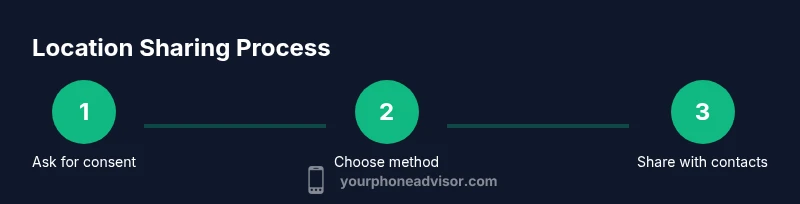
- 1
Ask for consent
Initiate a calm conversation and explain why location sharing is needed, what data will be shared, and for how long. Document consent when possible.
Tip: Start with a specific use-case and reassure that data will be limited to what’s necessary. - 2
Choose a legitimate method
Select an official, consent-based location-sharing option that fits both devices. Avoid third-party tools with vague privacy policies.
Tip: Prioritize built-in OS features that allow time-limited sharing. - 3
Enable sharing with trusted contacts
Turn on location sharing for a defined list of trusted contacts, with explicit expiry or revocation controls.
Tip: Only share with people you trust and who have a legitimate need. - 4
Test the setup
Run a short test to confirm data is shared as intended and that the correct contacts can access it.
Tip: Use a temporary test window (e.g., 15–30 minutes) to limit exposure. - 5
Monitor and adjust
Review the sharing settings after use and adjust permissions or recipients if circumstances change.
Tip: Set reminders to audit permissions every few weeks. - 6
Revoke access when finished
Immediately revoke consent or expiry when the need ends to minimize ongoing data exposure.
Tip: If you lose trust in a contact, revoke access promptly.
Got Questions?
What does it mean to track location through a phone number?
It means determining a device's position using data connected to a specific phone number. Legitimate use requires consent and adherence to privacy laws. Covert tracking without consent is illegal in many places and ethically questionable.
Tracking location via a phone number requires consent and lawful use; avoid covert methods.
Is it legal to locate someone by their phone number?
Legality depends on jurisdiction and context. In most cases, explicit consent is required, especially for adults. For minors or dependents, guardians may have rights within a defined framework. Always consult local laws and obtain consent.
Consent and local laws matter; consult regulations and get explicit permission.
What are legitimate ways to share location data?
Use built-in location-sharing features of the device's OS or trusted apps with clear consent and expiry controls. Share only with designated trusted contacts and review permissions regularly.
Use official sharing features with consent and expiry controls.
Can carriers locate a phone by number without consent?
Carriers can provide location data to authorities with proper legal process. Personal location tracking by private individuals requires consent or a court order in many jurisdictions.
Carriers must follow legal processes to share location data.
How can I protect my own location privacy?
Review app permissions, disable unnecessary location access, use temporary shares, and revoke access when not needed. Keep devices updated and enable strong authentication.
Review permissions and revoke access; keep devices secure.
What should I do if I suspect misuse of location data?
Document the incident, remove permissions, and contact the service provider or relevant authorities as appropriate. Seek legal guidance if needed.
If in doubt, revoke access and seek guidance from authorities.
Watch Video
What to Remember
- Know the legality before attempting any tracking
- Obtain explicit, informed consent
- Use official, consent-based location features
- Limit data sharing to trusted contacts
- Review permissions regularly