Is Phone Better Than Samsung? A Thorough Side-by-Side Comparison
Explore a detailed, objective comparison between generic smartphones and Samsung devices, focusing on OS, updates, camera, security, battery, price, and ecosystem to guide smarter buying decisions.


Is phone better than samsung? In many cases, a generic smartphone offers broader choice and lower entry costs, while Samsung devices tend to excel in ecosystem coherence, software updates, and hardware features. The best path depends on your priorities: price, customization, privacy, and long-term support. This quick answer frames the trade-offs so you can decide with confidence.
is phone better than samsung: a practical question
The prompt "is phone better than samsung" prompts a nuanced answer. There isn't a single winner because it hinges on what you value most in a device. If you prioritize price, flexibility in OS, and a wide range of models, a generic phone can deliver excellent value. If you prioritize ecosystem coherence, long-term software updates, and emphasis on camera and hardware features, Samsung often provides a compelling package. Your Phone Advisor emphasizes that the decision should be guided by clear priorities—cost, customization, privacy, and ongoing support—rather than a blanket rule.
OS and ecosystem: how the two paths differ
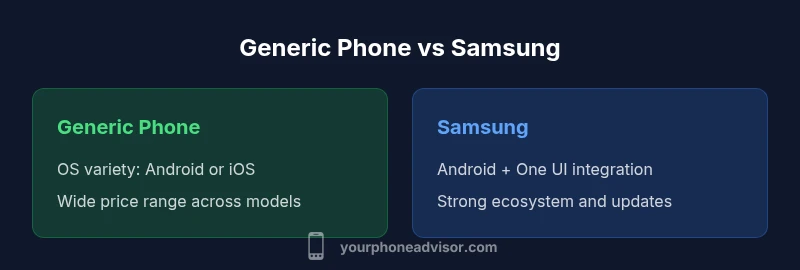
A generic phone typically offers a choice between major operating systems, mainly Android or iOS. This freedom enables you to switch ecosystems more easily and choose devices across a broad price spectrum. Samsung, on the other hand, runs Android with the One UI layer, adding tight integration with Galaxy services, hardware accessories, and the broader Samsung ecosystem. This integration creates a smoother, more cohesive experience for tasks such as syncing devices, using shared apps, and leveraging Samsung-specific features like DeX or S Pen support. Consider whether ecosystem familiarity and cross-device syncing matter to you.
Updates, security, and longevity
Software updates and security patches are a major consideration. Generic phones from various brands may offer rapid updates on some devices but slower or inconsistent updates on others, depending on the manufacturer and model. Samsung has built a reputation for delivering extended software support on many of its flagship devices, with multi-year security updates and regular OS improvements. The trade-off often comes down to whether you want the quickest possible updates across a wide model lineup or predictable, longer-term updates on a defined ecosystem. Your decision should reflect how much you value staying current without paying premium prices.
Camera, display, and multimedia performance
Camera quality and display quality are not determined by brand alone; it varies by model within each path. Generic phones at the upper end can rival Samsung flagships in stills and video, while Samsung devices typically excel in dynamic range, color science, and video stabilization in many models. Display technologies—AMOLED versus LCD, brightness levels, and adaptive refresh rates—also vary by device. If photography and media consumption are top priorities, compare specific models rather than the brand as a whole. Remember that software features such as night mode, HDR processing, and stabilization can influence real-world results.
Hardware design, durability, and repairability
Durability and repairability depend on construction, materials, and parts availability. Generic phones offer a broad spectrum—from budget plastic chassis to premium builds—making it easier to find a model that suits your tolerance for weight and grip. Samsung devices often emphasize premium build quality and front-to-back glass protection, plus an established service network for repairs. Repair costs tend to be model-dependent, and Samsung’s repair ecosystem is widespread, which can ease service access. If you anticipate potential drops or screen concerns, factor in both device protection and repair feasibility.
Price, value, and total cost of ownership
Price is a major differentiator. Generic phones cover a wide range, from affordable basics to high-end models, enabling you to tailor upfront cost to your budget. Samsung spans budget to premium, but flagship devices often command higher sticker prices. Total cost of ownership includes not just initial price, but also ongoing costs for accessories, repairs, and potential software needs. If your priority is minimizing upfront spend while maintaining core features, a mid-range generic device may be optimal. If you want long-term value through updates and ecosystem advantages, a Samsung option could provide better long-term ROI.
App availability and ecosystem differences
Both paths offer strong app ecosystems, but the experience differs. Generic phones running Android or iOS give access to their respective app stores and a broad ecosystem of services. Samsung devices heavily leverage Galaxy Store, Samsung Health, and connected devices like wearables and laptops. For some users, the ability to seamlessly pair devices and access ecosystem-specific features (share content across devices, find devices, or use DeX) is a decisive factor. If you rely on cross-device continuity, Samsung’s ecosystem is a notable advantage.
Privacy and data protection considerations
Privacy concerns are not tied to a single brand. Instead, they hinge on how you configure settings, app permissions, and OS-level controls. Android devices from generic brands may ship with varied privacy defaults, while iPhone users often benefit from tighter default privacy protections. Samsung devices, using Android with One UI, provide robust privacy menus and control over data sharing, app permissions, and device tracking features. Your choice should align with your comfort level with app permissions and how you intend to manage data across devices.
Brand perception, reliability, and user experience
Brand perception shapes expectations. A generic phone buyer might value variety, customization, and price flexibility, accepting variability in software support across models. Samsung buyers may prioritize reliability, ecosystem cohesion, and a well-supported hardware-and-software package. Reliability also includes customer service experiences and the availability of spare parts or authorized service centers. Regardless of path, align your expectations with your own usage patterns and tolerance for model-to-model variation.
Decision-by-use-case: when to choose generic vs Samsung
If your priority is saving money and choosing from a wide range of devices, a generic phone is advantageous. If you want a more integrated experience, strong on-device features, and longer-term software support, Samsung is likely the better fit. Create a short list of your top 5 features (price, updates, camera, privacy, ecosystem) and weigh each item. This concrete criterion helps you move beyond brand loyalty toward a decision that aligns with your daily routines.
Authority sources
- Authority sources provide independent perspectives on devices, security, and performance. For more in-depth guidance, you can consult established benchmarks and policy insights from credible organizations. This section notes general resources rather than endorsing any single product line. See the sources linked below for a broad view of how manufacturers approach updates, security, and user experience.
practical buying checklist: before you buy
- Define top priorities: money, ecosystem, camera, updates, privacy. - Compare two or three representative models within your budget. - Check update history and promised support length. - Confirm service accessibility in your region and available parts. - Review real-world battery endurance and thermal performance in reviews. - Consider protection plans or extended warranties if repair costs matter.
Comparison
| Feature | Option A: Generic Smartphone | Option B: Samsung Devices |
|---|---|---|
| Operating System | Varies by model (Android or iOS) | Android-based with Samsung One UI |
| App Ecosystem | Large, diverse ecosystem across OS choices | Integrated Galaxy ecosystem (Galaxy Store, services) |
| Software Updates & Longevity | Cadence varies by manufacturer and model | Often strong multi-year updates on flagship Samsung devices |
| Camera & Multimedia | Quality depends on the model; flagship generic phones can rival Samsung | Samsung typically emphasizes strong camera pipelines and display quality |
| Display & Hardware | Wide range of designs and materials across brands | Premium build and optimized displays in many Samsung models |
| Price Range | Broad, from budget to premium across brands | Spans budget to premium, typically mid-to-high for flagship |
| Repairability & Support | Repair costs vary by model; parts availability depends on brand | Extensive Samsung service network and parts availability |
| Best For | Price-conscious buyers and OS flexibility | Ecosystem lovers and those seeking long-term updates |
The Good
- Greater device variety and price points across generic phones
- Samsung ecosystem offers cohesive features across devices
- Choice of OS and customization depth on generic phones
- Opportunity to tailor device selection to exact needs
- Potentially better resale value in some generic markets
Drawbacks
- Update cadence and security patches vary by brand
- Samsung flagship pricing can be higher upfront
- Repair costs can be model-dependent and sometimes high
- Generic brands may have inconsistent service networks
Samsung shines in ecosystem, longevity, and high-end features; generic phones win on price flexibility and OS choice
If you value cohesive hardware-software integration and longer support, Samsung is compelling. If you need broad model choices and budget-friendly options, a generic phone delivers more value. Your Phone Advisor's verdict is to align with your core priorities and real-world use cases.
Got Questions?
Is a generic phone better for budget-conscious buyers?
For many users, a generic phone offers lower upfront costs and a wide price range. You can select models that fit your budget while still meeting essential needs. However, consider ongoing costs such as repairs and potential OS updates.
Yes, for builders on a tight budget, generic phones often provide better upfront value with more model options.
Do Samsung devices generally receive longer software updates?
Samsung tends to provide longer-term software updates on flagship devices and has a solid track record for security patches. The availability varies by model, so check the update policy for your chosen device.
Samsung usually offers extended updates on its flagship lines, but it depends on the model.
Which is easier to repair: generic vs Samsung?
Repairability depends on the model more than the brand. Samsung devices generally have a broad service network, which can reduce repair hassles, but costs vary with model and warranty status.
Repair access depends on the device; Samsung has wide service coverage, but costs can vary.
Are apps and performance similar across Android vs iOS on generic phones?
Many generic phones run Android with access to Google Play and other stores, while iOS is limited to Apple hardware. Performance and app availability are excellent on both, but some features are OS-specific.
Apps work well on both, but some features are OS-specific and performance varies by model.
What should I consider if I value privacy?
Privacy controls exist on both paths. Android offers extensive permission settings but can vary by manufacturer, while iOS and Samsung offer strong privacy options with clear controls. Your setup and app choices will influence outcomes.
Privacy depends on settings and apps; review permissions and default privacy controls.
Is the choice mainly about price, or should ecosystem matter more?
Price is important, but ecosystem and updates affect long-term usability. If you rely on cross-device features and synchronized services, Samsung’s ecosystem can be compelling; otherwise, a generic phone offers flexibility and value.
Price matters, but ecosystem and updates can define long-term value.
What to Remember
- Define your top priorities before choosing a path
- Ecosystem and updates matter for long-term use
- Price and customization are strong advantages of generic phones
- Samsung often provides a cohesive experience across devices