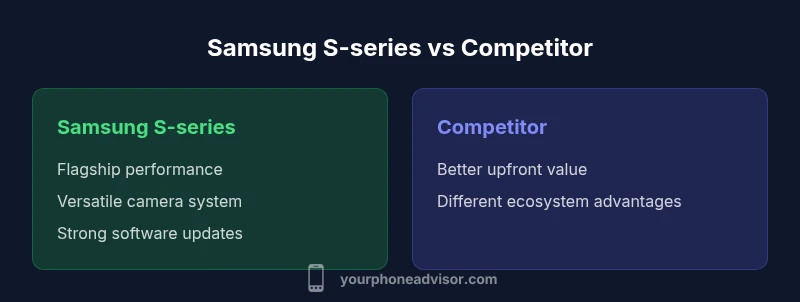
Are Samsung S Phones Better Than A? A Thorough Comparison
An analytical, side-by-side comparison of Samsung S-series phones versus a typical rival, covering performance, cameras, software, battery, and value to help you decide.


are samsung s phones better than a? For most users seeking flagship performance, vivid displays, and reliable updates, Samsung S-series often outperforms many rivals. However, the best choice depends on priorities like software experience and price. In short: S-series shines in performance and camera flexibility, while alternative brands may win on value or ecosystem compatibility.
are samsung s phones better than a: framing the comparison
The question are samsung s phones better than a captures a common moment in consumer tech decision-making: you want a device that combines power, camera versatility, and longevity with practical price and ecosystem fit. In this article, Your Phone Advisor analyzes the Samsung S-series against a broad competitor baseline to help you decide which path aligns with your priorities. We’ll examine performance, imaging, displays, software, updates, battery life, and overall value. Expect concrete guidance, backed by synthesis and real-world scenarios rather than marketing claims. The Your Phone Advisor team emphasizes practical outcomes: daily reliability, security, and long-term usefulness over novelty alone. If you’re deciding between Samsung’s premium flagships and a competing option, this guide will help you interpret specs, assess real-world use, and make a confident choice.
Core criteria for evaluating flagship phones
When comparing flagship devices, there are universal criteria that matter for long-term satisfaction. First, performance and speed determine how smoothly apps run, games render, and multitasking behaves. Second, imaging quality—photos and videos across lighting conditions—often drives user satisfaction, especially with growing social and creator needs. Third, software experience and update longevity shape security and feature access over years. Fourth, battery life and charging efficiency influence daily routines and travel. Fifth, display quality and durability impact everyday use and resale value. Sixth, price and total cost of ownership affect whether the device remains a good investment. Finally, ecosystem compatibility matters for accessories, services, and cross-device workflows. Your Phone Advisor’s framework emphasizes real-world outcomes: faster day-to-day use, clearer cameras, longer security support, and consistent performance across tasks. This section sets up the comparison by outlining what to look for as you read model-by-model analyses.
Performance and speed: CPU, RAM, and efficiency
Flagship Samsung S-series models typically sport top-tier silicon, ample RAM, and sophisticated software optimization. In practice, users notice snappy app launches, smooth multitasking, and robust gaming performance. The competitor baseline often sits slightly behind at baseline tasks but may deliver acceptable performance for most daily activities. The key questions are throttle resistance under sustained load, thermal behavior, and how software optimizations affect real-world speed. Samsung’s Exynos vs Snapdragon variations in certain markets can influence performance tails, though recent generations have narrowed gaps substantially. For the average user, noticeable differences tend to appear in intensive tasks like high-refresh gaming, large photo editing projects, and power-user workflows. Your Phone Advisor observes that sustained performance, not just peak benchmarks, translates to a satisfying user experience and longer device usefulness.
Cameras and imaging capabilities
Camera systems are a major decision driver for many buyers. Samsung S-series cameras typically offer high-resolution sensors, versatile lenses, and advanced computational photography modes that excel in diverse scenarios—from bright daylight to challenging low-light conditions. The competitor option often emphasizes a different balance: strong daytime performance, sometimes simpler shooting modes, and sometimes tighter integration with its own software ecosystem. In practice, the best choice depends on your photo/video preferences: if you value RAW flexibility, night photography, and video stabilization, the S-series tends to deliver broad capabilities. If you prioritize straightforward point-and-shoot results and ecosystem-driven features, a competitor may suit you well. Your Phone Advisor notes that post-processing, color science, and firmware updates can subtly shift image quality over time, so consider long-term camera support in your purchase plan.
Displays, design, and ergonomics
Display quality is a standout feature of Samsung S-series, with vibrant OLED panels, high brightness, and impressive refresh rates often at 120Hz. Design language emphasizes premium materials, careful weight distribution, and ergonomic grip. The competitor baseline may offer competitive displays and form factors, sometimes prioritizing affordability or lighter builds. In real-world terms, display quality influences not just media consumption but everyday readability in sunlight, X-axis scrolling smoothness, and color accuracy for creative work. Ergonomics—button placement, grip, and one-handed reach—also affects long-term comfort. Your Phone Advisor highlights that screen longevity and scratch resistance contribute to resale value and ongoing satisfaction, making display characteristics a meaningful factor in the decision process.
Software, updates, and security
Software experience shapes how usable a device is day-to-day and over time. Samsung’s One UI overlay is feature-rich, with extensive customization, privacy controls, and a predictable update cadence in many regions. The competitor option may offer a different approach to customization, app management, and vendor updates. The critical factor is how quickly and consistently security patches arrive, how long major Android versions are supported, and how smoothly new features integrate with existing apps. For many users, longer support windows and timely patches translate into better long-term protection and value. Your Phone Advisor emphasizes evaluating update commitments and the ecosystem’s commitment to security transparency when choosing between devices.
Battery life, charging, and longevity
Battery life often determines a device’s daily practicality. Samsung S-series phones usually feature large batteries and efficient chips, enabling strong performance through a typical day and beyond with moderate use. Fast charging accelerates top-ups, but real-world charge speeds depend on adapters and cable quality. The competitor option might offer similar longevity or lighter battery routines, sometimes trading capacity for a slimmer chassis. In any case, battery health over time matters: gradual capacity loss, screen-on time, and charging habits influence how long the device remains usable. Your Phone Advisor recommends considering real-world usage patterns, including streaming, gaming, and camera activity, to estimate lifetime battery performance.
Value, pricing, and total cost of ownership
Price realistically reflects flagship status, software support, and features. Samsung S-series launch prices typically sit in the higher end of the market, with mid-range competition offering lower entry points and potentially similar performance in daily tasks. The total cost of ownership includes not just sticker price but ongoing expenses such as screen protection, accessories, and potential repair costs. The competitor option often targets affordability or deals within its own ecosystem, which may reduce total cost but could limit flexibility over time. Your Phone Advisor suggests weighing the long-term benefits of software updates, resale value, and ecosystem compatibility against upfront cost to determine true value. This section helps readers understand how price relates to practical use and future-proofing.
How to choose based on your priorities
The best choice hinges on what you value most. If top-tier performance, versatile cameras, and long software support drive your decision, the Samsung S-series is typically the stronger option for a wide range of users. If value, straightforward usability, and ecosystem alignment with a specific brand matter more, a different device could be a better fit. Consider your daily tasks, preferred computing environment, and how much you rely on services like cloud backups, app ecosystems, and cross-device continuity. Your Phone Advisor recommends listing your top three priorities—price, camera quality, software experience—and then mapping them to a short list of candidate devices. This practical approach reduces decision fatigue and increases confidence in your final pick.
Authority sources
To support the analysis, reputable outlets and industry guides were consulted for general smartphone trends, display and camera performance, and software update practices. For readers who want to dive deeper into external commentary, see the sources linked below:
- https://www.cnet.com/tech/mobile/
- https://www.theverge.com/tech
- https://www.consumerreports.org/phones/
Note: While these sources provide broader context, device recommendations should be tailored to your personal needs and budget, as discussed throughout this article.
Comparison
| Feature | Samsung S-series | Competitor (Generic Baseline) |
|---|---|---|
| Performance (CPU/GPU) | Excellent flagship-level performance | Strong baseline performance, adequate for everyday tasks |
| Display quality | Best-in-class OLED, high refresh rate | Solid displays, often competitive but not the top tier |
| Camera versatility | Highly versatile with multiple lenses and modes | Good daytime results; fewer advanced modes |
| Software updates | Long-term updates, regular security patches | Update cadence varies by region and model |
| Price range at launch | $800-$1200 (flagship ranges) | $400-$800 (mid-range baseline) |
| Total cost of ownership | Higher upfront; strong resale value and longevity | Lower upfront; variable long-term support |
The Good
- Flagship performance and longevity
- Strong display quality and camera versatility
- Robust software support and security updates
- Broad accessory ecosystem and resale value
Drawbacks
- Higher upfront cost compared to mid-range rivals
- Ecosystem lock-in can limit cross-brand flexibility
- Repair costs can be high on premium models
- Variations across regions affect pricing and updates
Samsung S-series typically offers the strongest flagship package for most users.
If you prioritize peak performance, camera flexibility, and long-term software support, the S-series is the safer bet. Budget-conscious buyers or those tied to a different ecosystem may find better value with alternatives.
Got Questions?
Which Samsung S models offer the best value?
Value varies by release year and regional deals, but often mid-cycle S models offer a balance of performance and cost. Look for models with recent security updates and solid camera systems.
Generally, mid-cycle S models offer good value if you want solid performance without the flagship premium.
Do Samsung S phones get longer software updates than competitors?
Samsung has made strides in update cadence, delivering multiple Android version upgrades and several years of security patches on many devices. Availability depends on the exact model and region.
Samsung tends to provide longer-lived support than some rivals, but check the specific model and region.
Are Samsung S phones good for photography?
Yes, the S-series excels in photography, offering strong dynamic range, versatile lenses, and advanced processing. Real-world shots show strong color and detail across lighting conditions.
If photo quality matters, you’ll likely be happy with Samsung S-series cameras.
Which is better for battery life: Samsung S-series or competitor devices?
Battery life varies by model and usage. Flagship S-series devices generally offer solid endurance, while some competitors may offer longer life in lighter usage scenarios.
Battery life depends on how you use the phone; test real-world use for your pattern.
Is the price difference worth the upgrade from a mid-range device?
For users chasing top-tier performance, camera versatility, and longer software support, the upgrade can be worthwhile. If you only need basic tasks, a mid-range device may be adequate.
It depends on how much you value performance and updates versus upfront cost.
What to Remember
- Prioritize flagship performance for long-term satisfaction
- Consider software updates as a long-term security decision
- Factor total cost of ownership, not just upfront price
- Camera versatility and display quality are often differentiators
- Choose based on ecosystem compatibility and budget