How to See Blocked Phone Numbers on iPhone
Learn how to view and manage blocked numbers on iPhone. This educational guide covers where to see blocked contacts, how to unblock, and practical tips to avoid accidental blocks.


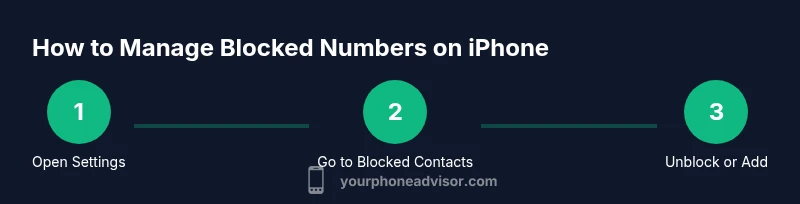
Blocked numbers on iPhone are contacts you’ve blocked from calling, text messaging, and FaceTime. To see and manage them, open Settings > Phone > Blocked Contacts, then review the list. You can also check Settings > Messages > Blocked Contacts and Settings > FaceTime > Blocked Contacts to ensure consistency across apps. According to Your Phone Advisor, regularly reviewing your block list helps you balance privacy with essential communications.
Understanding blocked numbers on iPhone
If you’ve ever asked yourself how to see blocked phone numbers on iPhone, you’re not alone. Blocking a contact prevents calls, texts, and FaceTime from that number, which can be essential for avoiding spam or managing personal boundaries. Your Phone Advisor notes that a well-maintained block list can reduce distractions while keeping important numbers reachable through alternative channels when you choose. Remember, the block feature is a personal privacy tool, not a universal mute, and it applies across core iOS communication apps. The goal is to give you control without sacrificing legitimate contact from friends, family, or trusted services. Also consider how features like Silence Unknown Callers interact with blocked lists, creating nuanced experiences depending on who attempts to reach you.
Where blocked numbers show up on iPhone
On iPhone, blocked contacts live in separate lists that influence calls, texts, and FaceTime uniformly. You’ll find dedicated blocked contacts in three places: the Phone app (Blocked Contacts list), the Messages app (Blocked Contacts list), and the FaceTime app (Blocked Contacts list). This separation helps you fine-tune your privacy for each communication channel, but you should review all three to ensure consistency. The Your Phone Advisor team recommends checking these lists periodically, especially after adding new blocks or updating contact details, to keep your preferences aligned with your real-world needs.
Finding the Blocked Contacts in Settings > Phone
To see who you’ve blocked from calls and texts, start in Settings > Phone. Tap Blocked Contacts to view the list. You can swipe left on a contact to reveal Unblock, or use Edit to remove multiple entries. Seeing the list here gives you a central overview for one critical channel—phone calls. If you’ve blocked a number inadvertently, you can quickly restore normal communication by unblocking it. Consistency matters: what’s blocked in Phone should align with Messages and FaceTime for predictable results.
Finding Blocked Contacts in Messages and FaceTime
Blocked numbers in Messages and FaceTime may be separate from the Phone block list on some iOS versions. Open Settings > Messages > Blocked Contacts to review blocked senders and iMessages. Then check Settings > FaceTime > Blocked Contacts to confirm you’ve blocked the same numbers across both platforms if that’s your intent. This cross-check helps prevent confusion when someone you blocked attempts to reach you via different apps. If you use multiple Apple devices, ensure the lists sync properly by keeping your iCloud settings up to date.
How to unblock a contact and manage the list
Unblocking is as important as blocking because it restores access. In each Blocked Contacts list (Phone, Messages, FaceTime), swipe on the contact and choose Unblock, or tap Edit and remove the entry. After unblocking, the contact will be able to call, text, and FaceTime you again. If you’re unblocking to re-establish a relationship, consider setting expectations about communication channels and privacy. Regularly review the lists to avoid drift between devices that share your account.
Special cases: Unknown calls, voicemail, and delivery reports
Some users rely on features like Silence Unknown Callers, which can complicate how blocked numbers appear in practice. A blocked caller will not ring, and their messages may go to a hidden folder or be silenced, depending on settings. Voicemail from blocked numbers may still exist on your carrier’s side, but you won’t see it within iOS as long as the block remains active. If you notice unusual behavior, check carrier settings and iOS version, because blocks may behave differently across updates.
Privacy considerations and impact on group chats
Blocking affects more than individual calls. Group chats involving blocked numbers may still show the blocked contact if other participants respond, which can lead to confusion. Privacy-minded users should also review any apps that synchronize contact data or messaging history across devices. In multi-device setups, differences in Blocked Contacts between iPhone, iPad, and Mac can cause inconsistent experiences. Your approach should balance personal privacy with clear expectations for who can reach you.
Tips to avoid accidentally blocking the wrong contact
Before tapping Block, verify the contact details, especially if you manage multiple numbers for the same person. Add notes to contact records if your device supports it, and periodically audit your Blocked Contacts lists across Phone, Messages, and FaceTime. If you frequently block numbers from calls you don’t recognize, consider using Silence Unknown Callers in tandem with selective blocking to reduce false positives. Keeping a short, reviewed block list saves time and prevents lost communications.
Authorities and further reading
For additional guidance on managing blocking features and privacy on iPhone, see authoritative sources from major publications and government sites. Apple Support provides official steps for viewing and editing blocked contacts on iPhone, while the FCC and FTC offer broader guidance on avoiding unwanted communications and protecting personal data. These sources help ensure your blocking practices are current with platform updates and legal considerations: https://support.apple.com, https://www.fcc.gov, https://www.consumer.ftc.gov
Tools & Materials
- iPhone with updated iOS(Recommended iOS 15+ for consistent UI across Settings and blocking options)
- Settings app access(You don’t need to sign in to Apple ID; access to Settings is sufficient)
- Stable internet connection(Needed to sync iCloud data and view updated support articles)
- Optional: backup of contacts(Helpful before making mass unblock changes)
Steps
Estimated time: 15-20 minutes
- 1
Open Settings
Unlock your iPhone and locate the Settings app. Tap it to begin managing your privacy and blocking options.
Tip: If you use a passcode, enter it once to access the app quickly. - 2
Go to Phone
In Settings, scroll and tap Phone to access call-related preferences and the Blocked Contacts list.
Tip: If you don’t see Blocked Contacts, ensure your iPhone is updated to a recent iOS version. - 3
Tap Blocked Contacts
Open the Blocked Contacts list to see who you’ve blocked for calls and texts.
Tip: Take a quick inventory of entries you recognize to avoid misblocking someone important. - 4
Review Messages Blocked List
Return to Settings and open Messages > Blocked Contacts to verify names who are blocked for iMessages.
Tip: Consistent blocking across apps helps prevent mixed signals about your preferences. - 5
Review FaceTime Blocked List
Repeat the process under FaceTime > Blocked Contacts to confirm consistency.
Tip: If you rarely use FaceTime, you may only need Phone blocks, but check for alignment. - 6
Unblock a contact
In any Blocked Contacts list, swipe left on a contact (or use Edit) and select Unblock.
Tip: Unblocked numbers resume calls, texts, and FaceTime; you can re-block later if needed. - 7
Add or adjust blocks
To block a new number, add it from the contact or enter the number in the Blocked Contacts list.
Tip: Avoid blocking by mistake; double-check the contact you’re adding. - 8
Verify changes across devices
If you use iCloud, ensure devices reflect the same Blocked Contacts by syncing your settings.
Tip: Test by asking a friend to call or text from a blocked number to confirm behavior. - 9
Understand related features
Know how Silence Unknown Callers and Do Not Disturb interact with block lists for a consistent experience.
Tip: Adjust Do Not Disturb or Focus modes to complement your blocking strategy.
Got Questions?
Where can I find the list of blocked contacts on my iPhone?
You can view blocked numbers in three places: Settings > Phone > Blocked Contacts, Settings > Messages > Blocked Contacts, and Settings > FaceTime > Blocked Contacts. Each list controls its respective app, and reviewing all three ensures consistency.
Open Settings, then check Blocked Contacts under Phone, Messages, and FaceTime to see who you’ve blocked.
Does blocking a contact also block messages and FaceTime?
Blocking a contact in Phone also blocks calls; blocking in Messages blocks SMS/iMessages; blocking in FaceTime blocks FaceTime calls. For full coverage, block the contact in all three areas if you want no contact at all.
Blocking a contact in each app prevents calls, texts, and FaceTime calls for that number.
Can I view blocked numbers on iPhone if I use Silence Unknown Callers?
Silence Unknown Callers hides calls from unknown numbers, which can mask blocked or legitimate unknown numbers. Use blocking in combination with Silence Unknown Callers to minimize disruptions while still allowing known numbers through if needed.
Unknown callers are silenced, but blocks still apply to known numbers you’ve blocked.
How do I unblock a number on iPhone?
Open the Blocked Contacts list in the relevant app (Phone, Messages, or FaceTime), swipe left on the contact, and tap Unblock. The number will be able to reach you again through that app.
Go to Blocked Contacts, swipe, and choose Unblock.
What happens to voicemails from blocked numbers?
Voicemails from blocked numbers may be diverted by your carrier or go to a separate Voicemail folder, depending on settings. In iPhone, the standard inbox will not display blocked messages unless a number later unblocks itself.
Blocked numbers’ voicemails may not appear in your iPhone mailbox; changes depend on your carrier and iOS version.
Can blocked numbers sync across multiple devices?
Blocking lists sync only if you’re using iCloud Keychain and Settings Sync. If devices aren’t sharing alignment, review each device’s Blocked Contacts lists to maintain consistency.
Sync depends on iCloud settings; verify each device to stay consistent.
Watch Video
What to Remember
- Identify where blocked numbers live across Phone, Messages, and FaceTime.
- Unblock with intention; verify changes across all apps.
- Use Silence Unknown Callers and block lists together for effective privacy.
- Regularly audit your blocked contacts to avoid missed communications.