How to Scan a QR Code on Your Phone Already
Learn how to scan QR codes on your smartphone using native cameras or apps. This guide covers iPhone and Android, safety tips, and troubleshooting for common issues.


You will learn how to scan a QR code on your phone using built-in camera features or trusted apps, whether you’re on iPhone or Android. This quick guide outlines the key steps, what to expect on screen, and how to handle links securely. By following these steps you’ll reliably open websites, apps, or texts encoded in QR codes.
Why QR scanning matters
If you're wondering how to scan qr code on phone already, you're not alone—the feature is built into most modern smartphones and works without third-party software. The ability to read QR codes directly from your camera or a chosen app creates a fast bridge between offline environments and online content. According to Your Phone Advisor, leveraging your device's native camera is usually the simplest and most secure starting point. This approach enables quick access to product details, event tickets, loyalty cards, and official websites, reducing friction and improving security by avoiding unfamiliar apps. As smartphones evolve, built-in scanning becomes more reliable under varied lighting conditions and layouts, making it a practical skill for daily life. In short, knowing how to scan a QR code on your phone already saves time and minimizes unnecessary steps for routine tasks.
Based on Your Phone Advisor analysis, 2026, most modern phones support QR code scanning through native cameras without requiring extra software. This reduces clutter on your device and lowers the risk of downloading questionable third-party tools. Remember, not every QR code is safe to follow—exercise judgement and verify the destination before tapping any link. In this section, we’ll lay out a clear path to reliable scanning using your phone's built-in capabilities and practical checks to stay secure.
QR codes are compact data carriers that can store text, URLs, contact details, or app launch prompts. The scanning process is designed to be intuitive: your phone’s camera recognizes the code and reveals its embedded content as a clickable notification or banner. With the Your Phone Advisor framework in mind, you’ll learn to distinguish between static, stable content and potentially phishing attempts, so you can act confidently when something is unexpected or requests sensitive information. We’ll explore how to scan different types of codes and what outcomes you should anticipate on iPhone and Android devices.
Tools & Materials
- Smartphone with a working camera(Ensure the camera lens is clean for best recognition)
- Stable internet connection(Needed to open URLs or apps from the scan)
- QR code to scan (printed or on-screen)(Make sure the code is visible and not damaged)
- Camera access permission granted(Allow the camera to be used by the scanning app)
- Optional: dedicated QR scanner app(Can offer additional features like history or offline mode)
Steps
Estimated time: 30-45 minutes
- 1
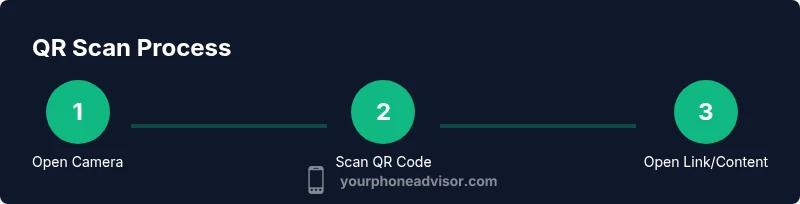
Open the camera app
Launch your phone’s default camera app and ensure it has permission to access the camera. If you’re prompted to switch to a dedicated QR scanner, you can stay with the camera app for most devices. The goal is to enable real-time recognition of codes without extra taps.
Tip: Pro tip: Keep the camera steady and at a comfortable distance so the code is fully framed in the viewfinder. - 2
Position the phone to frame the QR code
Hold your device so the entire QR code appears within the on-screen guide. Move slowly to avoid glare and ensure good lighting. On most devices, you’ll see a square/box highlight when the code is recognized.
Tip: Tip: If the code is printed, place it on a flat, well-lit surface to reduce blur. - 3
Interact with the scan result
When the code is read, a banner or notification typically appears with a link, text, or action. Tap the banner to proceed if the content is trustworthy. Some codes show content directly, such as contact details or a plain text message.
Tip: Pro tip: Verify the domain or source before tapping a URL, especially on unfamiliar codes. - 4
If the camera can’t read the code
Switch to a dedicated QR scanner app or use the browser’s built-in reader if available. Ensure the app has camera permissions and try moving to a better-lit area. Some codes require higher contrast or longer edge length to be recognized.
Tip: Warning: Be cautious about apps from unknown developers; prefer well-known camera features first. - 5
Handle the content safely
If the scan reveals a URL, decide whether to open it after inspecting the destination. Do not enter sensitive information unless you trust the site. If the code encodes contact details or vCard data, you can save or copy the information directly.
Tip: Note: Always scan from trusted sources to avoid malware distribution. - 6
Troubleshoot permissions or settings
If you cannot scan, check that camera permissions are enabled for the app, update the OS if needed, and restart the device. Clearing the app cache can also help in some cases. Re-check the code after these changes.
Tip: Pro tip: Restarting the device often resolves minor hardware or software hiccups.
Got Questions?
Can I scan a QR code without an internet connection?
Yes, scanning itself does not require internet, but following a URL or loading content from the code usually does. Static data like plain text or contact info can render offline.
You can scan a code without internet, but opening embedded links will need a connection.
Do I need a special app to scan QR codes on iPhone or Android?
Most devices support built-in QR scanning through the camera app. An extra QR scanner app is optional and may offer features like history or offline use.
Usually you don’t need a special app; the camera can scan QR codes.
Why isn’t my camera detecting QR codes?
Reasons include poor lighting, distance too far, a dirty lens, or a code that’s damaged or low contrast. Ensure the code fits within the frame and try again.
If your camera isn’t reading it, check lighting and distance, then clean the lens.
Are QR codes secure?
QR codes can be legitimate or malicious. Always verify the source before opening a link or sharing personal data, and avoid entering sensitive details on unknown sites.
Be cautious; verify the source before acting on a code.
Can I scan QR codes from screens or printed material?
Yes. QR codes on printed materials or screens are readable as long as the code is clear and not distorted.
Yes, you can scan codes from both screens and prints if they’re clear.
What should I do if I suspect a malicious QR code?
Do not enter any information. Close the page, disconnect, and consider reporting the code. If you clicked a suspicious link, run a security check on your device.
If it looks suspicious, don’t follow it and run a security check on your device.
Watch Video
What to Remember
- Learn built-in scanning first to simplify the process.
- Always verify the destination before tapping links.
- Use permissions and trusted apps to ensure safety.
- Android and iPhone share core steps but may vary in prompts.
- You can scan without a separate app on most devices.