How to Get Location by Phone Number: Safe & Legal Methods
Learn legitimate ways to get location by phone number with consent. This guide covers built-in tools, carrier options, privacy considerations, and practical steps to locate devices responsibly.


Goal: locate a device or learn the location of a number only with clear authorization. This quick guide outlines legitimate methods to get location by phone number using official tools (Find My iPhone/Find My Device), consent-based sharing through family plans or carriers, and best practices for privacy, legality, and accuracy. Always verify consent before proceeding.
Why getting location by phone number matters
Getting location by phone number can be a practical tool for safety, family coordination, or asset protection. However, privacy, consent, and the law govern how location data can be used. According to Your Phone Advisor, any attempt to track a person without consent raises ethical concerns and can have legal consequences. The aim of this guide is to distinguish legitimate, consent-based approaches from risky, unauthorized methods. When you follow the official routes, you benefit from transparent data handling, clear expectations, and built-in controls that help protect both the tracker and the person being tracked. In practice, you’ll often be locating your own device, a family member who has agreed to share location, or a business asset under appropriate policy. The keyword you’ll see repeatedly is get location by phone number, but applying it responsibly means ensuring consent, purpose limitation, and minimal data exposure. This article uses plain language to outline what works, what doesn’t, and how to verify you’re acting within the law.
Legal and ethical considerations
Location data is highly sensitive. Laws vary by country, but many jurisdictions require informed consent for location tracking and prohibit covert surveillance. From a privacy standpoint, the least intrusive approach is to use consent-based features that let a person share their location with you. Your Phone Advisor analysis shows that when consent is explicit, most services provide auditable logs and clear controls, reducing risk for both parties. If consent is not given, any attempt should be avoided and you should consider other options, such as requesting help from the person or contacting authorities if there is a safety risk. In corporate contexts, employers may implement location sharing only after policy approval and employee agreement. Always maintain a transparent purpose and limit data retention to what is necessary. If you’re unsure about the legality in your area, consult a qualified attorney. The point is not to track covertly, but to ensure safety and cooperation, with robust privacy safeguards in place.
Legitimate use cases
There are legitimate scenarios for locating a device or confirming a person’s location with consent. This includes locating your own phone after it’s misplaced, helping a family member under explicit permission, or managing company devices under a documented policy. Always document consent boundaries, retention periods, and the exact purposes for data collection. Your Phone Advisor emphasizes that clear, documented authorization protects everyone involved and reduces risk of misuse.
How location sharing actually works
Location sharing relies on a few core principles: the device must be capable of reporting location, the owner must opt in or grant permission, and the data should be transmitted securely to an approved account. In practice, you’ll see maps with a dot or circle representing a device’s approximate location, updated periodically. The precision varies by device, network conditions, and the services being used. It’s important to set expectations: some services show the device’s last known location, while others provide near real-time updates. Always respect privacy boundaries and avoid sharing sensitive locations (e.g., home, medical facilities) without explicit consent.
Built-in tools: Find My iPhone / Find My Device
Modern smartphones include built-in location services designed for safety and recovery. Find My iPhone and Find My Device are official integrations that let you locate a device you own or have consent to track. To use them responsibly, sign in with a trusted account, ensure the device is linked to that account, and enable location sharing ahead of time. Results are typically displayed on a map with the option to ring, lock, or erase the device if needed. The key benefits are end-to-end trust, clear ownership, and strong privacy controls. If you do not own the device or lack consent, do not attempt to locate it using these tools.
Carrier and family-safety options
Carriers and family-safety ecosystems offer additional channels for location sharing with proper authorization. Many carriers provide device-management portals that allow account holders to view location data for linked devices, usually with overt consent and clear privacy disclosures. Family Sharing or similar features (e.g., Google Family Link) enable guardians to request or share location information within a controlled framework. When using these options, document consent, set role-based access, and limit access to necessary devices and timeframes.
Third-party apps and privacy concerns
Third-party apps claim to offer location tracking, but they often introduce privacy risks or conflicts with terms of service. Reputable providers require explicit permission and transparent data-use policies. Be cautious of apps that request broad permissions or promise access to location data without a clear, lawful basis. Your Phone Advisor advises sticking to official tools or verified, consent-based solutions to minimize privacy risk and data exposure.
How to request consent and document it
Before requesting location data, present a clear purpose, timeframes, and data-retention expectations. Obtain explicit written or in-app consent, and save a record (e.g., in a note or policy document) detailing who authorized access, when, and for what purpose. This creates an auditable trail that protects both parties and supports accountability in case of misunderstandings or disputes. If consent cannot be obtained, reconsider the approach and explore alternatives that respect privacy.
Limitations and common issues
Location data is not perfect. Devices may be offline, powered down, or out of network range, leading to stale or unavailable data. In some cases, location may be approximate rather than precise. Weather, privacy settings, or regional restrictions can further affect accuracy. Always communicate expectations about reliability and be prepared for gaps. When in doubt, prioritize consent and minimize the use of location data.
Red flags and scams to avoid
Be wary of services or messages that promise instant location data without prior consent or request access to your accounts. Phishing attempts may imitate legitimate tools to steal credentials. Always verify the source, use official apps, and avoid sharing passwords or verification codes. If something feels off, pause and seek guidance from trusted support channels.
Your Phone Advisor's verdict
The responsible approach to get location by phone number centers on consent, transparency, and official tools. Use built-in tracking features for your own devices or with explicit permission, and avoid covert monitoring. Always document consent and respect privacy boundaries. By following these principles, you maximize safety while minimizing risk of legal or ethical issues. The Your Phone Advisor team recommends prioritizing consent-driven methods and regular privacy reviews.
Authoritative sources
For privacy and safety guidelines, refer to official resources from government and major publications. These references provide context on lawful data handling, consent, and best practices for location sharing. See the linked sources in the next section for authoritative guidance.
Tools & Materials
- Authorized account or device owner(You must have consent or ownership to access location data.)
- Official location-sharing tools(Find My iPhone / Find My Device, Family Sharing, or carrier-based sharing.)
- Active internet connection(Needed for real-time location updates.)
- Consent documentation(Save records of permission and purpose where possible.)
- Access to the target device settings(Only with consent or ownership; not applicable if tracking without permission.)
Steps
Estimated time: 15-60 minutes
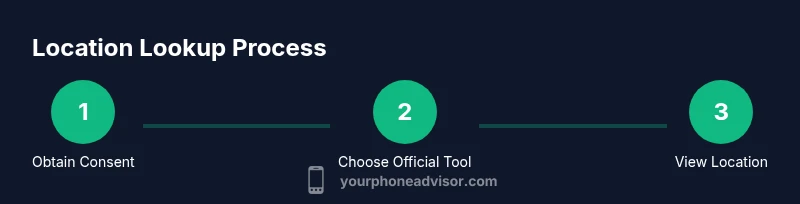
- 1
Verify authorization
Confirm that you have explicit, informed consent or that you are locating your own device. This protects privacy and complies with laws. If consent is not clear, pause and seek consent before proceeding.
Tip: Document the consent in writing or within an app log for future reference. - 2
Choose a legitimate method
Select an official tool appropriate to the device (Find My iPhone/Find My Device) or a carrier/family-sharing option designed for consent-based location sharing.
Tip: Avoid third-party apps that request broad permissions without a clear consent. - 3
Prepare the target device
Ensure the device is linked to the authorized account or that location sharing is enabled with consent. Confirm that notifications and privacy settings allow location data to be sent.
Tip: If you’re helping someone, guide them through enabling sharing on their device with you as a trusted contact. - 4
Initiate location sharing
From the authorized account, start viewing the device’s location via the official map interface. Use accompanying options (ring, lock, or message) if the device is misplaced, and respect ownership boundaries.
Tip: Do not use location data beyond the agreed scope or timeframe. - 5
Verify data accuracy
Cross-check the location against known context (time, last known activity) and consider latency or last-known data if the device is offline.
Tip: If data seems inconsistent, pause and re-verify with the owner or with official support. - 6
Close and document the session
Conclude the session once the purpose is met or consent ends. Record the outcome and delete unnecessary logs to protect privacy.
Tip: Set a reminder to review access rights periodically.
Got Questions?
Is it legal to locate someone by phone number without their consent?
In most jurisdictions, locating someone without consent is unlawful and can result in penalties. Use official tools only when you have explicit permission or are locating devices you own. If there is a safety concern, seek appropriate legal or law-enforcement channels.
Locating someone without explicit consent is usually illegal. Use built-in tools only with permission or for your own devices, and contact authorities if there’s an immediate safety risk.
What about locating my own lost phone?
Locating your own device is a legitimate use case. Use official services like Find My iPhone or Find My Device to ring, locate, or secure the device. Ensure the device is linked to your account and privacy settings allow updates.
If it's your own phone, you can locate it using official tools after you’ve linked it to your account and enabled location services.
How accurate are location-tracking features?
Location accuracy depends on device sensors, network availability, and the service used. It’s often approximate and may show last-known location if the device is offline. Always interpret data with these limits in mind.
Location data can be approximate, especially if the device is offline or in a poor network area. Plan for some uncertainty.
Can I locate a device without consent for safety reasons?
Even in safety scenarios, you should obtain consent or involve authorities as appropriate. Many services require owner approval, and attempting to bypass consent can violate laws and policies.
Even in emergencies, use official channels and seek consent or legal guidance before trying to locate someone.
What should I do if the device is offline?
If the device is offline, you’ll typically see the last known location or none. Plan for intermittent updates and communicate with the device owner about possible downtime.
If the device is offline, you’ll only see the last known location or nothing until it reconnects.
How can I protect my own location data when sharing?
Limit sharing to trusted individuals, set explicit timeframes, and regularly review who has access. Use strong authentication and disable sharing when no longer needed.
Limit who can see your location, set timeframes, and review permissions regularly.
Watch Video
What to Remember
- Get consent before attempting location sharing
- Use official tools for safety and privacy
- Document authorization and data retention limits
- Respect limitations and avoid coercive tracking