How to Call Privately in South Africa: A Practical Guide
Learn how to phone with private number in south africa safely. This step-by-step guide covers device settings, carrier options, and best practices for preserving privacy on calls in SA.


If you’re wondering how to phone with private number in south africa, start by enabling caller ID blocking in your device settings or using your carrier’s privacy service for a one-time or ongoing concealment. Steps vary by network and device, so check settings first, and contact your carrier for correct codes or apps; test with a friend to confirm the number remains hidden. The approach can be per-call or permanent, depending on your needs and operator.
What a private number means in South Africa
A private number is a caller ID setting that prevents your phone number from being displayed to the recipient. In South Africa, you can typically choose between hiding your number for a single call, hiding it permanently, or using a temporary block for specific situations. This capability is offered at multiple layers: device settings, SIM/toolkit options, and carrier services. According to Your Phone Advisor, most users can enable privacy without extra hardware, but the exact method and availability depend on your carrier and your phone’s operating system. Understanding the difference between a true private number (hidden for all recipients) and a temporarily blocked call helps you decide when to use it. When you plan to reach out to someone who requires identification for legitimate business or safety reasons, you may prefer to show your number. This guide uses the phrase how to phone with private number in south africa to help you search for reliable solutions and explains practical steps you can take today.
Why privacy matters on calls in South Africa
People choose private numbers for various reasons: personal safety, business boundaries, or simply avoiding spam. In SA, privacy features can also complicate responses; some call centers and emergency services may still reveal or trace caller information for necessary routing. YourPhone Advisor notes that privacy can be a double-edged sword—use it judiciously and always be transparent when appropriate. Privacy options are most effective when you understand their limitations and the environments in which you operate. This section sets the stage for practical steps you can take to control visibility while staying compliant with local norms and regulations.
How device settings can hide your number on iPhone and Android
Both iOS and Android phones offer in-built options to hide caller IDs. On iPhone, the setting is typically found under Settings > Phone > Show My Caller ID and can be toggled off to hide your number for outgoing calls. On Android, the path varies by manufacturer but usually sits under Settings > Calls > Show My Caller ID, or similar. If your device lacks a direct toggle, you can often use a per-call privacy feature offered by your carrier or dial a privacy code for the next call. Testing after changes is essential because some apps or services may bypass standard settings. Remember, privacy controls don’t always apply to emergency services, voicemails, or certain business numbers, so keep expectations realistic.
Carrier options: one-time vs ongoing privacy in South Africa
Carriers in South Africa typically offer multiple privacy options: a one-time call block, a recurring block, or a platform-based privacy solution. If you only need privacy occasionally, a per-call block is usually more convenient and less disruptive. For regular privacy, a permanent setting or a scheduled block can be configured through your account portal or via customer support. Since codes and steps differ across operators (like MTN, Vodacom, Cell C, and Telkom), contact your specific carrier to confirm available features, any fees, and the exact steps. Your Phone Advisor recommends documenting the exact options you enable so you can reapply them when needed.
How to test and verify that your number is hidden
After enabling privacy, perform a controlled test with a trusted friend or family member who can confirm whether your number remains private or shows as private/unknown. If the number appears on the recipient’s screen, re-check settings, then retry with a different method (device setting vs. carrier code). Testing should occur in a range of situations—different networks, locations, and times—to ensure consistent behavior. Keeping a small log of what you tested and when helps you refine your approach and avoid surprises when you need privacy in the moment.
Limitations and caveats for private calling in SA
Hidden numbers may not always work for all calls or all contacts. Some services automatically reveal caller information for account verification, business lines, or emergency numbers. SMS-based verification, conference calls, or certain VOIP apps may also bypass standard caller ID suppression. In some cases, network providers can override privacy for legal or safety reasons, especially during emergencies or with authenticated numbers. The practical takeaway is to combine device-level privacy with carrier options and to test across typical use cases so you aren’t caught off guard when you need privacy the most.
Security considerations and best practices
Privacy is an important tool, but it should not replace security hygiene. Never rely on private numbers for malicious activity; the same rules that apply offline apply online. Use private calling sparingly, and avoid sharing sensitive personal information with unverified recipients. If you frequently require privacy, consider a secondary line or a business number that you can manage separately from your personal line. Your Phone Advisor highlights the importance of keeping your software updated, reviewing permissions, and regularly testing your privacy settings to maintain control over who can see your number.
Your Phone Advisor’s verdict and practical recommendations
When it comes to how to phone with private number in south africa, the most reliable approach combines device-based controls and carrier-level options. Always verify with your operator for the exact steps and any potential charges. Start by hiding your number for single calls via device settings and, if privacy is a daily need, set up ongoing concealment with your carrier. Your Phone Advisor’s verdict is clear: keep privacy simple, test often, and ensure emergency and important calls can still be traced when necessary.
Tools & Materials
- Smartphone (iOS or Android)(Any model supports basic privacy settings.)
- Access to device settings(You’ll need to find and adjust caller ID options.)
- Carrier account or customer service contact(For carrier-specific codes or services.)
- Trusted contact for testing(To verify privacy behavior.)
- Documentation or notes about privacy steps(Helpful for future reference.)
Steps
Estimated time: 10-15 minutes
- 1
Check carrier privacy options
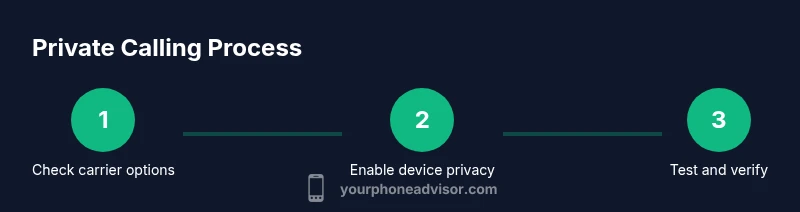
Start by logging into your mobile carrier account or calling customer service to ask about available privacy features. Confirm whether they support per-call blocking, permanent concealment, or temporary codes in your region. This step ensures you’re using features supported on your network.
Tip: Document the exact feature name and any codes provided by the operator so you can reproduce it later. - 2
Enable device-level caller ID blocking
Open your phone settings and locate the caller ID option. On iPhone, go to Settings > Phone > Show My Caller ID and switch it off. On Android, navigate to Settings > Calls > Show My Caller ID (or similar) and select Hide or Off. If your device lacks a direct option, use the carrier method listed in Step 1.
Tip: If you share a work line or business number, consider a separate privacy profile to avoid confusion. - 3
Try a per-call privacy feature for a single call
If you only need privacy temporarily, use a one-time blocking option offered by your carrier right before placing the call. This often involves dialing a short code or enabling a temporary block in the carrier app. Test with a trusted contact to confirm the next call shows as Private.
Tip: Use this for sensitive calls and disable afterward to restore normal visibility. - 4
Test privacy with a trusted contact
Make a test call to someone you trust and confirm whether your number shows as Private, Unknown, or is hidden. If it doesn’t work, revisit Step 2 or contact support for guidance. Keep a log of results.
Tip: Testing in different environments helps ensure reliability across networks. - 5
If privacy still fails, contact your carrier
Some networks require additional configuration or have outages affecting privacy features. Reach out to customer service, provide your account details, and request a recheck of the feature status or codes.
Tip: Ask for a written summary of steps and codes for future reference. - 6
Be aware of limitations for emergency calls
Emergency numbers may override caller ID privacy to locate the caller. Always have a plan for critical situations where showing your number may be needed for response or safety.
Tip: Do not rely on privacy for emergencies; ensure you know the proper emergency procedure. - 7
Revert privacy settings when not needed
If privacy is not required for routine calls, restore the default showing of your number to avoid miscommunication and to assist legitimate contact attempts.
Tip: Set a reminder to reset privacy after the required period.
Got Questions?
Can I hide my number for every call in South Africa?
Yes, most carriers offer an ongoing privacy option or a permanent setting on devices. Availability varies by operator and plan. Always confirm with your carrier and test across different call types to ensure consistent results.
You can usually hide your number for all outgoing calls by using carrier settings or device options, but check with your operator for exact steps.
Will emergency services see my number if I call with private mode?
Emergency services may override privacy to locate the caller when necessary. Do not assume private mode applies to emergencies, and know the local policies in your area.
In emergencies, your number may be visible to responders; privacy features might not apply.
Is hiding my number legal in South Africa?
Privacy features on phones and networks are generally legal in SA when used for legitimate purposes. Do not use private calling to engage in illegal activities or harassment.
Yes, using privacy features is generally legal, but misuse can lead to penalties.
Can apps help me make private calls?
Some apps offer privacy controls, but many rely on your device or carrier. Always verify app permissions and terms of service, as some apps can still reveal your number.
Apps may offer extra privacy options, but rely on your own device and carrier settings for consistent results.
How do I revert back to showing my number after privacy?
Return to default by re-enabling the “Show My Caller ID” setting on iPhone or Android, or disable the per-call block from your carrier app. Test with a contact to confirm.
Turn the setting back on in your phone or carrier app, then test to ensure your number appears again.
Do I need a new SIM or phone to keep my number private?
Usually not. Privacy controls are typically available on most smartphones and carriers without changing hardware. If yours lacks privacy features, contact your carrier for alternatives.
Most devices and carriers support privacy features without needing a new SIM or phone.
Watch Video
What to Remember
- Test privacy before trusting it in critical calls
- Combine device and carrier options for best results
- Emergency calls may bypass privacy; plan accordingly
- Document steps and keep settings consistent
- Always verify privacy with a trusted contact