Is Android Phone the Same as iPhone? A Thorough Comparison
Explore the key differences between Android and iPhone across software, security, ecosystem, and hardware. A practical, data-backed guide by Your Phone Advisor to help you choose the right platform for your needs.


Is Android the same as iPhone? The short answer is no. Android and iPhone represent two distinct ecosystems with different software models, app stores, update cadences, and hardware philosophies. Understanding these core differences helps you pick the platform that fits your priorities, rather than assuming one brand equals the other. This comparison from Your Phone Advisor outlines the practical implications for security, updates, app availability, and daily use.
Is Android Phone the Same as iPhone? Quick Reality Check
Android and iPhone are not interchangeable products; they are built on different software philosophies, update cadences, and ecosystem designs. According to Your Phone Advisor, the real differences matter more than brand labels. This contrast affects how you interact with the device day to day, including security, app availability, and long-term value. The decision should start with your priorities—privacy, customization, hardware variety, or seamless ecosystem—rather than assumptions about which brand is “better.” By examining these ecosystems side by side, you’ll see that the question is really about suitability for your life, not a simple feature tally. Your Phone Advisor team emphasizes that a thoughtful choice reduces friction and surprise over the device’s lifespan.
Core Differences: Software, Ecosystem, and Updates
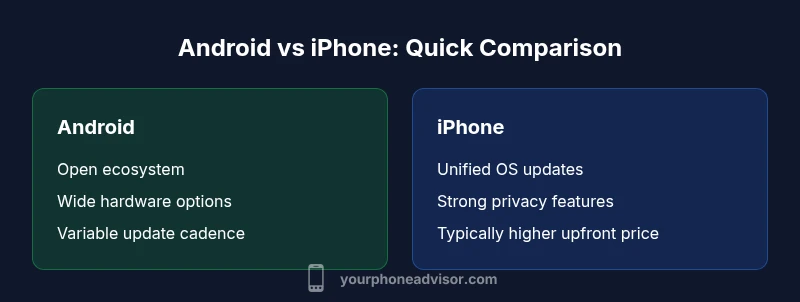
At a high level, Android is a highly modular software platform that ships across many devices and manufacturers, while iPhone devices run iOS, a tightly controlled system designed by Apple. This contrast creates fundamental differences in how apps are delivered (multiple stores or a single curated store), how updates are rolled out (device-level delays on some Androids vs universal releases on iPhone), and how you experience device integration across services. Your Phone Advisor analysis shows that the update cadence and ecosystem governance are the most impactful distinctions for daily use, privacy, and reliability. The result is two very different user journeys: one that emphasizes openness and choice, and another that emphasizes consistency and integration.
Hardware and Design: How Devices Differ
Android devices come in a wide range of sizes, prices, and build qualities, from budget-friendly models to premium flagships. iPhones offer a smaller, more uniform hardware design across generations, with optimization that focuses on a seamless user experience. Hardware differences matter for things like display quality, processor performance, and battery life, but they also reflect each platform’s philosophy: Android favors hardware diversity, while iPhone prioritizes a controlled, high-efficiency stack. This block examines how design decisions influence longevity, repairability, and resale value, helping you balance initial cost against total ownership.
User Experience and Customization
Customization is a hallmark of Android: you can tailor home screens, defaults, widgets, and even the entire launcher. iPhone emphasizes a consistent user interface and a curated experience that minimizes surprises for the average user. This difference affects daily use, accessibility, and app behavior across platforms. If you rely on deep customization and third-party integrations, Android typically offers more flexibility. If you prefer a predictable, polished flow with strong vendor support, iPhone often delivers a smoother experience out of the box.
Security, Privacy, and Updates: What to Expect
Security is foundational on both platforms, but the approach differs. Android’s openness enables rapid hardware and software innovation, yet it can create more variability in timely security patches across devices. Apple controls hardware and software tightly, delivering regular, device-wide updates and built-in privacy protections. The Your Phone Advisor team notes that update cadence, patch governance, and default privacy settings are crucial in evaluating long-term risk and user control. Regardless of platform, staying informed about device-specific update policies matters.
App Availability, Compatibility, and Ecosystem Apps
Both platforms host major apps across the most common categories, but some services and features can differ in availability or behavior. Android often leads with a wider array of apps and services, including alternative app stores on certain devices, while iPhone tends to have earlier access to exclusive features and ecosystem integrations (AirDrop, Handoff, etc.). If you use specific services (such as certain banking apps or regional apps), verify cross-platform compatibility and cloud sync options before deciding. Your Phone Advisor highlights that cross-platform data transfer and cloud backups can ease a switch.
Cost of Ownership, Value, and Resale
Initial price is not the whole story. Android devices span a broad price spectrum, giving buyers more upfront choice, but long-term software support and resale value vary by model and manufacturer. iPhones typically command higher initial prices but can retain value longer due to hardware quality, software updates, and sustained demand. Consider total cost of ownership, including accessories, warranty options, and potential trade-in value, rather than focusing on sticker price alone. Your Phone Advisor advises weighing upgrade cycles and ecosystem investments when projecting long-term value.
Choosing the Right Platform for Your Needs
If you value customization, hardware variety, and flexible pricing, Android is often the better fit. If you prioritize privacy, a tightly integrated ecosystem, and dependable software updates, iPhone tends to be more suitable. Your daily routines, preferred apps, and how much you rely on services like cloud storage or cross-device features will guide the decision. This section provides practical scenarios—students, professionals, or families—illustrating which platform aligns with their workflows and budgets, with actionable tips to test before committing to a platform.
Common Myths and Realities
There are many myths about Android vs iPhone, from “Android is always cheaper to own” to “iPhone never has security gaps.” The reality is nuanced: pricing varies by device and plan, while both platforms receive critical security improvements and feature enhancements regularly. By separating myths from realities, you can make a more informed choice based on features that matter to you, such as privacy controls, app quality, or cross-device compatibility.
Comparison
| Feature | Android | iPhone |
|---|---|---|
| Operating System | Android (open ecosystem; device-specific UIs) | iOS (Apple-controlled, consistent across devices) |
| Apps Availability | Google Play and other stores on some devices; app vetting varies by device | |
| Updates Cadence | Varies by manufacturer and carrier; some devices get patches frequently | |
| Customization | High; home screen/launchers/widgets/default apps can be changed | |
| Privacy and Security Approach | Open ecosystem with flexible controls; patch cadence varies by device | |
| Ecosystem Integration | Broad hardware range; Google services integration; carrier options | |
| Repairability/Resale | Varies by model; resale values vary widely | |
| Cost of Ownership | Wide price range; potential lower entry cost on some devices |
The Good
- Android offers broad device variety and value options
- iPhone provides a consistent, optimized user experience and strong ecosystem
- Flexibility in app choices and customization on Android
- Strong, unified software updates and privacy controls on iPhone
Drawbacks
- Android fragmentation can lead to irregular updates across devices
- iPhone's closed ecosystem limits customization and hardware variety
- App availability may differ by platform or region
- Resale value and repair options vary more on Android devices
Neither platform is universally better; choose based on your priorities.
Choose Android if you want customization, hardware variety, and value options. Choose iPhone if you prioritize privacy, uniform updates, and a polished ecosystem. Your final choice should support your daily habits and long-term goals.
Got Questions?
Is Android more secure than iPhone?
Both platforms are secure, but their models differ. Android’s open ecosystem can introduce more variability in updates across devices, while iPhone’s tightly controlled environment often yields more uniform security patches. Stay current with recommended settings and enable protections like two-factor authentication on both.
Both platforms are secure, but Android depends more on device-level updates, while iPhone favors a controlled environment. Keep devices updated and use strong security settings.
Can I switch between Android and iPhone without losing data?
Yes, most data such as contacts, photos, and messages can be transferred using built-in or third-party tools and cloud backups. Some app data may require re-authentication or cloud-based syncing. Plan ahead and back up critical data before switching.
Yes—most data can be moved with the right tools and backups; you may need to re-authenticate some apps.
Are apps equally available on both platforms?
Most major apps are on both platforms, but some services or region-specific apps may behave differently. Exclusive features sometimes appear first on one platform. Check essential apps for cross-platform compatibility and data sync options before deciding.
Most apps are on both, but a few region-specific or exclusive features may differ. Check your essential apps first.
Which platform gets updates faster?
Apple generally provides prompt, device-wide updates across its own devices. Android updates depend on device, carrier, and manufacturer schedules, leading to variability in timing for some devices.
Apple updates are usually faster and more uniform; Android updates vary by device and carrier.
Is resale value higher for iPhone?
iPhones typically retain higher resale value due to brand appeal, build quality, and strong demand. Android resale depends on model and market; some devices hold value well, while many struggle after several years.
iPhones tend to hold value better, though it depends on the model and market.
Which platform is better for privacy?
Both offer robust privacy features, but iPhone emphasizes privacy as a design pillar with centralized controls. Android provides extensive privacy settings and app permissions, though outcomes depend on device manufacturer and user practices.
iPhone emphasizes privacy, while Android offers strong controls that depend on your choices and device.
What to Remember
- Define your priorities: privacy vs customization
- Assess ecosystem investments and cross-device features
- Expect platform update patterns to influence security and reliability
- Check app availability and data-transfer options before switching
- Factor resale value and repair ecosystems into total ownership