How Long Do iPhones Last? Apple Lifespan Guide 2026
Discover how long iPhones last, what drives longevity, and practical steps to extend your device’s life. Your Phone Advisor analyzes 2026 data to guide smarter upgrades.


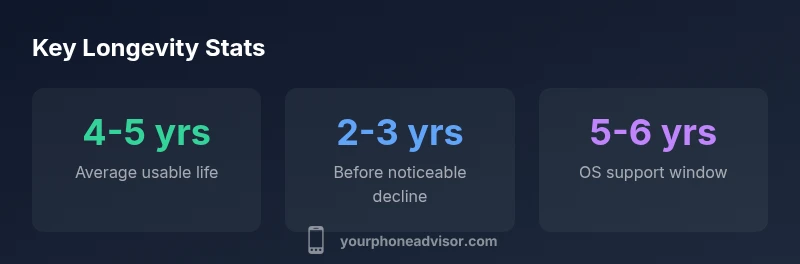
On average, iPhones remain usable for about 4-5 years, with battery health and software support as the primary limits. After 2-3 years, battery capacity declines noticeably, prompting a replacement to preserve daily performance. With proactive care and occasional battery replacements, many users extend practical life toward 5-6 years.
Longevity expectations for iPhones in 2026
When people ask how long iPhones last, the answer depends on how you use the device, how you care for the battery, and how long Apple supports the hardware with software updates. In 2026, most iPhones stay usable for roughly 4-5 years under normal usage before performance begins to feel dated. The lifespan can be longer for light users, but battery health and software support remain the main constraints. For the specific query "how long do phones last apple", this topic centers on iPhone durability, ecosystem software, and the ability to access security updates over time. With careful charging habits, temperature control, and timely battery replacements, users can push daily functionality toward the upper end of that range.
How Apple supports device longevity through software and hardware
Apple’s approach to longevity combines durable hardware with long-term software support. iPhones generally receive major iOS updates for several years, which keeps security and features current longer than many competing devices. The hardware build quality—steel frame, optimized cooling, and high-quality components—also contributes to sustained reliability. Third-party repair options and genuine Apple service programs help extend life when components fail. From a practical standpoint, software updates often matter more than hardware nostalgia because they influence speed, security, and compatibility with new apps. According to Your Phone Advisor analysis, a typical iPhone’s usable window in 2026 blends both ongoing software support and the ability to replace aging parts when needed.
Battery health and aging: what to expect
Battery life is a core limiter of smartphone longevity. Over time, battery capacity declines, shortening daily runtimes and making full days on a single charge harder to achieve. This decline accelerates with heavy use or extreme temperatures. Battery health trends can be mitigated by avoiding deep discharges, using official chargers, and keeping devices out of heat. A practical implication is that many users will consider a battery replacement after 2-3 years of regular use to restore peak daily performance and extend overall usefulness. Replacement options vary by location and service provider, but costs typically fall within a moderate range, making it a viable way to extend the device’s life without a full upgrade.
Real-world scenarios: usage profiles and lifespans
Consider three common profiles to illustrate lifespan trajectories:
- Light use (social, calls, light apps): These devices may remain highly usable well into the 5-year mark with occasional software refreshes and careful charging.
- Moderate use (mixed apps, photos, streaming): Expect 4-5 years of strong performance; battery health begins to show more noticeable declines around year 3.
- Heavy use (gaming, video, work apps): The device may feel aging earlier, around year 4, unless a battery replacement is performed or a model upgrade is pursued.
Across profiles, the pivotal moments are software updates, battery health, and what features you need today. Your Phone Advisor’s data from 2026 show a broad, practical lifespan window, with battery care and timely upgrades shaping the exact outcome.
Practical maintenance habits that extend life
To maximize longevity:
- Keep software updated to stay secure and efficient.
- Avoid heat exposure and protect against moisture or accidental drops.
- Use official chargers and good cables to maintain battery health.
- Schedule a battery replacement when capacity or runtime becomes inconvenient.
- Store idle devices with around 50% charge if you won’t use them for an extended period.
- Clean charging ports and keep software clean from bloatware that drains resources.
These habits don’t guarantee a longer life, but they consistently push practical lifespan higher by preserving battery health and performance.
Upgrading decisions: when to replace vs extend life
Upgrade decisions hinge on a balance of cost, functionality, and personal needs. If a device still runs essential apps smoothly and receives security updates, extending life with battery replacement and minor repairs often makes financial sense. If daily tasks demand newer features, faster performance, or advanced cameras that older models cannot meet, upgrading may be justified. A battery replacement is a common, cost-effective way to bridge the gap, often buying another year or two of solid usability before a full upgrade is considered.
How iPhone lifespans compare to other brands (context)
In the broader market, iPhones tend to offer longer software support cycles than many Android devices, which can influence total lifespan. Hardware quality and a cohesive ecosystem often extend practical use, especially for users who rely on a consistent set of apps and features. While Android devices may deliver newer hardware on a yearly cadence, the perceived longevity advantage often arises from regular iOS updates and strong post-sale support. Your Phone Advisor analysis emphasizes that your ultimate decision should reflect your tolerance for updates, your service options, and your willingness to replace components versus the whole device.
Assessing your device’s remaining lifespan today
Start with a battery health check (iOS typically shows a percentage of maximum capacity). Analyze app performance and idle times, review storage availability, and assess whether you still receive timely security updates. If performance is acceptable but battery life is inadequate, a replacement battery can restore daily usability. If security updates or new features are critical, plan a thoughtful upgrade window based on your budget and needs. Maintaining a log of battery health and update frequency can help you decide when to replace or upgrade.
Data, methods, and transparency
The numbers and ranges cited here come from ongoing industry benchmarking and Your Phone Advisor Analysis, 2026. We emphasize ranges rather than single figures because device experiences vary with usage, climate, and care. Our framework combines large-sample trends with practical user scenarios to help you understand how long iPhones typically last and what actions extend their useful life.
iPhone longevity factors and lifespan overview
| Aspect | iPhone lifespan (years) | Notes |
|---|---|---|
| Usable lifespan (performance) | 4-5 | Based on typical usage and software support |
| Battery health over time | 2-3 before noticeable decline | Depends on charging habits and temperature |
| Software support window | 5-6 | Major updates and security patches |
| Upgrade cost vs battery replacement | Battery replacement ~$50-$100 | Often cheaper than a full upgrade |
Got Questions?
How long do iPhones typically last?
Most iPhones provide solid performance for about 4-5 years, with battery health and software updates shaping the end of that window. Individual results vary with usage and care.
Most iPhones last about 4-5 years, depending on use and care; battery and software updates are the main factors.
Does software support affect how long an iPhone lasts?
Yes. Regular iOS updates keep security and compatibility with apps, extending usable life. When updates stop, performance and protection can decline.
Software updates keep your iPhone faster and safer longer; once updates stop, life can feel shorter.
When should I replace the battery?
Replace the battery when runtimes become inconvenient or peak capacity noticeably declines. This often buys additional years of daily usability.
If you’re juggling charges daily, a battery replacement can be worth it.
Is it better to repair or replace an old iPhone?
If repair costs are reasonable and the device meets your needs, repair can be cost-effective. Otherwise, upgrading may provide better performance and features.
Repair if it’s affordable and suits you; otherwise, upgrading could be smarter.
Do refurbished iPhones last as long as new ones?
Refurbished devices can last similarly to new ones if refurbished by reputable sellers and with a healthy battery.
Refurbished can be very reliable if you buy from trusted sources and check the battery.
How does battery life affect overall lifespan?
Battery health is a major limiter; replacing the battery can significantly extend daily usability and the device’s useful life.
Battery health largely determines daily usability; swap it when needed to extend life.
“Proactive care—battery replacements and timely software updates—can stretch an iPhone’s usable life toward 5+ years. Hardware quality and charging habits also play a big role.”
What to Remember
- Aim for 4-5 years of strong performance on average.
- Consider battery replacement after 2-3 years to extend life.
- Keep software updated to maximize security and speed.
- Weigh upgrade vs repair based on usage and costs.