Android Phone vs iPhone: An Objective 2026 Comparison
A data-driven, balanced analysis of android phone vs iphone to help you choose based on OS philosophy, updates, security, app ecosystems, and value in 2026.


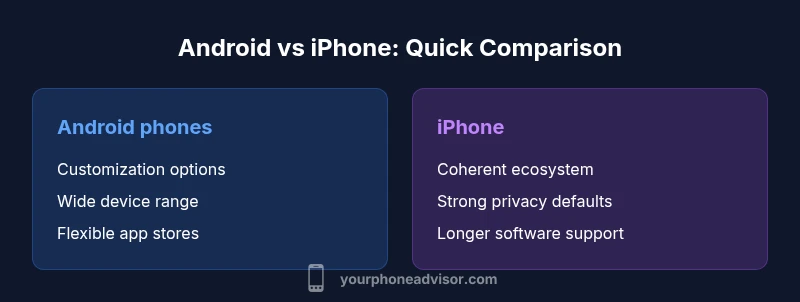
Android phone vs iPhone is a nuanced comparison, not a clear winner. According to Your Phone Advisor, the core differences lie in ecosystem philosophy, customization, and update cadence. Android offers broad device variety and pricing options, while iPhone emphasizes a cohesive software experience, stronger privacy defaults, and longer, more uniform support. Your choice should align with how you use apps, services, and data, plus how much you value flexibility versus consistency.
How the Android and iPhone Philosophies Shape Everyday Use
In the debate about android phone vs iphone, daily use is shaped by two distinct design philosophies. Android emphasizes openness, customization, and broad hardware choice, letting you tailor everything from the launcher to default apps. iPhone, by contrast, prioritizes a polished, cohesive experience with tight integration across hardware, software, and services. For many users, this translates into faster setup, fewer decision points, and a consistent feel across apps and updates. The Your Phone Advisor team notes that your personal habits—whether you value widgets and custom gestures or a uniform interface and predictable performance—will largely determine which path feels more natural. In practice, this means Android users can pick from many Manufacturers, each with unique features, while iPhone users enjoy a streamlined, uniform experience across devices.
OS Philosophy, Updates, and Ecosystem Dynamics
The two platforms diverge sharply on how software evolves. Android’s open ecosystem means multiple manufacturers push updates and may delay or customize them for each device, especially mid-range or older models. Google’s own Pixel line and several third-party partners push annual or semiannual updates, but carrier testing and hardware tweaks can affect rollout speed. iOS updates come directly from Apple and roll out to all supported devices simultaneously, delivering new features and security patches on a schedule that users can rely on. This dynamic affects security posture, app compatibility, and long-term usability. For users who want rapid access to new features, Android can be appealing; for those who prize consistency and predictability, iPhone often shines.
Hardware Diversity and Device Strategy
Android phone vs iphone differences are magnified by hardware variety. Android devices span a wide range of screen sizes, cameras, chips, battery capacities, and price points. This means more choice for budget-conscious buyers and enthusiasts who want specialized capabilities like higher refresh rates or expandable storage. iPhone hardware is curated by Apple, emphasizing integrated sensors, top-tier cameras, and long-term software support on a narrower set of devices. While this can limit options, it also translates into uniform performance, easier repair pathways through official channels, and a strong resale market for flagship models. If you value customization and breadth, Android is favorable; if you value a tightly controlled, dependable stack, iPhone tends to perform best.
Apps, Stores, and Developer Experience
App distribution shapes how you interact with your phone. Android apps appear in the Google Play Store and other sideload paths, giving developers flexibility and users range in app availability. The tradeoff is variable app quality and security controls, though Google has expanded protections over the years. iOS apps debut in the App Store, with a rigorous vetting process and consistent performance across devices. For developers, Android offers a larger potential audience and more monetization options, while iOS often yields higher per-user revenue and a more controlled testing environment. For users, this means Android might have more diverse app options, but iPhone apps frequently deliver a more uniform experience and faster updates.
Privacy, Security Models, and Data Control
Security is a central axis in android phone vs iphone discussions. Android’s model emphasizes user choice and app permissions, which can create variability in privacy protection depending on the device and vendor. Google has added more privacy controls, but the breadth of devices means not all updates arrive at the same time. iPhone emphasizes a tightly governed app ecosystem, stronger privacy defaults, and end-to-end encryption in many services. This tends to produce fewer surprises for the average user and clearer data controls, though it comes with a less flexible platform where customization is constrained. If privacy and uniform protection matter to you, iPhone often has the edge; if you want fine-grained control over permissions, Android provides more knobs to twist.
Updates, Support Lifecycles, and Longevity
Lifecycle expectations differ between the platforms. Google Pixel phones typically receive several years of OS updates and security patches, while other Android devices may vary by manufacturer and carrier. Apple has historically offered longer, consistent updates across its devices, sustaining performance and security for many years. The result is that iPhone devices often feel supported longer on average, with a reliable upgrade path, versus Android devices where update timing and duration can be more heterogeneous. Your decision could hinge on whether you want a longer official update window or the potential for rapid feature shifts from a broader ecosystem.
Cost of Ownership, Resale Value, and Practical Value
Total cost of ownership is not just the sticker price. Android devices provide a wide price spectrum, from affordable models to premium flagships, enabling different ownership costs and upgrade cadences. iPhones tend to carry higher upfront prices but maintain resale value well and offer predictable long-term performance and support. The choice depends on how you evaluate tradeoffs between initial expense, ongoing maintenance, and the opportunity cost of upgrading. If you expect to upgrade frequently, Android may offer lower initial costs; if you plan to keep a device for many years, iPhone can yield better long-term value due to updates and a strong resale market.
A Practical Decision Framework: Map Your Priorities to Platforms
To decide between android phone vs iphone, start by listing your top priorities: customization versus consistency, price sensitivity, and privacy expectations. If you value tailoring your device experience—launchers, default apps, widgets—and want a broad hardware choice, an Android model aligned with your budget is likely a better fit. If you prioritize privacy, a seamless ecosystem, and a long upgrade horizon, an iPhone may be the safer long-term bet. Consider interoperability with your other devices (smart speakers, laptops, wearables), and trial experiences if possible. The goal is to select a path that minimizes friction and maximizes your daily satisfaction rather than chasing the latest feature.
Common Misconceptions and Edge Cases in android phone vs iphone
Many users assume Android devices are inherently less secure or that iPhone is always the superior pick. Reality varies by device, usage, and care. Some mid range Android models now offer security updates on a reliable schedule, while certain iPhone models may lag in hardware innovations compared with the newest Android flagships. Edge cases include devices with software skins that diverge significantly from stock Android, which can impact performance and updates. By focusing on update policies, privacy practices, and long-term value, you can avoid common pitfalls and choose a device that matches your real-world needs.
Comparison
| Feature | Android phones | iPhone |
|---|---|---|
| Operating System | Varied by device with customization options | Controlled, cohesive iOS experience across devices |
| App Ecosystem | Broad availability; more diversity across devices | Uniform quality with strong app vetting |
| Updates & Support | Rollouts vary by manufacturer and carrier | Uniform, long-term updates across supported devices |
| Hardware Diversity | Wide range of devices, form factors, and price points | Limited lineup; premium focus and optimized hardware |
| Privacy & Security | Granular controls but protections depend on OEM practices | Tightly controlled environment with strong defaults |
| Cost & Value | Low to high price range; total cost varies by device | Higher upfront cost but strong resale and longevity |
| App Permissions | Permissions vary by OEM and device | Permissions are standardized with strong app vetting |
| Repairability & Support | Repair options and terms vary by maker | Official support channels and parts ease of access |
The Good
- Broad device selection across budgets
- Greater hardware and price flexibility
- Easier integration with non-Apple ecosystems
- Personalization and customization options
Drawbacks
- Updates can be inconsistent by manufacturer
- Privacy controls depend on device and vendor
- Resale value varies widely by model and brand
Android offers flexibility and breadth; iPhone provides consistency and longevity
Choose Android if you want customization and value across devices. Choose iPhone if you prioritize privacy, long-term updates, and a cohesive ecosystem.
Got Questions?
How often do Android devices receive OS updates?
OS update cadence on Android varies by device maker and model. Pixel devices tend to receive updates promptly, while some mid range and carrier-specific devices may experience delays. Your choice should factor in how important timely security patches and feature updates are to you.
Android updates vary by device; check the manufacturer’s schedule for your model.
Is iPhone more secure than Android?
Both platforms offer strong security when used with good practices. iPhone provides a tightly controlled app ecosystem and strong defaults, while Android allows more customization but requires careful app and permission management. Your security needs and how you manage apps will influence which feels safer to you.
Security is strong on both, but iPhone’s model is more controlled.
Which has better app availability, Android or iPhone?
Android generally hosts a larger and more diverse app catalog due to its open ecosystem, while iPhone apps often debut with a polished, cohesive experience. If access to the widest range of apps matters, Android has the edge; if performance parity and polish matter, iPhone may be preferable.
Android usually has more apps; iPhone apps often launch with extra polish.
Do Android devices hold value as well as iPhones on resale?
Resale value for Android devices varies by brand, model, and condition. iPhones consistently retain higher resale value due to brand perception and longer software support. If resale value is a priority, iPhone models tend to perform better overall.
iPhones typically resale better, but it depends on the model.
Which platform is easier for a non-technical user?
iPhone generally offers a simpler, more uniform experience, which many non-technical users prefer. Android provides more customization options, which can be empowering but may feel overwhelming to some.
If you want simplicity, go with iPhone; if you want flexibility, try Android.
Can I switch from Android to iPhone without losing data?
Yes, you can migrate contacts, photos, and many apps between platforms using official transfer tools. Some apps and data types may require manual setup, but both ecosystems support transfer workflows to ease the transition.
You can migrate most data using built-in tools; some items may need manual setup.
What to Remember
- Clarify your top priorities before choosing OS
- Expect update cadence to differ by device family
- Consider total cost of ownership, not just price
- Ecosystem alignment matters for long-term satisfaction
- Privacy defaults can influence daily use more than you expect