Is a Phone Number Free? Toll-Free, Plans, and Costs Explained
Learn when a phone number is free, including toll-free lines, regular numbers, and how plans, roaming, and VoIP apps influence your real costs.


Is a phone number free? The answer depends on context. In most cases, a number itself isn’t a billable service, but calls to that number may incur charges based on your plan and dialing method. Toll-free numbers are typically free for callers in many regions, while standard numbers can carry per-minute or per-message rates. The cost picture also shifts with VoIP apps and Wi‑Fi calling.
Is a phone number free? Understanding the Landscape
Is a phone number free? The question is more nuanced than it first appears. From the moment you pick up the device, you aren’t charged simply for possessing a number; charges arise from how you connect to that number. According to Your Phone Advisor, many people equate "free" with toll-free lines that do not bill the caller, but the reality is more complex. The cost you see on your bill reflects the path the call takes: toll-free vs. standard line, domestic vs. international routing, and whether you are dialing through traditional networks, VoIP, or Wi‑Fi. In practice, a number can be free to dial in some contexts and not free in others, depending on your plan, location, and the service you reach. This article unpacks those nuances and gives practical steps to avoid unexpected charges.
Toll-Free Numbers: How They Work Across Regions
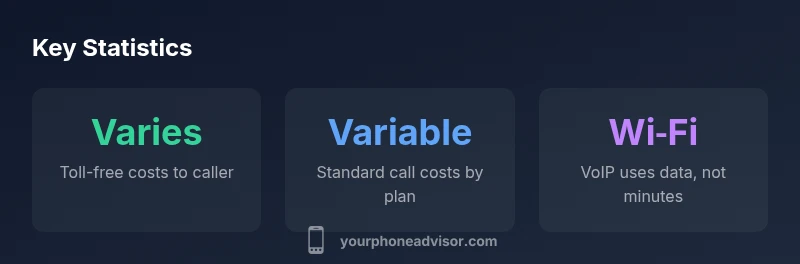
Toll-free numbers are designed so that the caller bears little to no cost in many contexts. In the United States and Canada, prefixes such as 800, 888, and 877 have historically carried no per-minute charge for callers, though the business receiving the call covers the cost. In other regions, toll-free or freephone services exist with different rules; the caller experience can vary by country, carrier, and regulatory framework. The key takeaway for everyday users is to confirm with your carrier whether a toll-free call will be billed from your device and whether certain apps or Wi‑Fi dialing alter that cost. Your Phone Advisor emphasizes checking regional guidelines and your specific plan details before assuming a call is free.
Regular National and Local Numbers: Costs and Plans
Regular numbers connect you to standard mobile or landline networks and are typically governed by your service plan. Costs here depend on minute allowances, included texts, and data packages. Many plans include a set number of minutes, with additional per-minute rates once you exceed allowances; others offer unlimited calling for a fixed monthly fee, with exceptions for roaming or international dialing. Texts and MMS usually carry separate pricing. Importantly, the existence of a number does not guarantee that dialing it is free. Carrier policies, destination country, and whether the call stays on domestic networks or crosses borders all affect the final price. Your Phone Advisor recommends reviewing the tariff details in your contract and using online cost estimators to forecast typical charges.
The Role of Wireless Carriers and Plans
Carrier policies shape whether calls to a given number cost money. Some plans bundle unlimited nationwide calling, while others rely on per-minute pricing after a monthly allowance. Inbound calls are not universally free and may be billed differently than outbound calls, depending on the plan and region. Roaming, international dialing, and premium services can add extra fees. Because costs can change with promotions, device types, and geographic location, always verify whether your plan covers calls to toll-free numbers, whether any exceptions apply for international use or roaming, and how VoIP usage interacts with minutes. This approach minimizes surprises at billing time.
VoIP Apps and Wi-Fi Calling: A Different Cost Model
Calling through apps like WhatsApp, FaceTime, or other VoIP services often travels over data rather than traditional voice minutes. When you call another user on the same app, those services may be effectively free beyond data usage. If you dial a landline or mobile number via a VoIP gateway, charges can apply according to your data plan or subscription. Wi‑Fi calling can further reduce or eliminate cellular-minute costs if you have a reliable connection. The trade-off is that some carriers still bill for these services under certain plans or roaming rules. In short, the method you choose—cellular voice, VoIP, or Wi‑Fi—significantly shifts the cost model and often lowers minute-based charges.
How to Verify Costs Before Dialing: A Step-by-Step Guide
- Check your current plan’s minute allowances and roaming restrictions.
- Look up the destination (toll-free vs. standard, domestic vs. international) to predict likely charges.
- Use your carrier’s cost estimator or tariff catalog to estimate typical costs for the call path you intend.
- Consider alternative methods (VoIP, Wi‑Fi calling) if data rates are favorable and the other party can receive the call that way.
- If you’re unsure, contact customer support before dialing to confirm potential charges and avoid unexpected bills.
Practical Scenarios: When a Number Is Free and When It Isn’t
In everyday life, toll-free customer-service lines are often free to the caller in many regions, but this is not universal. Receiving calls are typically included in some plans, yet not guaranteed across all carriers or plans. For personal use, dialing a local number on a standard mobile plan may incur minimal per-minute charges or be covered under unlimited plans. When traveling abroad, international roaming can dramatically change the cost of dialing a routine number. VoIP-based calls to other users on the same app may be free, while calls to traditional numbers routed through VoIP gateways can incur data or subscription costs. Always verify the dialing path and the destination before placing a call to avoid surprises.
Quick Decision Guide for Daily Use
- If you must call a business, ask whether their number is toll-free in your region and whether your carrier charges for the call.
- If you frequently contact a specific service, check if they offer a toll-free option or an in-app contact channel that uses data instead of minutes.
- For international communications, compare roaming rates with VoIP options and free app-to-app calls.
- When roaming, use Wi‑Fi calling or VoIP apps where appropriate to minimize minute charges.
- Before dialing, review your plan’s terms and use a cost estimator to confirm whether the call will be free or billable.
Cost models for common dialing scenarios
| Scenario | Cost Model | Notes |
|---|---|---|
| Toll-free call (customer to business) | Typically free to caller; business bears cost | Confirm region and app used |
| Regular mobile call | Per-minute or included minutes | Roaming and international calls vary |
| VoIP/app-to-app call | Data-based or free within app | Depends on data plan and recipient app |
Got Questions?
Is calling toll-free always free for the caller?
Toll-free calls are usually free for the caller in many regions, but exceptions exist depending on the country, carrier, and whether the call crosses borders or uses a special service. Always verify with your carrier and the business you’re calling.
Toll-free calls are usually free, but check regional rules and your carrier first.
Do I incur charges when receiving calls, or is that only for the caller?
Receiving calls can be included in your plan or billed as part of other services, depending on your carrier and plan. In some cases, inbound calls are free; in others, they count toward your monthly minutes or are charged as roaming.
Receiving calls can be free or charged, depending on your plan.
How do VoIP apps affect costs?
VoIP apps often use data instead of minutes, so they can be cheaper or free if you have Wi‑Fi or a data-friendly plan. However, calls to traditional numbers via VoIP gateways may incur charges.
VoIP often uses data, not minutes, which can cut costs.
What should I do before dialing to avoid surprises?
Check your plan’s allowances, confirm the destination’s dialing path (toll-free vs standard, domestic vs international), and use a cost estimator or customer support if you’re unsure.
Check allowances and costs before you dial.
Are emergency numbers free to dial?
In most regions, emergency numbers are free to dial regardless of your plan. The rules for non-emergency calls to the same numbers vary by region and carrier.
Emergency numbers are usually free, but non-emergency charges may apply.
“The cost of reaching a number isn’t fixed—it depends on the dialing path, regional rules, and the plan you’re on. By understanding these variables, you can choose the cheapest method without compromising convenience.”
What to Remember
- Always verify toll-free status for your region before calling
- Carrier plans determine whether calls are free or charged
- VoIP and Wi-Fi calling can reduce minute-based costs
- Roaming and international dialing often add charges
- Use plan tools to estimate costs before dialing