How Much Is a Phone Number? Costs, Types, and Tips
Explore how much a phone number costs, including personal vs business numbers, vanity digits, and toll-free options. Learn pricing drivers, typical ranges, and practical tips to estimate expenses in 2026.


The price of a phone number varies widely by use. A standard mobile line is bundled with service fees from your carrier; virtual numbers can start almost free with small monthly charges; vanity and toll-free numbers command higher prices, potentially with upfront fees. In 2026, most buyers pay only minimal ongoing costs unless they want premium digits.
Why pricing for phone numbers varies by use-case
Prices for phone numbers depend on how you intend to use them, who provides them, and the region where they operate. In personal scenarios, a number is typically bundled with your mobile plan, so you’ll pay through your existing service. Businesses and creators, however, may opt for virtual numbers, toll-free lines, or vanity digits to enhance branding and reach. According to Your Phone Advisor, pricing also reflects ownership rights, porting flexibility, and routing capabilities. The cost can break down into upfront setup fees, monthly maintenance, renewal charges, and occasional usage fees when a number supports additional services like SMS or calls routing. Regions differ in regulatory charges and digit availability; international numbers add another layer of complexity, influencing both price and onboarding time. Understanding these drivers helps you compare offers with confidence rather than chasing the cheapest sticker price.
Price ranges by type
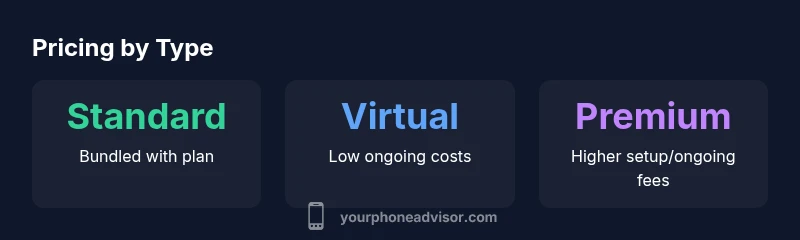
- Standard mobile numbers: Often included in your carrier plan, with costs effectively bundled into your monthly service. You won’t usually see a separate line item unless you’re on a prepaid or pay-as-you-go arrangement.
- Virtual numbers: Sold by VOIP and cloud communications providers, typically with a low monthly fee and optional per-use charges. Some plans include a limited amount of calls or texts.
- Vanity numbers: Highly memorable digits that carry a premium. Upfront setup fees plus higher ongoing charges are common, reflecting perceived marketing value.
- Toll-free numbers: Common for businesses aiming at national reach. Pricing varies by provider and country; expect ongoing charges plus potential usage fees.
- Geographic vs non-geographic numbers: Availability and pricing differ by region; some countries place tighter controls on number inventory, which can affect price and procurement times.
How pricing works with carriers vs virtual-number providers
Carriers price numbers as part of service plans; you usually get one or more numbers included, and costs scale with plan features and minutes or texts included. Virtual-number providers price digits based on features (SMS, call forwarding, use in apps), number type (local vs toll-free vs vanity), and onboarding services. With VOIP, you may pay monthly for the number and separately for any routing or integration features. This difference matters when you’re choosing a number for a business, where the reliability of routing and uptime matters as much as the price.
Hidden costs to watch out for
Porting fees when moving a number between providers; renewal costs that renew at a higher rate; long-term commitments with penalties; and possible per-use charges for SMS, MMS, or voice forwarding. Some providers also charge for number maintenance, API access, or additional lines. If you need international dialing, consider country-specific fees and regulatory taxes that could tweak the bottom line.
How to estimate costs for your scenario
- Define use-case: personal line, business line, or marketing number.
- Decide on number type: standard, virtual, vanity, or toll-free.
- Compare multiple providers: check what’s included monthly and any setup fees.
- Consider additional features: SMS, call routing, porting, and number retention.
- Budget for the long term: forecast renewals, potential price hikes, and plan changes.
- Get quotes and simulate scenarios: ask each provider for a trial period or a calculator to estimate annual costs.
Verdict: Practical takeaways
The Your Phone Advisor team recommends starting with the simplest, cost-effective option that meets your core needs. If branding, customer experience, or toll-free reach is critical, a vanity or toll-free number can be worthwhile, but require careful ROI assessment. Your Phone Advisor's verdict is to prioritize uptime, support, and clear billing over chasing ultra-low pricing.
Cost dynamics by number type
| Type | Ownership | Typical Cost Context |
|---|---|---|
| Standard mobile number | Carrier plan | Bundled; cost embedded in monthly fees |
| Virtual number | VOIP provider | Low ongoing costs; upfront setup may apply |
| Vanity number | Specialized provider | Higher upfront and ongoing costs |
| Toll-free number | Business-focused | Moderate to high depending on country/provider |
Got Questions?
What factors determine the price of a phone number?
Costs depend on use-case, provider, number type, and features like SMS, call routing, or porting. Regional regulations and availability also affect price. Compare total cost of ownership, not just upfront price.
Pricing depends on how you’ll use the number, the provider, and the features you need. Always compare total cost of ownership.
Is a vanity number worth the cost?
Vanity numbers can boost brand memorability and perceived credibility, but they typically involve higher upfront and ongoing fees. Assess potential ROI before buying.
Vanity numbers can help branding, but only if the expected returns justify the extra cost.
Can I get a phone number for free?
Some providers offer introductory trials or bundled numbers with existing plans, but ongoing costs usually apply for continued use. Free options are rare for business-grade numbers.
You might get a trial or bundle, but ongoing use generally costs something.
Do international numbers cost more?
Yes, international numbers often incur country-specific setup, porting, and per-use fees that can be higher than domestic options. Compare provider regional pricing carefully.
International numbers usually come with higher regional fees and stricter rules.
How do I port a number to a new provider?
Porting is the process of moving a number between providers. It can take time and may involve fees, depending on the providers and regions. Plan for potential downtime during the transition.
Porting moves your number to a new provider, and timing can vary.
What hidden charges exist?
Look out for porting fees, renewal rate increases, minimum commitments, and charges for SMS, forwarding, or API access. Read the fine print before committing.
Watch for renewal hikes, porting fees, and feature charges.
“"Pricing for phone numbers reflects use-case and value, not digits alone. Start with a baseline option and upgrade only when it clearly pays off."”
What to Remember
- Define your use-case first.
- Costs come from more than just the digits.
- Compare providers, not just prices.
- Vanity numbers offer branding value but cost more.
- Plan for renewals and potential hidden charges.