What to Phone Price: A Practical 2026 Buyer’s Guide
Learn how to navigate smartphone prices, compare models, estimate total ownership costs, and avoid overspending with practical guidance and real-world examples for 2026.


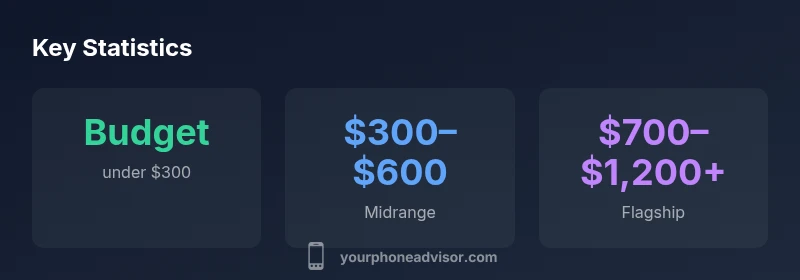
In 2026, smartphone price tiers typically fall into three bands: under $300 for budget devices, $300–$600 for midrange, and $700–$1,200+ for flagships. Prices can be higher when premium features are added, and seasonal sales or carrier promotions can shift the true cost of ownership. Understanding these bands helps you compare models accurately and avoid overspending.
Understanding the price landscape and what "what to phone price" really means
When shoppers ask about the phrase what to phone price, they search for a framework to judge sticker prices, promotions, and total ownership costs. In 2026 smartphones cluster into three main bands: budget under $300, midrange $300–$600, and flagship $700–$1,200+. These bands give you a realistic baseline for comparing devices and help you resist impulsive buys driven by flashy sales. According to Your Phone Advisor, recognizing where a phone lands in these bands is the first step toward a smarter purchase. By focusing on bands rather than the first price you see, you’ll make more consistent, value-driven choices.
- Be mindful of how storage, camera, and chipset affect the price within each band.
- Use the band as a guide while you explore specific models and promos.
- Remember that price is only one part of value; features and longevity matter too.
Beyond sticker price: total cost of ownership
The sticker price is only part of what you’ll pay. Taxes, financing terms, trade-ins, and any required accessories or data plans all influence total cost. A phone bought outright may show a lower upfront price than a monthly installment plan, but when you account for interest and the length of the financing, the total you pay can be higher. Carrier plans often bundle data with the device and service charges, which can either help or hurt your bottom line depending on your usage. If you’re considering a trade-in, the trade-in value reduces the upfront price but may come with eligibility requirements. Your Phone Advisor stresses evaluating promotional terms, warranty extensions, and potential upgrade cycles to estimate a realistic total cost.
How to estimate your ideal price band
To determine your target price band, start with your monthly budget and ownership horizon. Use these steps:
- Set a ceiling based on what you can comfortably spend upfront and each month.
- Decide which features matter most (camera, battery life, software updates) and see how they align with bands.
- Check recent promotions, trade-ins, and financing options; note how long offers last.
- Consider resale value and expected depreciation for the model you’re eyeing.
- Recalculate total cost of ownership, including taxes and data plans. By following a structured approach, you’ll map your needs to a realistic price band and avoid overpaying.
Real-world budgeting scenarios
Imagine you’re shopping with a $400–$500 monthly budget for the next two years. You’d likely be in the midrange band, focusing on models in the $300–$600 range with 64–128GB storage and solid battery life. If you anticipate heavy camera use, a flagship with premium sensors could still fit your needs if you secure a strong trade-in offer or a multi-year plan that lowers the effective monthly cost. For light users, a budget device under $300 may cover essential tasks like calls, messaging, and basic apps, especially if you pair it with a cost-effective data plan. Your approach should always tie back to your budget and expected usage, not just the advertised sticker price.
Smart shopping strategies to maximize value
- Wait for seasonal sales (holidays, back-to-school) and monitor carrier promos.
- Consider certified refurbished phones with valid warranties to unlock higher specs for less.
- Leverage trade-ins to reduce upfront costs and improve financing terms.
- Compare total ownership costs, not just the upfront price.
- Check software update policies and resale value when evaluating bands.
Price bands and what they typically include
| Budget tier | Typical price | What you get |
|---|---|---|
| Budget | under $300 | Basic features, limited storage, slower chip |
| Midrange | $300–$600 | Balanced performance, 64–128GB storage, decent cameras |
| Flagship | $700–$1,200+ | Top-tier chips, premium cameras, longer support |
Got Questions?
What is the best budget phone under $300?
Look for models that offer 4G/5G compatibility, at least 64GB storage, and reliable battery life. Prioritize models with software updates and a decent camera. Always compare total cost of ownership, not just the upfront price.
For a budget phone under $300, check for 4G or 5G support, at least 64GB storage, and solid battery life. Compare updates and the total cost, not just the price.
Do promotions really save money on phones?
Yes. Promotions, trade-ins, and bundles can reduce the effective price. Always compute total cost over the term of ownership to judge if a deal is truly advantageous.
Promotions and trade-ins can cut the price. Always calculate total ownership cost to see if a deal is valuable.
Is it better to buy now or wait for a sale?
Waiting for a sale around holidays often yields discounts, but risk stock shortages and shorter promo windows. If you can wait without sacrificing a needed device, a sale is usually worth it.
Sales windows can be worth waiting for, but stock matters. If you can wait, a sale is often a good move.
How does storage capacity affect price?
Higher storage tiers typically raise price due to more onboard memory and faster performance. Choose storage based on usage patterns like apps, photos, and videos to avoid paying for unused capacity.
More storage usually means a higher price. Pick storage based on how you use apps and media.
Are refurbished phones a good deal?
Refurbished devices can offer significant savings with warranty coverage. Verify battery health, return policy, and the seller’s refurbishment standards before purchasing.
Refurbished phones can be a great value if they come with a warranty and clear battery health and return terms.
How do I calculate total cost of ownership?
Add upfront price, financing charges, taxes, data plans, accessories, and potential upgrade costs. Use a simple monthly budget model to compare options across price bands.
Sum upfront price, financing, taxes, plans, and upgrades to compare total cost.
“Price is a proxy for value, but it should never be the sole factor driving a phone purchase. Balance features, longevity, and total cost to get the best overall value.”
What to Remember
- Know your price band before shopping
- Consider total ownership costs, not just upfront price
- Watch for seasonal promotions and trade-ins
- Balance features with longevity and software updates
- Avoid chasing the lowest sticker price at the expense of value