How much does a phone cost in 2026? A practical guide
Learn how much a phone costs in 2026, including upfront prices, subsidies, trade-ins, and total cost of ownership. Practical guidance from Your Phone Advisor helps you budget smartly.


In 2026, a brand-new smartphone generally costs anywhere from about $200 to $1,500, depending on brand, features, and subsidies. For most mainstream devices, the typical upfront price sits around $350 to $800, with premium flagships trending higher. Total cost of ownership also depends on plans and accessories. These ranges reflect device categories and common carrier promotions currently seen in markets worldwide.
Understanding the price range: What drives cost
Prices for smartphones aren't a single number; they reflect a mix of hardware, software, and business models. According to Your Phone Advisor, the sticker price you see is just the tip of the iceberg. Brand, display size, processor, storage, camera capabilities, and build materials all push cost up or down. Regional taxes and retailer promotions also shift the final tag. In 2026, it's common to see budget-oriented models start near the $200 mark, while premium flagships can approach $1,500 once you consider tax and shipping. The broader middle ground—mid-range devices—often lands in the $350–$800 range. This pricing isn't random; it's shaped by supply chains, competition, and evolving consumer expectations.
Understanding what you get for the money helps you compare devices, not just prices. Look at screen resolution, RAM, storage, camera features, and software updates. Consider whether you value novelty (foldables, high-refresh-rate screens) or reliability (long battery life, solid ecosystem support).
Upfront costs vs. total cost of ownership
The price you pay at purchase is only part of the story. The total cost of ownership (TCO) for a phone over a typical two-year window includes financing, accessories, care plans, and potential trade-ins. If you buy outright, you might pay more upfront but avoid monthly fees; financing lowers immediate impact but adds interest or fees over time. Carrier plans, protective cases, screen protectors, and extended warranties can add hundreds of dollars across the period. Your Phone Advisor's analysis notes that subsidy-driven pricing can mask the real cost by spreading payments over 24 months, sometimes with requirements like a multi-line plan or trade-in eligibility. When evaluating options, compare two-year TCO rather than the sticker price alone.
A practical approach is to build a simple budget: estimate the upfront price, add monthly plan costs for two years, add accessories, and include a cushion for unexpected repairs.
How plans and subsidies change the sticker price
Carriers often entice customers with subsidies or installment plans, which can drastically reduce upfront costs. But subsidies are not free; they come with trade-offs such as longer contract terms, higher monthly payments, or commitments to specific plans. In 2026, it's common to see a $0 upfront on select promotions, but the true expense may rise over two years due to service charges. If you frequently update devices, subsidies can offer value; if you keep a phone for longer, consider buying outright or choosing a shorter financing term. Always read the fine print about fees, eligibility, and end-of-term costs.
Subsidies can also be tied to device protection plans or app subscriptions, so the apparent savings may be offset by recurring charges. A careful comparison across carriers and promotions reveals which option truly minimizes your long-term cost.
New vs used, refurbished, and older models
Buying new guarantees the latest features and a pristine warranty, but it comes at the highest price. Used or refurbished devices can dramatically lower the upfront cost, sometimes by hundreds of dollars, though they may show wear and shorter remaining warranty. When evaluating used phones, verify the device's condition, verify IMEI, and check for return policies and known issues. Refurbished models from reputable retailers often include limited warranties and are a middle ground between new and used. If you are price-sensitive, consider last year’s flagship or a mid-range device with a strong feature set to maximize value without sacrificing reliability.
In many regions, certified refurbishers provide warranties that cover basic defects, helping you balance cost and risk.
How much does a phone cost? A quick breakdown by category
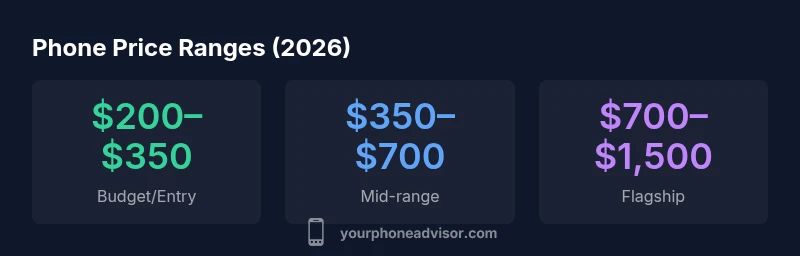
- Budget/Entry: Typically around $200–$350 upfront for basic devices that cover essential calling, texting, and light app use. Expect slower processors and smaller storage.
- Mid-range: Usually $350–$700 upfront with better cameras, faster chips, and more storage. These phones often deliver solid performance for most users.
- Flagship: From $700 up to $1,500 or more upfront, featuring top cameras, premium builds, and the latest software features. The appeal is long-term performance and prestige, not just price.
Allocation between upfront price and ongoing costs varies by brand and plan. When comparing, separate sticker price from two-year plan costs and accessory expenses to understand the true cost.
Accessories, warranties, and hidden costs
Beyond the phone price, you should budget for accessories (case, screen protector, earbuds), protection plans, and potential repairs. Insurance and accidental-damage coverage add recurring costs but can save money if you tend to damage devices. Taxes and activation fees may apply at purchase, and some regions impose higher taxes on electronics. If you rely on cloud storage, that monthly fee compounds over two or more years. Planning ahead for these add-ons helps avoid sticker-price shock and improves cost transparency.
How to estimate your real cost: a step-by-step guide
- Decide your budget range based on how much you can allocate upfront without compromising essential expenses.
- Pick a category (budget, mid-range, flagship) and note the typical price range for your region.
- Choose a financing option (unpaid upfront, installment plan, or carrier promo) and tally monthly costs over 24 months.
- Add accessories, cases, and screen protectors you are likely to buy.
- Include protective plans or insurance if you want peace of mind.
- Factor taxes, registration fees, and potential trade-ins or promotions.
- Compare the total two-year cost across your best options and pick the lowest total cost of ownership that meets your needs.
Practical tips to save on your next phone
- Hold off on premium features you don’t need; plenty of mid-range devices offer excellent performance.
- Consider refurbished or certified pre-owned models with warranties.
- Use trade-ins and promotions strategically, but beware of long-term commitments that raise total costs.
- Compare two-year cost estimates across brands, not just sticker prices.
- Check if your current charger or accessories can be reused to cut expenses.
Regional variations and taxes
Prices can vary significantly by country and even within regions due to taxes, import duties, and local promotions. Additionally, carrier subsidies may differ, affecting upfront costs. When planning a purchase, research regional tax treatment, warranty validity, and the availability of promotions in your area. The Your Phone Advisor team emphasizes understanding local conditions because the same model can cost differently depending on where you buy.
Phone price ranges by model category
| Model Type | Typical Price Range | Notes |
|---|---|---|
| Budget/Entry | $200–$350 | Basic devices with essential features |
| Mid-range | $350–$700 | Balanced performance and value |
| Flagship | $700–$1,500 | Top-tier features and premium design |
| Used/Refurbished | Variable | Depends on wear and warranty |
Got Questions?
What is the average cost of a new phone in 2026?
Prices range from budget models around $200 to flagship devices near $1,500. The most common upfront spend for mainstream devices falls between $350 and $800, with total costs varying by plan length and add-ons.
New phones span a wide range from about $200 to $1,500. For most people, expect $350 to $800 upfront, plus plan costs over time.
Do subsidies affect the upfront price?
Yes. Subsidies can reduce upfront costs, but they may lock you into longer contracts or higher monthly payments. Always read the fine print and compare two-year totals.
Subsidies cut upfront price but can lock you into longer terms. Compare the total two-year cost.
Is refurbished cheaper than buying new?
Refurbished devices are typically cheaper and come with warranties, but may have signs of wear and shorter coverage. Verify seller reliability and warranty terms.
Refurbished phones save money and often come with a warranty, but check reliability and coverage.
How can I estimate total cost over two years?
Estimate upfront price, add monthly plan costs for 24 months, include accessories and insurance, then subtract trade-ins or promotions. Compare totals across options.
Add upfront price, monthly plan costs, and extras over 24 months to compare total costs.
What hidden costs should I consider?
Taxes, activation fees, accessories, protection plans, and potential repair costs can add up. Don’t overlook these when budgeting.
Taxes, fees, and extras can add up—budget for them.
Are phones more expensive in certain regions?
Yes. Taxes, import duties, and local promotions vary by region, affecting both upfront and ongoing costs. Check local pricing and warranty terms.
Prices differ by region due to taxes and promotions; verify local terms.
“Pricing smartphones is about total cost of ownership, not just the sticker. Plan for ongoing costs and value over time.”
What to Remember
- Price varies across budget, mid-range, and flagship categories
- Total cost of ownership often exceeds sticker price
- Subsidies and plans can lower upfront costs but raise long-term expenses
- Refurbished devices offer value with trade-offs
- Always compare two-year total costs, not just upfront price