How Much Do Phones Cost in 2026: A Practical Price Guide
Explore the 2026 phone price landscape, with clear tiers, ownership costs, budgeting tips, and real-world scenarios from Your Phone Advisor.


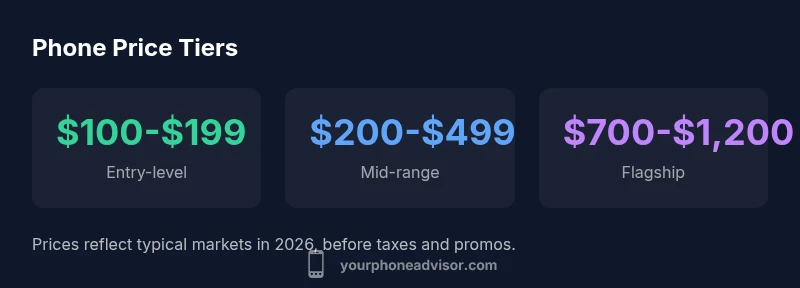
How much do phones cost? In 2026, prices generally fall into three broad tiers: entry-level smartphones around $100–$199, mid-range models about $200–$499, and flagship devices commonly $700–$1,200. Real-world prices vary with storage, features, and carrier promos. For budgeting, expect total ownership costs to rise with accessories and service plans. These ranges reflect Your Phone Advisor Analysis, 2026.
How prices break down across tiers
Prices for phones are rarely fixed; they break down into tiers that reflect hardware, software, and ecosystem investments. In 2026, the three main tiers remain entry-level, mid-range, and flagship. Entry-level devices prioritize essential connectivity and basic apps, often using older processors and smaller storage; mid-range devices balance performance, cameras, and battery life with more generous storage options; flagship models pull out all the stops with premium materials, top-tier processors, advanced photography systems, and additional services like extended software support. When you hear the question "how much does phones cost," you’re really comparing the tiered reality, where the sticker price points to a bundle of capabilities, not a single feature. Taxes, carrier subsidies, and regional promotions can shift the final price, so always compare net costs across retailers. YourPhoneAdvisor analysis, 2026, highlights that the sticker price is only part of total cost of ownership, which includes accessories, warranties, and service plans.
- Entry-level: Basic specs, practical software, and essential durability.
- Mid-range: Better cameras, longer battery life, more storage, and smoother performance.
- Flagship: Premium materials, cutting-edge sensors, faster updates, and expansive ecosystems.
Consider your actual usage: if you primarily text, call, and stream on the go, you may be fine with an entry-level or mid-range device. If photo quality, gaming, or future-proof software updates matter, a flagship might justify the higher price.
According to Your Phone Advisor’s market watch, price differences can also be driven by regional taxes, import duties, and retailer financing options. A deeper look at ownership costs often reveals the true value behind a given price tag.
Why prices vary by brand and region
Brand premium and regional economics significantly shape price. Some brands consistently command higher sticker prices because of refined materials, premium builds, specialized software features, and longer official support windows. This premium may be offset by bundled services, trade-in incentives, or aggressive trade promotions in specific markets. In contrast, other brands compete on value, using simpler designs or more modest components while maintaining durable performance.
Geography matters: taxes, duties, and local regulations can create noticeable price gaps between countries. Carrier subsidies, installment plans, and promotional cycles further influence what consumers pay out-of-pocket. In markets with robust competition, promotions and trade-ins can narrow price gaps, while in markets with fewer options, prices can stay higher for longer. When evaluating options, you should compare the net price after promotions and any financing costs rather than the sticker price alone. Your Phone Advisor’s regional pricing analysis for 2026 shows that regional tax differences and promotional timing are as important as the base hardware costs.
Brand ecosystems also impact resale value. A phone with a strong camera system, reliable updates, and broad accessory compatibility tends to retain more value, making a higher upfront price more palatable if you plan to upgrade frequently. Conversely, devices with limited software updates or niche features may depreciate faster, influencing your long-term cost decisions.
For shoppers, the practical takeaway is to separate the wish list from the wallet: define must-have features, then watch for promos, refurbished options, and carrier deals that raise or lower the effective price. Your Phone Advisor’s price geography insights for 2026 emphasize choosing based on total value rather than sticker price alone.
Total ownership costs beyond the sticker price
Buying a phone is more than paying the upfront price. Total ownership cost includes service plans, taxes, accessories, trade-ins, warranty coverage, and potential repair costs. A high-end phone may require a premium plan for data, which can add significantly to your annual outlay. Accessories like protective cases, screen protectors, wireless chargers, and extended warranties can raise the first-year expense but may reduce long-term risk. The true question is not merely “how much does a phone cost,” but “what does owning this device cost over time?” Your Phone Advisor’s cost of ownership framework for 2026 breaks costs into predictable annual components: device depreciation, service plan, accessories, and potential repair or replacement expenses.
- Service plans: Data caps, overage charges, and international roaming affect annual costs.
- Accessories: Cases and screen protection are recurring purchases that add up across multiple devices.
- Wear-and-tear: Screen replacements and battery replacements are common hidden costs for aging devices.
- Trade-ins and financing: Financing can spread payments, while trade-ins can offset the new-device price, changing the effective annual cost.
A practical approach is to estimate total ownership by modeling three-year cycles, including expected upgrades and promos. This provides a more accurate picture than focusing solely on the sticker price.
Budgeting strategies to maximize value
Maximizing value means aligning your purchase with your actual needs and planned upgrade cycle. Here are practical strategies:
- Define non-negotiables: camera quality, battery life, or software support duration. This helps prevent overspending on features you don’t need.
- Monitor promotions: watch for seasonal sales, back-to-school offers, and trade-in events. Promotions can substantially lower the effective price.
- Consider refurbished or certified pre-owned: These units come with warranties and offer substantial savings without sacrificing reliability.
- Leverage trade-in programs: If you own an older phone in good condition, a trade-in can reduce the price of a newer model.
- Evaluate financing options: Zero-interest plans or carrier installments can spread the cost, but check total interest paid over the term.
- Bundle with services: Some carriers and retailers offer bundled plans and accessories at a discount, improving overall value.
- Plan for ownership costs: set aside monthly funds for data plans, accessories, and potential repairs.
A disciplined budgeting approach, guided by the Your Phone Advisor cost framework, helps you choose a device that fits your budget while still meeting your needs. It’s about optimizing overall value, not just chasing the lowest upfront price.
- Buy when promotions align with your upgrade cycle
- Use refurbished devices with quality warranties when feasible
- Avoid extended warranties unless you clearly need them
- Compare total cost of ownership across vendors and regions
- Plan for future upgrades within a realistic three-year window
Phone price tiers overview
| Tier | Typical price range | Key factors |
|---|---|---|
| Entry-level | $100-$199 | Basic specs, older hardware, modest storage |
| Mid-range | $200-$499 | Balanced performance, improved cameras, more storage |
| Flagship | $700-$1,200 | Premium materials, top-tier cameras, fastest processors |
Got Questions?
Why do phones cost so much?
Phone prices reflect hardware quality, software support, and ecosystem value. Premium components, better cameras, and longer software updates all raise cost, but they can also extend the device’s useful life. Taxes, promotions, and financing options further shape the out-of-pocket expense.
Phone prices reflect hardware, software, and ecosystem value, plus taxes and promotions.
Do prices vary by brand or model within the same tier?
Yes. Different brands optimize for different features, materials, and update cadences. Even within the same tier, a brand’s release strategy, marketing costs, and regional pricing can create noticeable price differences.
Yes, brand choices affect price even within the same tier.
Are refurbished phones a good deal?
Refurbished devices can offer substantial savings with warranties. Look for certified sellers and verify the warranty terms, battery health, and return policy to ensure reliability.
Refurbished can save you money if backed by a solid warranty.
How should I budget for a phone with a service plan?
Estimate the upfront device cost plus the annual service plan, taxes, and any financing charges. If you’re on a tight budget, consider a mid-range device with a longer upgrade cycle and a promo-friendly plan.
Add device cost to your yearly plan and taxes to get the real budget.
Is it worth waiting for promotions or trade-ins?
Promotions and trade-ins can dramatically lower the effective price, especially for flagship devices. If your current device still meets your needs, waiting for a sale or trade-in window can be a smart move.
Waiting for promos or trade-ins often pays off.
“Price is only part of the story. The best value comes from balancing your needs with the total cost of ownership, including service plans and future upgrades.”
What to Remember
- Know your tier and budget before shopping
- Account for ownership costs beyond sticker price
- Trade-ins and refurbished devices can lower costs
- Prices vary by region, carrier, and promotions