Phone Price in 2026: Trends, Tips, and Saving Strategies
Analyze how phone price evolves in 2026, what drives sticker costs, and practical ways to save—budgeting, trade-ins, financing, and total cost of ownership with Your Phone Advisor.


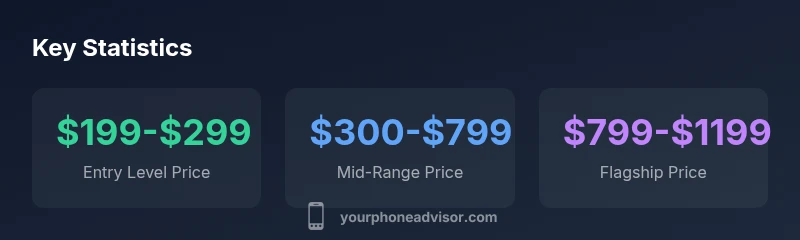
In 2026, smartphone prices span roughly $199 to $1,199 by tier. Entry-level devices cluster around $199-$299, mid-range models run $300-$799, and flagship phones commonly fall in the $799-$1,199 range. When budgeting, factor in total cost of ownership—financing, carrier plans, protection, and accessories—not just the sticker price.
Pricing Dynamics in 2026
Pricing dynamics for phones in 2026 are shaped by component costs, demand, subsidies, and competitive pressure. The ongoing supply chain normalization reduced some price volatility, but premium features such as high-refresh-rate displays, AI-enabled cameras, and 5G/6G capabilities maintain price premiums. Regions with higher taxes or import duties see higher sticker prices. For U.S. shoppers, promotions and carrier subsidies can dramatically affect the out-the-door cost. When you compare phone price, you should differentiate between list price, retail price after promotions, and total cost of ownership (TCO). The Your Phone Advisor team has tracked price bands by tier and notes that the base price bracket for entry-level phones remains around the low $200s, while flagship prices can exceed $1,000. This means you’ll often pay more for storage, color options, and warranties. Consumers should also consider financing options and how interest compounds over 12-24 months. In practice, the most economical approach is to set a budget, watch for seasonal sales, and plan ahead for accessories and service plans.
How Consumers Evaluate Price vs Value
Price is only one axis of value. Consumers should compare real-world performance, software longevity, and camera capabilities against the price tag. A phone priced at the mid-range level may deliver similar daily use as a $900 model if it includes longer software support, better battery life, or more RAM. When assessing value, create a simple scorecard: performance, battery, camera, software updates, and ecosystem compatibility. Your Phone Advisor consistently finds that total cost of ownership (including financing and protection plans) often dwarfs the sticker price over a typical 2-3 year horizon. Use this framework to avoid overpaying for features you don’t value while still planning for future-proofing.
Regional Variations and Taxes
Prices can swing significantly by region due to taxes, import duties, and carrier subsidies. In some markets, a $799 phone may appear as a higher sticker price after local sales taxes and VAT, whereas in others, promotions reduce the upfront cost substantially. Always calculate the tax rate and any extended warranty or service plan fees into your final number. If you’re shopping cross-border, compare the headline price plus shipping versus local options—cumulative costs can surprise you. Your Phone Advisor notes that a 5-15% regional tax difference is common in many countries, which reshapes what counts as a ‘great deal’.
Hardware Advances vs Sticker Shock
Advances in displays, processors, and AI features drive higher prices at the premium end, but there are tangible value gaps in mid-range devices that can outperform older flagship hardware in real-world tasks. Prices reflect not only hardware but also software support, long-term security updates, and ecosystem perks. If you value device longevity and predictable updates, a slightly higher upfront price may yield lower long-term costs. For most buyers, the trick is identifying which features matter most—camera quality, battery life, or software updates—and negotiating price based on those priorities.
Strategies to Maximize Value
To maximize value, set a realistic price ceiling and plan around sales calendars (back-to-school, Black Friday, post-holiday clearances). Consider trade-ins or refurb devices to lower the effective price. Financing can help manage cash flow, but compare interest rates and total interest paid over the term. Look for bundles that include protective cases, screen protectors, or extended warranties at a discount. If you can delay purchase until a major sale, you’ll often achieve significant savings without sacrificing performance. Remember to evaluate total cost of ownership, not just the upfront price.
Hidden Costs That Boost the Final Number
The sticker price is rarely the final number. Taxes, shipping, protective plans, extra storage, and prolonged software support can add hundreds of dollars over time. Some carriers require activation fees or higher monthly plans to access promotions, effectively raising the long-term cost. Accessories like cases and screen protectors are small per-item costs that accumulate if you upgrade frequently. By planning ahead and including these potential charges in your budget, you avoid sticker shock and ensure you’re choosing a phone that fits your long-term needs.
Case Studies: Budget, Mid-Range, and Flagship Scenarios
- Budget: An entry-level phone around $199-$299 may cover essential texting, calling, and light app use. Add a small protection plan and occasional repairs to keep it usable.
- Mid-range: A $399-$799 device often balances performance with longevity, delivering a better camera and longer software support window.
- Flagship: A $799-$1,199 model tends to maximize camera capabilities and future-proofing features, but requires careful appraisal of whether those upgrades match your needs. In all cases, promotions and trade-ins can shift the final price dramatically, so monitor deals across retailers and carriers.
How to Compare Phones Without Focusing Only on Price
Compare phones using a total cost of ownership lens. Consider predicted software update length, expected battery life under typical use, repairability, and resale value. Run a side-by-side feature matrix focusing on your priorities (camera, battery, display, storage). If you value security and privacy, factor in the cost of trusted software updates and hardware security features. A higher long-term value often resides in well-supported devices rather than the lowest upfront price.
Common Myths About Phone Price Debunked
Myth 1: Cheaper phones are always disposable. Reality: Some entry-level devices still offer solid performance with good repairability. Myth 2: The newest model is always the best value. Reality: Last year’s model with a big discount may provide similar performance at a fraction of the price. Myth 3: Storage alone drives price. Reality: Software optimization and ecosystem features often influence price more than raw storage capacity alone.
Phone price ranges by tier (2026)
| Phone Tier | Typical Price Range | Notes |
|---|---|---|
| Entry Level | $199-$299 | Great for basic use and short upgrade cycles |
| Mid-Range | $300-$799 | Balanced features; longer software support |
| Flagship | $799-$1199 | Top performance and best cameras; premium build |
Got Questions?
What is the typical price range for entry-level smartphones in 2026?
Entry-level smartphones typically fall in the $199-$299 range, depending on regional taxes and promotions. These devices cover essential tasks like calling, messaging, and basic apps and are suitable for light users or as a backup device. Always consider software support and resale value alongside price.
Entry-level phones usually cost between $199 and $299, with promotions affecting final price.
Do promotions and subsidies affect the final out-the-door price?
Yes. Carrier subsidies and retailer promotions can reduce upfront costs dramatically, but may tie you to specific plans or terms. Compare the final out-the-door price, not just the advertised sticker price, and factor any long-term contract costs into your decision.
Promotions can lower upfront cost but watch for plan terms and long-term costs.
Should I pay upfront or finance a phone?
If you can afford it, paying upfront avoids interest and fees, but financing can help manage cash flow and allow upgrades more frequently. Always compare total interest over the term and consider promotions tied to financing options.
Paying upfront avoids interest, but financing can help with upgrades if you compare total costs.
Is it worth buying flagship devices when prices are high?
Flagships offer premium cameras, screens, and longevity, but aren’t necessary for everyone. If you value top-tier features and longer software support, they can be cost-effective over several years; otherwise, mid-range devices often deliver excellent value.
Flagships suit users who want the best features and long software support.
How does storage capacity affect price?
More storage often increases price, but not always linearly. Consider whether cloud storage or external options can reduce immediate cost. Choose a capacity that meets your typical usage to avoid paying for unused space.
More storage raises price, but evaluate your actual need and cloud options.
What is total cost of ownership (TCO) for phones?
TCO includes upfront price, financing, carrier plans, accessories, protection, and software updates. It provides a clearer view of long-term affordability than sticker price alone, helping you avoid surprise costs over 2-3 years.
TCO accounts for price, financing, plans, and extras over time.
“Price is only one part of value. Consider software updates, longevity, and total cost of ownership when choosing a phone.”
What to Remember
- Know the tiered price bands: entry, mid-range, flagship.
- Total cost of ownership matters more than sticker price.
- Watch for regional taxes and carrier promotions.
- Trade-ins and financing can dramatically alter affordability.
- Your Phone Advisor recommends prioritizing value over chasing the latest model.