How to Make a Phone Call on Your Smartphone
A practical guide on how to make call phone on Android and iOS, covering dialing, contacts, call features, troubleshooting, privacy, and best practices for reliable mobile calling.


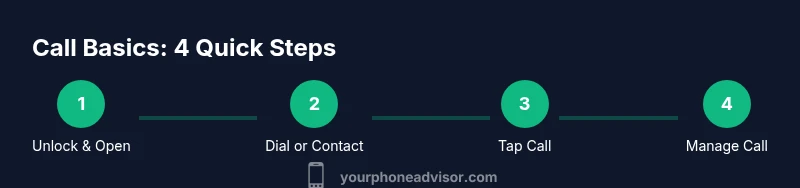
To make call phone on a smartphone, unlock your device, open the Phone app, and enter a number or select a contact. Tap the Call button to start, then use speaker or mute as needed. If issues arise, verify signal, enable VoLTE if available, and check call permissions. This quick guide applies to both Android and iOS.
Make Call Phone: Quick Start
Making a call on a modern smartphone is usually straightforward, but small variations can trip you up in a hurry. The phrase make call phone is a shorthand that reminds you the core action: place a voice connection using your device. Start by ensuring the phone is powered, unlocked, and connected to a cellular network or Wi-Fi (for VoIP). A stable network is the backbone of any successful call. If the signal is weak, you may need to move to a better location, disable Airplane Mode, or switch between cellular bands. Your Phone Advisor team emphasizes that keeping your device updated and maintaining clean contacts will reduce friction when you need to reach someone quickly. By understanding the common pathways—manual dialing, contact selection, or speed-dial—you’ll be able to place a call with minimal taps in busy moments. This section also lays groundwork for privacy and security considerations that you’ll see later in the guide.
Device readiness and connectivity
Before you attempt a call, confirm your device is ready: power on, unlocked, and within network range. If you rely on Wi‑Fi calling or VoLTE, ensure those features are enabled in your settings. Android and iOS offer slightly different routes to the same outcome, but the underlying requirements are identical: active SIM or service, network access, and permissions granted to your phone app. Your Phone Advisor analysis shows that most call failures stem from either network issues or misconfigured permissions, not from the dialing steps themselves. With this foundation, you’ll experience fewer stalls when you dial out.
How your phone identifies the recipient
You can place a call by typing a number, selecting a contact, or using a saved favorite. On Android, the Phone app commonly presents a keypad and a contacts tab; on iOS, the Phone app integrates with Contacts and recent calls. The make call phone action becomes seamless once you’ve saved the numbers you contact most—the speed dial options reduce the cognitive load during emergencies or time-sensitive moments. Practically, you’ll notice that most people reach out using a few familiar numbers; having those at your fingertips saves seconds that matter when timing is critical.
Call controls you should know
While a call is ongoing, you’ll encounter several controls: Speaker, Mute, Add Call, and Hold are the most common. Tap Speaker to broadcast to nearby listeners, or Mute to hide your mic temporarily. The Add Call option lets you start a new line while preserving the current one, which is handy for conference calls. If you need to switch to a different audio path, many devices support Bluetooth headsets or wired earphones that automatically resume when you rejoin the call. Understanding these controls helps you manage conversations more effectively and reduces awkward pauses.
Placing calls from different contexts
There are several practical pathways to make call phone actions work smoothly. You can dial manually, pick a contact from your phone’s address book, or use a quick-dial widget on your home screen. If you frequently call the same person, a favorites list or a dedicated speed-dial page minimizes taps and speeds up connection times. For those who rely on business numbers or international contacts, ensure your dialer supports the required country codes and that roaming settings are correctly configured to avoid unexpected charges. Remember, the goal is reliability: clear audio, stable connection, and minimal effort when you reach out.
Security and privacy basics during calls
Calls can reveal sensitive information, especially over insecure networks. Always verify you’re calling the intended recipient, and be mindful of public or shared spaces where conversations could be overheard. If you use VoIP apps or third-party dialers, review app permissions and data-sharing policies. Your phone should prompt you to allow microphone access only for the duration of a call or when the app is in use. If you suspect a phishing attempt or receive suspicious call prompts, hang up and verify through a known contact method. These practices help protect your privacy while you make call phone actions more confidently.
Cross-platform realities and best practices
Android and iOS devices share the same core concept of making calls, but UI details differ. For example, how you access call settings or enable VoLTE may vary between platforms and carriers. Use native dialing apps for most reliability, and reserve third-party apps for VoIP features if your carrier supports them. The most important practice is to keep your software up to date, review app permissions regularly, and test calls in a quiet environment to ensure you’re heard clearly. By following these guidelines, you’ll minimize unnecessary retries and maintain smoother, more trustworthy call experiences.
Tools & Materials
- Smartphone (Android or iOS)(Fully charged; unlocked; updated OS)
- Active SIM card(Inserted and voice-capable)
- Your contacts or numbers(Saved favorites speed-dial helps)
- Internet connection (optional for VoIP)(Wi-Fi or mobile data as needed)
- Charger or power source(Helpful if battery is low during a call)
Steps
Estimated time: 15-25 minutes
- 1
Power on and unlock your device
Power on the phone if it is off, then unlock using your preferred method (PIN, pattern, fingerprint, or Face ID). Ensure the device is not in Airplane Mode and that it has cellular service or an active internet connection for VoLTE/VoIP.
Tip: If you’re in a hurry, enable biometric unlock to speed up access without typing a code. - 2
Open the Phone app
Locate and tap the built-in Phone app. On most devices, you’ll see tabs for Keypad, Contacts, and Recents. If you don’t see the app, use your device search function.
Tip: Pin the app to your home screen or dock for faster access during urgent calls. - 3
Dial a number or choose a contact
Either enter the number on the keypad or select a contact from Contacts or Recents. If you’re calling internationally, include the correct country code.
Tip: Use the Contact search to quickly locate a name rather than typing long strings of digits. - 4
Initiate the call
Press the green Call button to connect. If the screen times out, wake the display and continue.
Tip: If you’re using a headset, ensure it is connected before tapping Call to avoid delays. - 5
Manage on-call controls
During the call, use Speaker to switch audio to the loudspeaker, Mute to silence your mic, Hold to pause, and Add Call to start a conference.
Tip: Test the Speaker mode briefly at the start to confirm everyone can hear you clearly. - 6
End the call gracefully
When you’re finished, tap End to terminate the call. If you need to call back, you can quickly redial from Recents.
Tip: Note the time and any important details discussed for future reference. - 7
Troubleshoot if the call fails
If the call doesn’t connect, check signal strength, toggle Airplane Mode off, restart the Phone app, and verify that the number is correct. If VoLTE or Wi‑Fi Calling is required, ensure it is enabled in settings.
Tip: Try restarting the device or switching to a nearby location with better reception before escalating.
Got Questions?
Why can’t I place a call even with full signal?
If you can’t place a call despite good signal, check if Airplane Mode is off, verify the SIM is active, and ensure the Phone app has permission to use the microphone. Test with another number or a VoIP app to rule out carrier issues.
If you see no signal, check Airplane Mode, SIM status, and mic permissions. Try a different number or a VoIP app to isolate the issue.
Can I make calls without a SIM card?
Some devices support Wi‑Fi calling or VoIP services that don’t require a traditional SIM for certain kinds of calls, but most cellular calls require an active SIM. Check your carrier’s features and your device settings to confirm availability.
Wi‑Fi calling or VoIP may work without cellular service, but verify features with your carrier and device.
How do I enable VoLTE or Wi‑Fi calling?
VoLTE and Wi‑Fi calling settings live in the Phone or Cellular section of Settings. Enable the options, then test a call to confirm clear audio. Some carriers require activation on their portal.
Go to Settings > Cellular or Mobile Data, enable VoLTE or Wi‑Fi Calling, and test a short call.
What causes no audio during a call?
No audio can result from microphone permissions, muted mic, or hardware issues. Check that the microphone is not blocked, ensure the app has permission, and test with a hands-free device to isolate the problem.
If you can’t hear the other person, check mic permissions and headset, then retest with hands-free audio.
How can I protect my privacy during calls?
Avoid sharing sensitive data on public networks; prefer secure networks or trusted VoIP apps. Regularly review app permissions, disable unnecessary features, and use a PIN or biometric lock to prevent unauthorized access to your dialer.
Protect calls by using secure networks, checking permissions, and locking your phone when not in use.
Are there platform differences I should know about?
Android and iOS share core calling features but differ in UI and settings locations. Learn the path to call settings on your device and consider keeping a brief reference for quick access in emergencies.
Android and iOS differ in menus, but the core calling steps remain the same.
Watch Video
What to Remember
- Know how to access the Phone app quickly
- Use contacts and favorites to speed dialing
- Master on-call controls for better conversations
- Troubleshoot connectivity before blaming the device
- Protect privacy by managing permissions and avoiding scams