How to Phone Detox: A Practical Step-by-Step Guide
Learn how to safely run a phone detox with a clear plan, practical steps, and sustainable habits. Your Phone Advisor guides you through setup, execution, and maintenance for healthier device use.


You're about to learn how to run a practical phone detox, including choosing a detox style, setting a duration, and sustaining new habits. You'll need a timer, a plan for offline activities, and support from friends or family. Follow the step-by-step guide to plan, execute, and maintain a healthier, more intentional relationship with your device.
What is a phone detox and why it matters
According to Your Phone Advisor, a phone detox is a deliberate period during which you reduce nonessential screen time, limit app use, and reallocate time to offline activities. The goal is not punishment but recalibration: you regain control over how you engage with your device and cultivate healthier boundaries. A detox can be full or partial—full meaning a complete abstinence from nonessential use, partial meaning strict limits on certain apps or times of day. Most people report increased focus, better sleep, and improved mood after a structured detox, especially when it is paired with a plan for replacement activities. The key is to set a realistic target, communicate it to close contacts, and treat the detox as a skill you are practicing rather than a one-off punishment.
As you begin, remember that a detox is a personal experiment. Your goals should align with your daily responsibilities and well-being. If you rely on your phone for emergencies, work, or caregiving, adapt the plan so safety and duties are preserved. The Your Phone Advisor team emphasizes that sustainable change comes from small, repeatable actions rather than drastic, abrupt shifts. Start with a modest window and build from there, treating each day as an opportunity to learn what truly supports your well-being.
Assess your baseline
Before you change your habits, measure where you stand. Start by logging typical daily screen time and identifying your most-used apps. Use built-in digital wellbeing tools or third‑party trackers to note how much time you spend scrolling, gaming, or watching videos, and when these sessions most often occur. This baseline helps you tailor the detox to your realities, rather than applying a generic plan that doesn’t fit your routine. Also track how you feel before and after phone use—levels of stress, mood, focus, and sleep quality can shift noticeably once you reduce digital interruptions. The goal here is to find concrete starting points you can monitor over the detox period.
If possible, log not just usage but triggers: boredom, loneliness, or social pressure. Understanding triggers makes it easier to create effective countermeasures and to choose replacement activities that satisfy the same needs without the downsides of excessive screen time.
Choose a detox approach
Detox approaches vary. A partial detox limits daily access to nonessential apps during defined windows, while a full detox minimizes all nonessential phone use for a set period. You can also adopt a graduated approach: start with short, daily phone-free blocks and gradually extend them as you feel more comfortable. Your choice should reflect your responsibilities, social life, and work demands. If you’re new to detoxing, a 3–7 day partial detox often yields the best balance between impact and feasibility. Your Phone Advisor recommends selecting an approach that you can sustain and scaling up if you experience clear benefits.
Consider combining methods—for example, a full weekend detox paired with weekday app-limiting rules—to create a rhythm that feels achievable and meaningful.
Set clear goals and rules
Write 3–5 specific rules you will follow during the detox. Examples include: no nonessential social apps after 8 p.m.; use a 30‑minute daily “phone check” window; keep the phone out of reach during meals and before bedtime. Tie rules to outcomes you care about, such as improved sleep, more time for hobbies, or better conversations. Set a defined detox window (e.g., 14 days) and a plan for what happens at the end, including how you will reintroduce apps in a controlled way. Regularly remind yourself of the why behind your rules to maintain motivation.
If you share a device with someone else, coordinate rules to avoid friction and ensure accountability. Consider simplifying the rules into one concise sentence you can repeat when tempted.
Prepare for the detox
Remove temptations before you start. Disable nonessential notifications, hide apps in a folder, or log out of addictive accounts. Prepare offline alternatives: a book, a hobby kit, a fitness routine, or a friend‑led activity. Inform family, friends, and coworkers about your plan so they can support you and avoid pressuring you to check your phone unnecessarily. Have emergency contacts written down or saved in a secure, accessible place so you’re not tempted to reach for your device for reassurance during stressful moments.
Arrange your environment to support the new routine: keep the phone out of reach at night, place a charger in another room, and use a dedicated alarm clock if needed. The goal is to reduce accessibility during times when you tend to drift toward mindless scrolling.
Build an alternative routine
A successful detox replaces phone time with meaningful activities. Create a short list of daily offline options—reading, going for a walk, calling a friend, journaling, or practicing a quick workout. Schedule these activities into your day, so you don’t rely on your phone as a default pastime. Food for thought: the most effective substitutions align with your values and priorities, whether that’s learning something new, staying connected person‑to‑person, or simply decompressing.
Incorporate micro-habits to ease transition: a 5‑minute pre-bed ritual without screens, a morning stretch instead of scrolling, and a weekly “phone Sabbath” to reset expectations. Small, consistent shifts accumulate into lasting improvement.
Manage social pressure and accountability
Social dynamics can undermine detox efforts. Set expectations with friends and family about your limits and propose supportive activities that don’t involve screens. Choose an accountability partner who checks in once or twice a week and celebrates progress rather than judging setbacks. If a group challenge helps, join a community or a local club—offline, high‑quality social time often reduces the urge to reach for your device.
Use gentle accountability methods: share your goals and progress in a short, non-judgmental update and invite feedback. If you stumble, note what happened, adjust your rules, and resume without self-criticism. Your Phone Advisor emphasizes kindness to yourself as a critical ingredient for sustainable change.
Track progress and adjust
End-of-day reflections help you learn what works. Record daily screen time reductions, mood shifts, sleep quality, and energy levels. Review weekly to identify which substitutions are most effective and which rules feel too rigid. If you’re not seeing benefits after a full detox window, consider adjusting duration, tweaking which apps are limited, or increasing offline activities. The aim is progress, not perfection, and your observations should guide a smarter approach next time.
Share insights with your accountability partner and celebrate small wins. Positive reinforcement makes it more likely you’ll maintain the healthier pattern once the detox ends.
Long-term maintenance after detox
Detox is a starting point, not a final destination. After you complete the initial period, set up a sustainable digital wellbeing plan: regular, shorter check-ins; fixed device-free times; and ongoing use of features like screen-time limits, focus modes, or wind-down routines. Reintroduce apps gradually, noting which ones add value without triggering friction. Over time, you’ll refine a balanced approach that protects your attention, sleep, and relationships while preserving the benefits you gained during the detox. Your Phone Advisor team recommends revisiting goals quarterly to stay aligned with evolving needs.
Tools & Materials
- Phone with screen time/digital wellbeing features(Enable usage data export if available to track progress)
- Journal or notes app(For logging cravings, triggers, and reflections)
- Timer or alarm app(To enforce detox windows and breaks)
- Accountability partner(Friend or family member to check in)
- Offline activity ideas list(Prewritten options like reading, walking, or hobbies)
- Charger and accessories kept out of reach(Reduces habitual plugging-in)
Steps
Estimated time: 14 days (adjustable to your needs)
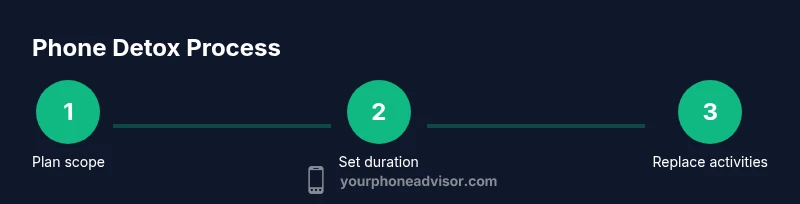
- 1
Define your detox scope
Decide whether you want a full abstinence or a partial reduction of nonessential phone use. Clarify which apps or times are off-limits and set a concrete detox duration. This step creates the blueprint you’ll follow and helps avoid vague rules that fail under pressure.
Tip: Write your scope on paper or in a notes app and keep it visible. - 2
Set a detox duration
Choose a realistic window that fits your schedule—common choices are 7–14 days for a test run or 21–28 days for deeper impact. Shorter periods are easier to maintain, while longer ones often yield stronger habit formation. Decide whether you’ll repeat monthly or adjust based on progress.
Tip: Use a calendar reminder to signal start and end dates. - 3
Limit access to nonessential apps
Disable nonessential notifications, move apps to a folder, or log out of accounts during detox hours. Keep essential communication apps available for emergencies or work, but reduce friction to open by mistake.
Tip: Turn on Do Not Disturb during detox windows to minimize interruptions. - 4
Plan offline replacements
Preload offline activities like e-books, podcasts, workouts, or journaling prompts. Schedule time for these activities so you don’t default back to scrolling when bored or stressed.
Tip: Prepare a weekly offline activity rota to stay engaged. - 5
Inform your circle and establish accountability
Tell trusted friends or family about your plan and set a check-in schedule. An accountability partner helps you stay on track and provides support when cravings hit.
Tip: Agree on how you’ll celebrate progress together. - 6
Review and adjust
At the end of the detox, review logs and reflect on what worked. Decide whether to extend the detox, repeat with tweaks, or incrementally reintroduce apps with new boundaries.
Tip: Document adjustments for the next cycle to build momentum.
Got Questions?
What exactly is a phone detox and how does it differ from simply using Do Not Disturb mode?
A phone detox is a deliberate period where you reduce nonessential screen time and regulate app use to reboot your relationship with your device. It goes beyond Do Not Disturb by enforcing concrete rules and replacing screen time with offline activities, rather than just muting notifications.
A phone detox is a focused period of reduced device use with rules and offline alternatives, not just muting notifications.
Can I still use my phone for calls and emergencies during the detox?
Yes. A detox often allows essential communication like calls and text messages. The key is to define what counts as essential during the detox window and to minimize nonessential activities that feed mindless use.
You can keep essential calls, but limit everything else during the detox.
How long should a phone detox last for someone new to this practice?
For beginners, a 7-day partial detox is usually more manageable than a full two-week loss of nonessential apps. You can extend the duration as you become more comfortable or adjust based on how you feel and the benefits you notice.
A week is a solid starting point; you can extend it if you want deeper changes.
What if I get overwhelmed and relapse during the detox?
Relapses are common and part of learning. Acknowledge the moment, revisit your goals, adjust rules if needed, and resume with a plan. Small, consistent steps matter more than perfection.
If you relapse, don’t beat yourself up—adjust and continue with your plan.
Will I rebound after the detox and start using my phone more than before?
A rebound can happen if boundaries aren’t maintained. Use a maintenance plan with regular check-ins, shorter daily limits, and ongoing offline activities to preserve the gains.
There can be a rebound, but a steady upkeep plan helps maintain progress.
What tools or apps help support a phone detox?
Tools include built-in digital wellbeing dashboards, focus modes, and task planners. Choose apps that support your rules—like scheduling, screen time limits, and reminders—while avoiding ones that enable backsliding.
Digital wellbeing tools and reminders can keep you on track.
Watch Video
What to Remember
- Plan before you start and define concrete rules
- Limit notifications and nonessential apps to reduce temptations
- Replace screen time with engaging offline activities
- Track progress and adjust rules based on real results
- Maintain the gains with ongoing, sustainable boundaries