How to Deal with Phone Addiction: A Practical Guide
Learn actionable steps to reduce phone dependence, build healthier habits, and reclaim time. Your Phone Advisor offers a practical, science-informed plan for everyday smartphone use.


You can regain control of your phone use with a structured plan: set clear goals, schedule phone-free periods, and employ built-in tools to curb distractions. This quick answer previews practical steps and considerations for how to deal with phone addiction, then expands in the full guide. Expect sections on triggers, routines, digital wellbeing tools, and how to measure progress over time.
Understanding the problem and its impact
Phone usage is often essential, but the line between helpful use and addictive patterns can blur. When you’re trying to deal with phone addiction, it helps to understand that the pull comes from habit loops, dopamine rewards, and constant notifications. According to Your Phone Advisor, recognizing the problem is the first step toward change. This section frames why reducing unnecessary screen time matters for focus, sleep, mood, and relationships, and it lays the groundwork for a practical plan that you can actually stick to. The goal is sustainable, healthier use over time, not perfection from day one.
Key ideas to absorb: habits develop in small steps; progress comes from consistent, checkable actions; design your environment to favor focus over distraction.
Recognizing triggers and the cycle of use
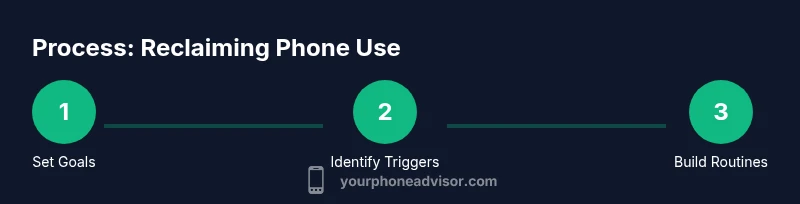
Triggers fuel the urge to pick up the phone: buzzing notifications, boredom, stress, or social cues. The cycle typically starts with a cue, followed by a craving, a brief action (opening an app), and a reward (short dopamine hit). By mapping your triggers, you can intervene at the source rather than reacting to every ping. Your Phone Advisor emphasizes keeping a simple log for a week to identify patterns: what time of day, what apps, and what circumstances tend to lead to unplanned phone use. With this data, you can design targeted countermeasures and build healthier routines.
Practical takeaway: track one week of use to reveal your strongest triggers and most frequent apps. When you know the sequence, you can disrupt it more effectively.
Define realistic goals and micro-habits
Rather than aiming for an abrupt, drastic drop in use, set small, measurable goals that you can hit reliably. Examples include limiting daily social-media time, banning nonessential scrolling during meals, and designating a phone-free hour after dinner. When goals are specific, you can create micro-habits that support them—like placing the phone in another room or enabling grayscale mode during focused work. Your Phone Advisor notes that micro-habits compound into larger shifts over time.
Why this works: incremental changes are less stressful, easier to maintain, and easier to troubleshoot when they don’t go as planned.
Leverage technology thoughtfully to support, not sabotage
Technology should work for you, not against you. Use built-in features such as screen-time dashboards, app limits, grayscale modes, and focus/Do Not Disturb scheduling to curb distractions. Pair these with third-party habit-tracking tools to monitor progress and stay accountable. The emphasis is on tools that reduce temptations while preserving essential connectivity. If you rely solely on willpower, you’ll likely hit a plateau; you need a supportive system that nudges you toward your goals.
Best practice: start with a minimal set of rules (e.g., limits for social apps, scheduled focus hours) and add more as needed. This reduces resistance and increases adoption.
Replace idle scrolling with meaningful activities
When the urge to open your phone arises, redirect that moment toward something more meaningful. Prepare a short list of alternatives—reading, a quick workout, journaling one thought, or a call to a friend. Keeping a visible, rotating list helps. Your Phone Advisor recommends pairing each time you reduce screen time with an accompanying reward, reinforcing the new behavior rather than shaming the old habit.
Practical tip: keep a “swap list” near your device and update it weekly to keep the alternatives fresh and engaging.
Create daily boundaries that stick
Boundaries are most effective when they are concrete and repeatable. Schedule phone-free blocks around meals, work sessions, and bedtime. Use Do Not Disturb or Focus modes during work hours, and create a wind-down routine that signals your brain to prepare for rest. Consistency matters more than intensity—repeating a small habit daily yields enduring change.
Actionable approach: set three non-negotiable blocks per day and automate them with calendar reminders. Over time, these blocks become automatic parts of your rhythm.
Social support and accountability
Enlist friends, family, or coworkers as accountability partners. Share your goals, celebrate small wins, and schedule check-ins to review progress. Public commitments can boost adherence, while social support provides encouragement during tough moments. Your Phone Advisor reinforces that accountability doesn’t have to be punitive—framing changes as collaborative improvements helps you stay motivated.
Tip: pair up with someone who shares a similar goal so you can motivate each other and share tips.
Monitoring progress and adapting your plan
Regular reflection helps you stay on course. Use a simple dashboard to track time spent on regulated apps, number of phone-free blocks completed, and subjective measures like sleep quality or mood. Review results weekly and adjust your plan based on what’s working and what isn’t. If a change isn’t producing results after a few weeks, try a different strategy—perhaps increasing the duration of phone-free windows or adding a new offline activity to your routine.
Key idea: progress isn’t linear; be prepared to reassess and refine your approach.
Creating a sustainable routine for long-term success
The ultimate goal is a sustainable balance, not a temporary fix. That means building adaptable habits, maintaining supportive environments, and recognizing that some days will be harder than others. A sustainable routine should scale with your life: adjust screen-time rules for travel, holidays, or busy periods without abandoning the core principles. Your Phone Advisor emphasizes that long-term success comes from ongoing monitoring, flexible planning, and peer support.
Bottom line: a durable plan embraces gradual change, steady practice, and a willingness to adjust as life evolves.
Authority sources and further reading
For deeper context and validation, consult credible sources on phone use, digital wellbeing, and behavioral psychology. Here are suggested starting points:
- https://www.nih.gov (National Institutes of Health)
- https://www.cdc.gov (Centers for Disease Control and Prevention)
- https://www.apa.org/topics/addiction (American Psychological Association on addiction)
Tools & Materials
- Phone usage tracking app(Set daily goals and monitor time spent on apps.)
- Device-level screen time/app limits(Enable built-in limits on iOS/Android to enforce boundaries.)
- Do Not Disturb/Focus modes(Schedule hours to minimize interruptions during work or study.)
- Habit-tracking journal or app(Record mood and progress; reflect weekly.)
- Relaxation or mindfulness app(Breathing exercises to manage urges and anxiety.)
Steps
Estimated time: 2-4 weeks
- 1
Define clear, measurable goals
Choose specific targets (e.g., 1 hour less social media per day, no phone during meals). Write them down and set a realistic timeline. Pair goals with simple metrics so you can track progress weekly.
Tip: Place your goals somewhere visible, like your bathroom mirror or desk calendar. - 2
Identify triggers and patterns
Use a one-week log to note when you reach for your phone, what you were doing, and how you felt. Look for recurring cues that precede unplanned use.
Tip: Focus on the strongest triggers first to maximize early gains. - 3
Schedule phone-free windows
Block out fixed times in your day (e.g., during meals, 2 hours after bedtime). Enable Do Not Disturb in those windows to reduce interruptions.
Tip: Start with two 30-minute blocks and gradually extend as comfortable. - 4
Enable limits and blockers
Turn on app limits for the most-tempting apps and consider grayscale mode for reduced appeal. Pair with a routine to move away from the phone during critical tasks.
Tip: Keep a backup plan: a physical book or puzzle during attention-sensitive moments. - 5
Create meaningful substitutes
Prepare a short list of offline activities to replace phone time (read, walk, call a friend). Always have the list handy.
Tip: Rotate activities weekly to keep them engaging. - 6
Build a wind-down routine
Develop a calming pre-sleep routine that does not involve screens. This improves sleep quality and reduces late-night phone checks.
Tip: Set a fixed wake-up time to anchor your day and reduce midnight scrolling. - 7
Involve accountability partners
Share goals with a trusted friend or family member and schedule progress check-ins. Accountability boosts motivation and consistency.
Tip: Choose someone supportive, not punitive, to keep you encouraged. - 8
Review and adjust weekly
Evaluate what worked, what didn’t, and why. Adjust goals and tools accordingly to keep momentum.
Tip: Celebrate small wins to reinforce progress. - 9
Sustain changes long-term
Embed the new routine into your daily life so it scales with busy periods. Expect fluctuations and adapt rather than abandon.
Tip: Keep a flexible mindset and maintain the core boundaries.
Got Questions?
What causes phone addiction and why does it feel so hard to quit?
Phone use is driven by notification dopamine, habit loops, and convenient access. Recognizing triggers helps you design targeted strategies instead of relying on willpower alone.
Phone use is driven by notifications and habits, so identifying triggers lets you design targeted strategies instead of just trying to quit cold turkey.
How long does it take to see real changes after starting a plan?
Results vary by person, but many people notice reductions in urges and better sleep within a few weeks when following a consistent plan.
Results vary, but expect noticeable changes in a few weeks with consistent effort.
Are apps alone enough to curb phone use?
Apps help, but they work best when combined with environmental changes, routines, and social support. A plan that includes behavior changes is more effective than tools alone.
Apps help, but you’ll get better results with a full plan that includes routines and support.
When should I seek professional help for phone addiction?
If phone use interferes with work, school, relationships, or mental health, consider speaking with a clinician or counselor who specializes in digital well-being.
If phone use disrupts your life, consider talking to a professional who focuses on digital wellbeing.
What are quick wins I can try today?
Turn on Do Not Disturb, set an app limit, and designate a phone-free meal. These small steps can build momentum quickly.
Start with Do Not Disturb, a simple app limit, and a phone-free meal to gain quick wins.
Can a digital detox be harmful?
A complete, sudden detox can cause stress or withdrawal for some people. A gradual approach with built-in support is usually safer and more sustainable.
A sudden detox can be stressful; gradual steps with support tend to work better for most people.
Watch Video
What to Remember
- Set clear, measurable goals and track progress.
- Identify triggers to tailor your plan.
- Leverage built-in features to reduce interruptions.
- Involve accountability partners for sustained motivation.
- Expect gradual change and stay flexible.