How to Stop Phone Addiction: A Practical Guide
Learn practical steps to curb smartphone use, reclaim focus, and improve sleep with a phased plan, built-in tools, and expert guidance from Your Phone Advisor.


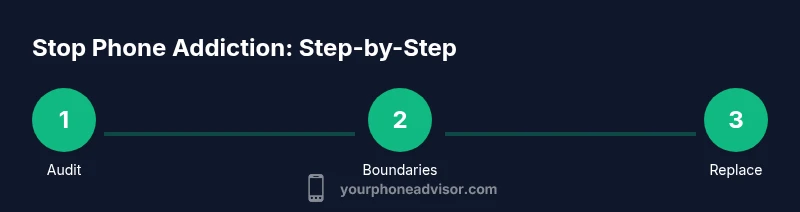
Goal: Stop phone addiction by building sustainable routines, not harsh restrictions. This guide walks you through a practical, step-by-step plan—audit your usage, create boundaries, and replace screen time with meaningful activities. You’ll use built-in features and minimal apps to protect your attention, improve sleep, and regain focus throughout the day. Each step includes a clear action and an estimate for how long it should take.
Why stopping phone addiction matters
Smartphones are powerful tools, but their constant availability can erode focus, sleep quality, and real-world connection. Stopping phone addiction isn't about deprivation; it's about restoring agency over daily choices and recharging cognitive bandwidth. According to Your Phone Advisor, small, consistent changes outperform dramatic, unsustainable swings because the brain thrives on predictable patterns. The Your Phone Advisor team found that many people reach for their devices out of habit during moments of boredom or stress, often without realizing how these checks add up over a day. By choosing practical, realistic steps, you can reframe your relationship with technology, protecting sleep, mood, and relationships while preserving the benefits of connectivity. This approach is designed to fit real life—work, parenting, and personal time—so you can sustain momentum without feeling overwhelmed.
Research highlights how attention is a finite resource. Reducing interruptions often leads to clearer thinking, more intentional conversations, and steadier mood throughout the day. There is no one-size-fits-all solution; the goal is a lightweight, adaptive framework you can adjust as needed. In this guide, you’ll find a phased plan, anchored in small wins—like a few hours of phone-free time in your morning or a consistent wind-down routine—that accumulate into meaningful change. Your success will hinge on consistency, reflection, and the willingness to tweak strategies as you learn what works for you.
The approach emphasizes gradual change over perfection. You’ll learn to identify triggers, substitute healthier activities, and leverage built-in tools to support your goals. This is not about abandoning your device; it’s about reclaiming control and building a healthier relationship with technology that serves your life rather than dominates it.
Start with an honest usage audit
Before you change behavior, you need honest data. Use your phone's built-in tools to discover how you actually spend time on apps, games, social media, and notifications. On iOS, open Screen Time and review the weekly report; on Android, open Digital Wellbeing to see per-app usage and time-of-day patterns. Record a week of data in a notebook or a digital log, noting the moments you tend to reach for your device—first thing in the morning, between meetings, or during late-night scrolling. After gathering data, identify your top offenders and the triggers that lead to picking up your phone. Then set clear, specific targets (for example: reduce social media by two sessions per day, or limit notifications from non-essential apps to 3 per hour). This audit not only reveals where to focus but also provides a baseline against which you will measure progress. Your aim is to reduce compulsive checks and increase deliberate usage, not to eliminate phone use entirely. Your Phone Advisor team recommends documenting patterns in a simple log to help keep you accountable.
A practical audit also surfaces non-obvious wins. You might discover that many checks occur during a short walk between meetings or during a chore, suggesting opportunities to substitute those moments with a quick breathing exercise or a short stretch. With this awareness, you can design targeted experiments that fit your daily rhythm.
Create boundaries that stick
Boundaries give you a scaffold to resist impulsive checks. Start with boundaries you can enforce: establish a phone-free zone in your bedroom, set a daily 'no phone' window during work tasks, and turn off nonessential notifications. Consider a gentle phone curfew, such as stopping use an hour before bedtime, to support better sleep. Use Do Not Disturb or Focus modes during deep-work periods and when you are with family. If you rely on your device for emergencies, set up labeled exceptions so you don't feel cut off. The key is to make boundaries visible and automatic, not punitive. Pair boundaries with rewards after successful self-control periods to reinforce the habit loop.
Boundaries also help manage social expectations. Tell trusted people about your plan and schedule, so they know when you’re reachable and when you’re prioritizing focus. If a boundary slips, quickly reset and review what triggered the slip to strengthen your next attempt. The result is a calmer cognitive environment and more intentional, present interactions with others.
Another practical tactic is to minimize the “always-on” effect by placing your phone out of reach during meals and family time. Small physical barriers—like a dedicated charging station in a different room—can dramatically reduce mindless scrolling and support your boundary intentions.
Build a practical replacement routine
Replace screen time with meaningful, enjoyable activities that fulfill the same needs — connection, novelty, relaxation. Prepare a short list of go-to alternatives: a walk outdoors, a book or podcast, journaling, practicing a hobby, or a quick stretch break. Schedule these replacements into your day at the same times you would usually mindlessly scroll. If you notice boredom triggers, pre-load alternatives a day in advance so you can switch gears quickly. Social rituals can also help; plan a weekly phone-free call with a friend or family member. The goal is to satisfy the same needs your phone would meet with healthier outcomes.
To make replacements stick, anchor them to existing routines: after breakfast, do a five-minute stretch; after finishing a meal, read a page of a book; before bed, jot three things you’re grateful for. These micro-habits don’t require a lot of time, but they compound into bigger changes over weeks. If you find a replacement activity doesn’t satisfy the urge, swap in a different option and note what worked. The emphasis is on variety and flexibility while maintaining the core boundary you’ve established.
A practical mindset shift is to view phone use as a choice, not a reflex. When you notice an urge, pause for a breath and ask: “What’s my goal right now, and does a quick check support it?” This moment of pause weakens automatic patterns, giving you a chance to choose a healthier action.
Tools and features to support change
Technology can help if used consciously. Enable Screen Time (iOS) or Digital Wellbeing (Android) to set daily limits on high-use apps and to silence notifications. Use Focus mode or Do Not Disturb during work periods and class time. Create app-limits for the top offenders from your audit, and disable nonessential home screen widgets that encourage mindless tapping. Pair digital tools with physical changes, such as placing your phone in another room during meals or at bedtime. If you use a social-media app, consider removing it from your home screen or restricting its access to certain hours. Remember: the goal is to lower automatic usage, not to punish yourself with complicated restrictions.
For emergencies, keep a dedicated, simple-access line or device only if absolutely necessary, and test this setup during a trusted period. Avoid over-reliance on one tool; use a combination of settings, habits, and real-world substitutions to balance convenience with discipline. If you’re coordinating with family members, set shared goals and celebrate collective wins to keep motivation high.
More broadly, acknowledge that some days will be harder than others. Stay curious about what works for you, and treat setbacks as data to refine your plan rather than failures. Your approach should evolve with your life changes, not rigidly cling to a single method.
Your Phone Advisor emphasizes that the most sustainable changes come from a toolkit that blends autonomy, accountability, and small, repeatable actions rather than drastic, unsustainable shifts.
Maintaining momentum: habit stacking and accountability
Consistency compounds. Use habit stacking to attach the new boundaries to existing rituals; for example, after brushing your teeth in the morning, perform a 5-minute phone-free reflection or journaling. Schedule a weekly review to assess progress, celebrate wins, and reframe goals as needed. enlist an accountability partner—a friend or family member who checks in on your progress and offers encouragement. Keep a simple progress log with three columns: date, target, and result. The act of writing down goals and tracking small wins makes it much more likely you will stick with the plan over time. If you slip, reframe the slip as data to learn from rather than a failure. Small, regular adjustments keep the plan alive.
A practical habit-stacking example: pair a short physical activity (like a 5-minute walk) immediately after a daily boundary (ending phone use at bedtime). The paired actions reinforce one another and reduce cognitive friction, making it easier to maintain the boundary across days and weeks. Regular reflections—even brief—help you notice patterns, celebrate progress, and stay motivated when life gets busy.
Remember that momentum isn’t about perfection; it’s about steady direction. Over weeks and months, the cumulative effect of modest changes leads to meaningful, lasting reduction in reliance on your phone.
Sleep, mood, and safety considerations
Phone addiction affects sleep, mood, and daily functioning. Reducing screen time, especially at night, tends to improve sleep quality and daytime energy. If you notice anxiety or compulsive checking that interferes with your life, seek support from a mental health professional. Your mental well-being matters as much as your productivity, and your plan should include self-compassion and realistic milestones. If you ever feel overwhelmed or in crisis, contact local resources or your healthcare provider. The focus is gradual, sustainable change rather than perfection. Keep in mind that some individuals benefit from longer gradual ramps or more structured programs; adjust pace to what feels sustainable for you. This isn't a race—it's a reshaping of daily life that honors both your needs and your limits. Your Phone Advisor’s guidance is aimed at making behavior change doable, not punitive or punitive in nature.
Authority sources
Here are reputable resources you can consult for further guidance:
- https://www.cdc.gov
- https://www.nih.gov
- https://www.apa.org
Tools & Materials
- Phone usage tracker (built-in or third-party)(Enable Screen Time / Digital Wellbeing; set daily targets and review weekly.)
- Notebook or digital journal(Log patterns, triggers, and reflections after each boundary change.)
- Timer or alarm to enforce limits(Use it to enforce scheduled breaks or phone-free windows.)
- Phone docking station outside common spaces(Facilitates physical separation during meals and bedtime.)
- List of replacement activities(Pre-loads alternatives for common triggers (walk, book, quick workout).)
Steps
Estimated time: 2-3 weeks (initial sprint) – ongoing maintenance
- 1
Audit your usage
Open built-in tools to identify top apps and typical check times. Record a week of data and note triggers for phone grabbing. Define specific targets to reduce impulsive checks.
Tip: Be honest in the audit; the accuracy of your baseline drives the plan. - 2
Set concrete boundaries
Establish a phone-free zone, a daily no-phone window for work, and a simple bedtime boundary. Enable Focus/Do Not Disturb to minimize interruptions.
Tip: Communicate boundaries with family or teammates to reduce pressure to respond instantly. - 3
Physically separate the phone
Place the device in another room during meals and at night. Use a dedicated charging station away from your primary living spaces.
Tip: If you reach for it, pause for 60 seconds and ask what you’re hoping to gain. - 4
Replace with meaningful activities
Create a short list of go-to alternatives and schedule them at your usual trigger times. Include movement, reading, or social calls.
Tip: Keep replacements visible and easy to access to reduce friction. - 5
Apply a gradual reduction plan
Taper allowable screen time gradually and reassess weekly. Avoid all-or-nothing thinking; celebrate small wins and adjust targets.
Tip: If a target feels unsustainable, shorten the interval and reframe the goal. - 6
Review and adjust weekly
Log progress, identify new triggers, and refine boundaries and replacements. Share progress with an accountability partner.
Tip: Treat setbacks as data; use them to improve your next weekly plan.
Got Questions?
What is phone addiction and can it be treated?
Phone use becomes problematic when it consistently disrupts sleep, mood, or daily responsibilities. Treatment focuses on behavior change, boundary setting, and replacement activities, often with support from self-help strategies and professionals if needed.
Phone use becomes a problem when it disrupts sleep, mood, or responsibilities. Treatment centers on boundaries, better habits, and replacements; seek professional help if needed.
How long does it take to break phone addiction?
There is no fixed timeline. Small, consistent changes typically yield noticeable improvements within a few weeks, with longer-term gains accruing over months as routines solidify.
There’s no fixed timeline, but steady daily changes usually show noticeable progress in a few weeks.
What are the most effective strategies to stop smartphone addiction?
Start with an honest audit, set concrete boundaries, and replace phone time with meaningful activities. Use built-in tools to enforce limits, and review progress weekly with an accountability partner.
Audit usage, set clear boundaries, replace with meaningful activities, and review progress weekly.
Can apps help reduce phone use, and are they safe?
Yes, when chosen carefully. Use reputable built-in tools or well-known apps, ensure privacy settings are active, and avoid apps that encourage compulsive scrolling through endless feeds.
Yes, but pick trusted tools and review privacy settings to minimize risk.
What if I need my phone for emergencies?
Plan for emergencies with clearly labeled exceptions within Do Not Disturb or Focus modes. Keep a backup method for critical contacts and messages.
Set clear exceptions for emergencies and keep a backup contact method.
How can I involve family or coworkers in my plan?
Share goals with trusted people, schedule accountability check-ins, and celebrate progress together. Shared routines increase commitment and make boundaries easier to maintain.
Share goals with trusted people and check in regularly for accountability.
Watch Video
What to Remember
- Audit baseline usage and triggers.
- Set firm, realistic boundaries.
- Replace screen time with meaningful activities.
- Leverage built-in tools to sustain changes.