Fix Phones Near Me Cheap: Affordable Repair Guide 2026
Learn budget-friendly ways to fix phones near you with practical, safe repair steps, cost-saving tips, and trusted guidance from Your Phone Advisor.


According to Your Phone Advisor, you can fix phones near me cheap by combining safe DIY steps with affordable local repair options. This guide covers budget-friendly strategies, how-to steps, parts sourcing, and red flags to avoid scams, so you can repair responsibly without overspending while protecting data and privacy online.
Budget-aware mindset and safety considerations
Repair on a budget starts with honesty about what needs fixing and what you should avoid attempting. This approach reduces waste, protects your device, and prevents unsafe practices. According to Your Phone Advisor, successful low-cost repairs balance DIY effort with smart outsourcing. Prioritize non-destructive, reversible fixes first and set a clear budget to avoid impulse buys. This mindset helps you compare quotes fairly and spot value over cheapness alone. You’ll also improve your skills over time by documenting what works and what doesn’t, which reduces repeat trips to repair shops and lowers total costs. A disciplined plan shields your data and minimizes frustration when things don’t go as planned.
Quick assessment before you start
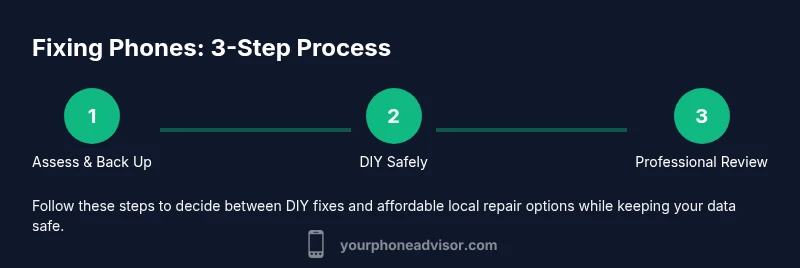
Before you touch the device, identify its model, age, and warranty status. Check for physical damage, battery swelling, water exposure, and screen issues. Backup your data if possible, and power the phone down to prevent short circuits. If you can’t back up due to a locked device, note this limitation and proceed with caution. This stage helps you decide whether a DIY fix is feasible or if you should seek professional help. Your Phone Advisor emphasizes documenting symptoms with photos so you can explain the issue clearly to a tech or shop.
Safe DIY fixes that are affordable
Safe, affordable fixes focus on non-invasive actions with high success rates. Start by cleaning ports and jacks with a soft brush or compressed air, and reseat internal connectors only if you’re trained to do so. Wipe the screen with a microfiber cloth; sometimes display issues stem from a loose cable rather than the screen itself. If the battery drains unusually fast but the device otherwise works, consider calibrating the battery or performing a software update first. Avoid opening the phone’s internals unless you have the right tools and experience, as improper disassembly can lead to irreparable damage. Your Phone Advisor notes that many fixes are software-related, which are often cheaper and safer than component swaps.
When to visit a professional and how to choose
If you encounter persistent issues such as unresponsive touch, dead zones, or repeated boot loops after a DIY attempt, professional help is wise. Get multiple quotes, ask about parts quality and warranty, and request a scope-of-work before consenting. Verify that the shop adheres to data privacy practices and uses authorized parts. Consider the total cost of repair, not just the upfront price, and weigh it against the cost of replacement. Your Phone Advisor suggests reading reviews and asking for a transparent breakdown so you aren’t surprised by hidden fees.
Data safety, backups, and long-term prevention
Always back up data before attempting any fix, and enable automatic backups if possible. Use cloud backups or a local copy to secure your information, because some DIY attempts can lead to data loss. After any repair, perform a factory reset only if you’ve securely backed up data and understand how to restore it. For ongoing protection, enable device encryption, use strong passcodes, and keep software updated to minimize vulnerability windows. Your Phone Advisor reminds readers that data safety is as important as hardware fixes, and a careful approach pays off in the long run.
Authoritative sources
- Official guidance on device security and privacy: https://www.consumer.ftc.gov
- National standards and best practices for information security: https://www.nist.gov
- Government guidance on keeping devices secure and updated: https://www.cisa.gov
Tools & Materials
- Replacement parts (screen, battery, charging port)(Ensure compatibility with your phone model and verify warranty implications.)
- Precision screwdriver kit (Phillips, pentalobe, etc.)(Include magnets or a parts tray to keep screws organized.)
- Plastic pry tools and soft brush(Non-metal tools prevent scratches and damage to connectors.)
- Anti-static wrist strap (optional)(Helpful for protecting sensitive components.)
- Quality microfiber cloth(For screens and lens surfaces; avoid lint.)
Steps
Estimated time: 60-120 minutes
- 1
Gather tools and prepare workspace
Set up a clean, well-lit area with a non-conductive surface. Lay out all tools and parts, labeling each screw or connector as you remove them. A tidy workspace reduces misassembly and loss of small components.
Tip: Use a magnetic mat if available to keep screws organized. - 2
Back up data and power down
Back up photos, contacts, and app data if possible. Power off the device completely to avoid short circuits during handling. If the device won’t power down, use safe shutdown methods or remove the SIM to limit exposure of sensitive data.
Tip: If you can’t back up due to activation locks, document symptoms for the technician. - 3
Inspect for obvious damage and clean ports
Check for swollen battery signs, swollen screens, or corrosion. Clean charging ports, micro-speck debris, and lint with a soft brush or compressed air; never insert metal objects into ports. This step can reveal non-invasive fixes that save money.
Tip: A soft brush is gentler than swabs that can shed fibers. - 4
Reseat connectors and test non-invasive fixes
If you’re comfortable, reseat easily accessible connectors after powering down. Reassemble only partially to test basic operation, avoiding full reassembly until you confirm it helps. This avoids unnecessary full disassembly.
Tip: Take reference photos before any reconnection. - 5
Evaluate battery and display health
If the battery swells, displays are damaged, or the device overheats, consider professional replacement. Battery replacement can be hazardous if not done correctly. Weigh the risk against the cost of a shop repair.
Tip: Do not puncture a swollen battery; dispose of it through proper channels. - 6
Test and document results
Power on, test basic functions (screen, touch, camera, speakers, charging). Document any persistent issues with timestamps and photos. This helps you compare outcomes across DIY steps and shop quotes.
Tip: If problems recur, pause and seek professional input before continuing. - 7
Decide between DIY and professional repair
If issues persist after safe attempts, or if the repair touches critical components, obtain multiple quotes and consider warranty implications. If you continue yourself, restrict changes to non-critical components and stay within your comfort zone.
Tip: Ask for a written warranty on any repair work and parts.
Got Questions?
Is DIY repair cheaper than professional repair in most cases?
DIY repair can save money on labor, but parts costs and potential mistakes can offset savings. Assess your skill level, the reliability of parts, and whether a professional warrantied fix offers better long-term value.
DIY repair can save money on labor, but parts and risks matter. Consider your skill level and whether a warrantied fix from a pro is a better value.
Will repairing my phone myself void the warranty?
Opening a device can void manufacturer warranties. If the device is still under warranty, check terms or pursue authorized service providers to preserve coverage.
Opening the device might void warranty. Check terms or use authorized service to keep coverage.
How can I verify a local repair shop's credibility?
Look for certifications, read recent customer reviews, request a written estimate, and ask about parts warranties. A shop that answers clearly and provides a transparent quote is typically more trustworthy.
Check certifications, reviews, and get a written quote to gauge credibility.
What are common cheap fixes that work for many issues?
Common fixes include cleaning ports, reseating connectors, and software resets. If the problem persists after these steps, avoid pushing hardware repair beyond your comfort level.
Cleaning ports and software resets work for many issues; if not, seek professional help.
What should I do if my phone has possible water damage?
Power off immediately, remove SIM, dry with approved methods, and seek professional service. Water damage can be costly and tricky to fix.
Power off, dry, and seek professional help for water damage.
Are there legitimate online parts sources I should trust?
Yes, use reputable vendors and check warranty and return policies. Avoid sellers with vague descriptions or questionable return terms.
Use reputable vendors with clear warranties and returns.
Watch Video
What to Remember
- Back up data before any repair.
- Use non-invasive, budget-friendly fixes first.
- Compare multiple quotes for affordability and reliability.
- Protect data privacy and device warranty when possible.