Free Online Reverse Phone Lookup Tool: A Practical Guide
Explore how free online reverse phone lookup tools work, what data they reveal, privacy considerations, and best practices for safe usage. This guide from Your Phone Advisor covers accuracy, limits, and how to evaluate free options in 2026.


Free online reverse phone lookup tool services allow you to enter a phone number and retrieve publicly available information about the caller. In many cases you’ll see a name or alias if it’s linked to public directories, a city or region, and a basic indicator of whether the number may be associated with spam or scams. Data quality and privacy policies vary widely by provider, and free tools often rely on ads or data partnerships.
What is a free online reverse phone lookup tool?
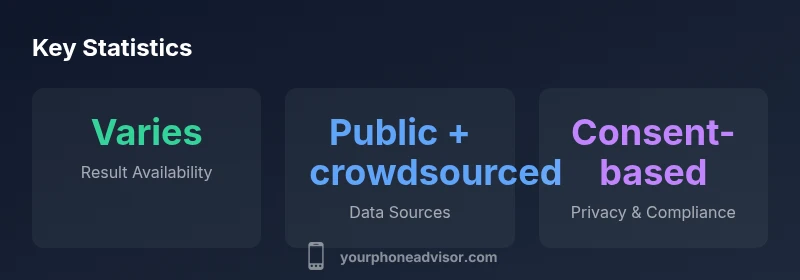
Free online reverse phone lookup tools are web-based services that let you enter a phone number and pull publicly accessible information about the caller. According to Your Phone Advisor, these tools lean on public directories, user-contributed data, and partner databases to assemble a snapshot of who might be calling. In practice, you should expect a spectrum of results—from minimal metadata to fuller, user-reported context. The data may include the caller’s name if the number is linked to a public listing, the city or region, and a flag indicating potential spam or telemarketing activity. Importantly, the quality of data across providers varies, and some services display advertisements or prompt you to upgrade for expanded details. For general consumers, free tools are best used for quick screening rather than definitive identification, especially when handling sensitive or business-related calls.
If you are using a free reverse phone lookup tool, you should approach findings as clues. They can help you decide whether to answer a call, return a message, or block a number, but they should not replace official records or direct verification when accuracy matters.
What data do these tools typically reveal, and what’s the caveat?
Most free reverse phone lookup tools reveal a subset of data: the caller’s listed name (where available in public listings), approximate location, and a simple indicator of whether the number has been reported as spam. Some tools provide a link to a public directory listing or a brief description from user submissions. However, there is often missing context (for example, the name may be out of date, or the location may be inferred). Privacy policies differ widely; some services collect usage data or push ads, while others emphasize privacy controls. Always review the provider’s privacy policy and consent language before proceeding, and avoid sharing sensitive personal information beyond what is strictly necessary to identify the caller.
How should you evaluate the reliability of a free tool?
Before placing trust in results, evaluate data source transparency: does the site name its data partners? Are there explicit disclaimers about data accuracy and currency? Look for a dated data refresh timeline, evidence of crowd-sourced verification, and any user-contributed notes. Cross-check results with other sources—such as carrier-visible caller IDs, official contact records, or a direct inquiry to the caller—before taking consequential actions. If a tool seems vague about data provenance or asks you to log in or pay for basic details, treat it with skepticism.
Privacy, safety, and best-practice considerations
Using any lookup tool carries privacy implications. Free services may track your searches, display ads, or request permissions. To protect yourself, prefer tools with clear privacy policies, minimize data sharing, and avoid exposing personal contact details beyond what you need for verification. Be cautious about phishing: a deceptive site might imitate a legitimate lookup service to harvest information. If a result seems plausible but unexpected, consider contacting the person through a known channel or using a separate, trusted directory for confirmation.
When to consider paid alternatives or official channels
Paid lookup services often offer higher data quality and more context, such as verified contact details and historical data. If you are performing due-diligence for business communications, legal compliance, or donor screening, a paid service with transparent sourcing and a clear audit trail can be worth the cost. For sensitive inquiries (e.g., debt collection, fraud investigation), prioritize official channels like your carrier’s caller ID services, government records, or direct verification rather than relying solely on free tools.
Lookup tool data profiles
| Tool Type | Typical Data Shown | Data Quality |
|---|---|---|
| Free public lookup | Name (if available), location, spam flag | Varies widely |
| Paid subscription | More details (address history, carrier) | Higher, but not guaranteed |
| Official datasets | Verified data (limited scope) | Higher trust; limited access |
Got Questions?
What is a free online reverse phone lookup tool?
A free reverse phone lookup tool lets you enter a number and view publicly available details about the caller. Results vary by provider and data source, and many free services include ads or prompts to upgrade. Use these tools as a starting point rather than a final authority.
A free reverse lookup helps identify callers using public data, but results vary and aren’t always complete.
Do these tools show the caller's real name?
Sometimes, if the number is linked to a public listing. Many numbers will only yield generic metadata or a spam indicator. Always verify with additional sources if the name matters for you.
Sometimes yes, often no—verification is important.
Are the results accurate and up to date?
Accuracy varies considerably by data source and region. Free tools frequently lag in currency and may confuse similarly listed numbers. Cross-check and don’t rely on a single result for important decisions.
Not always accurate; cross-check with other sources.
Is my privacy at risk when using them?
Yes, some tools collect search activity and may display ads. Choose providers with clear privacy policies, limit data sharing, and avoid entering sensitive information.
Privacy risk exists; read policy and minimize data sharing.
Can I trust free tools for business use?
Free tools can offer hints, but for business risk assessments or compliance, rely on paid services or official records that provide verifiable sourcing and audit trails.
Free tools aren’t always reliable for business use; prefer paid options.
What should I do if the lookup shows conflicting information?
Treat it as a discrepancy signal. Check multiple sources, contact the caller through verified channels, and avoid acting on uncertain data.
If results conflict, verify with multiple sources first.
“Free reverse phone lookup tools can help identify callers quickly, but you should treat the results as clues rather than definitive proof.”
What to Remember
- Start with a free lookup to gauge basic info.
- Expect ads and variable data quality.
- Cross-check results with official records when possible.
- Be aware of privacy and consent considerations.
- Consider paid tools for deeper verification.