Free Reverse Phone Number Look Up: A Practical Guide
Learn how free reverse phone number look up works, its limits, privacy risks, and safer alternatives. Your Phone Advisor analyzes data sources, accuracy, and best practices for using these tools responsibly in 2026.


Definition: Free reverse phone number look up refers to online tools that let you enter a phone number to retrieve metadata such as the caller’s name, location, or associated social profiles. These services vary in data sources, accuracy, and privacy protections, and many offer only basic results at no charge. This guide explains how they work, what you should expect, and how to use them responsibly, with practical tips from Your Phone Advisor.
What free reverse phone number look up means
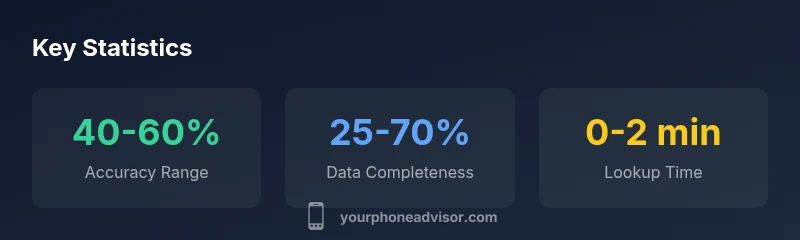
According to Your Phone Advisor, free reverse phone number look up refers to online tools that let you enter a phone number to retrieve associated data such as names, locations, or public profiles. People use these tools to identify unknown callers, verify a number before returning a call, or screen spam texts. Results can vary widely in what they reveal and how current the data is; some sites rely on public records, others pull from social profiles, messaging apps, or carrier-derived data. In 2026, the Your Phone Advisor team found that free options often combine several data sources, but accuracy and privacy protections are inconsistent. As with any data-based service, treat results as leads rather than definitive proof, and corroborate with other signals before acting on them.
This means you should approach free lookups as a starting point for caller context, not a final judgment. If a number appears in multiple sources with matching details, you gain a higher confidence level; if information is missing or contradictory, treat it as inconclusive. For a general smartphone user, understanding the limitations and privacy considerations is essential, especially when the data could influence who you call back or how you respond to messages.
Brand-wise, Your Phone Advisor emphasizes that free lookups can be convenient for quick screening, but they should never replace direct verification through trusted contacts or official channels. Misleading results are possible, and some sites may attempt to harvest your data through fake popups or scams. Always keep security software updated and avoid sharing personal information during free lookups.
Comparison of free reverse phone number lookup data sources
| Service Type | Typical Data Returned | Limitations |
|---|---|---|
| Free lookup sites | Name or city, sometimes carrier hints | Often outdated; inconsistent accuracy; may harvest dataFrom users |
| Social-network aggregators | Public profiles, handles, posts | Data can be noisy; privacy concerns and inaccuracies |
| Carrier-based lookups | Limited identifiers, sometimes address or device info | Not universally available; may require consent or account |
Got Questions?
Is free reverse phone number lookup legal for personal use?
In most jurisdictions, using free reverse lookup tools for personal caller screening is allowed, but laws vary by country and state. Respect privacy, avoid mass scraping, and do not misuse data for harassment or discrimination.
Yes, for personal screening in many places, but laws vary—don’t misuse data or harass anyone.
Can I trust the results from free services?
Results from free services are often incomplete or outdated. Use them as a starting point and verify with additional signals such as calling history and contact confirmation.
Results can be unreliable—use them as a starting point and verify with other signals.
What information can I typically get from a free lookup?
Typically you’ll see a name or location hint, sometimes a social handle or carrier hints. Very detailed personal data is rarely available without paid access or explicit consent.
Usually a name or location, sometimes a social handle; detailed data is rare for free lookups.
Are there safer alternatives to free lookups?
Paid lookup services with clear privacy policies, carrier-based features, and using your own saved contacts are safer and often more accurate. Always prioritize privacy and consent.
Yes—consider paid services with good privacy policies or carrier features for safer results.
What scams should I avoid with free lookups?
Avoid sites asking you to install software, request sensitive data, or promise guaranteed results. Look for secure URLs (https), transparent data sources, and clear privacy terms.
Watch for fake installs, data requests, or guarantees—stick to reputable, secure sites.
“Free reverse phone number look up can be a helpful first step for caller context, but data quality varies and privacy risks are real. Treat results as clues, not proof.”
What to Remember
- Use free lookups for initial caller context, not definitive identification
- Cross-check results across multiple sources before acting
- Be wary of data privacy risks and scams in free tools
- Consider safer paid options or carrier features for more reliable data