How Big Is a 6.7-Inch Phone? Size, Footprint, and Usability
Explore how big a 6.7-inch phone really is. Learn how diagonal size translates to width, height, and pocketability, with practical measurements and tips from Your Phone Advisor.


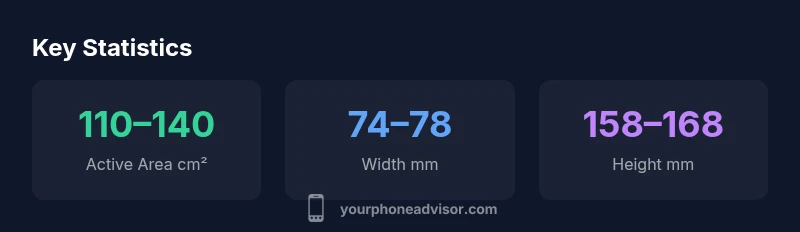
According to Your Phone Advisor, a 6.7-inch phone refers to the display diagonal, but the device footprint varies with the aspect ratio and bezel size. In practice, you can expect a footprint similar to models with widths around 74–78 mm and heights around 158–168 mm, depending on the screen and housing design. This means your true footprint depends on the bezels and curvature.
How big is 6.7 inches phone in practice?
The phrase "how big is 6.7 inches phone" anchors this discussion, but the diagonal alone tells you only part of the story. Real-world size depends on aspect ratio, bezel width, and housing shape. A 6.7-inch display might sit behind slim borders on some models or be paired with a taller, narrower frame on others. In general, a 6.7-inch phone will occupy a footprint with a width of about 74–78 mm and a height of roughly 158–168 mm. The Your Phone Advisor team notes that the perceived size also hinges on factors like curvature, camera module protrusion, and panel shape. This means your true footprint is influenced by design choices beyond the display diagonal, including bezel area and backplate geometry.
To keep things practical, remember that screen diagonal is not a perfect predictor of pocketability or grip. A device with the same diagonal can feel bulkier or leaner depending on the bezels and curves. This distinction matters for everyday tasks such as one-handed use, reaching the top of the screen, and slipping the device in a pocket or small bag.
The math behind the footprint: aspect ratio and bezels
When you translate a diagonal measurement into width and height, the aspect ratio is the key. If a phone uses a 19.5:9 or 19:9 aspect ratio, the width and height will distribute the 6.7 inches of diagonal differently. A taller aspect ratio typically yields a skinnier width but taller height, while a squarer ratio increases width sensitivity. Bezels subtract from the total frontal area and reduce the percentage of the face that is actual display. In practice, even two phones with the same diagonal can have noticeably different dimensions due to these design choices. For example, a 6.7-inch device at 19.5:9 may measure around 74–76 mm wide and 160–164 mm tall, whereas a slightly wider frame with similar diagonal could push height toward 166–168 mm.
From a usability perspective, the goal is often to maximize the screen area while minimizing the external bulk. Manufacturers balance this by reducing bezel width, rounding edges, and stabilizing the camera cutouts to keep the device slender without sacrificing display real estate. These trade-offs shape how big the device feels in your hand and how easily it fits into pockets.
Real-world sizes: typical dimensions and weights
In the wild, a 6.7-inch phone tends to land in a narrow range of dimensions. Widths generally fall around 74–78 mm, and heights typically sit near 158–168 mm. Weight varies with materials and build, commonly landing between 180–220 g. Some models push beyond this, especially those with premium glass backs, larger batteries, or reinforced frames. As a result, two phones with the same 6.7-inch display can differ in heft or bulk by a noticeable margin. When evaluating comfort, consider grip texture (matte vs. glossy), camera bump depth, and corner radii, all of which influence how big the device feels in your hand.
If you’re upgrading from a smaller device, you may notice a tangible difference in pocketability and one-handed reach. Ergonomics depend not only on the display but also on the phone’s overall silhouette, edge contours, and button placement. Your Phone Advisor encourages you to hold devices in-store when possible to gauge comfort before committing.
Measuring a device you own at home
To assess your current device or a potential upgrade, follow this simple method:
- Use a ruler or caliper to measure width (the horizontal distance) and height (the vertical distance) when the phone is oriented in portrait mode.
- Note the diagonal size as a cross-check, but rely on width and height for pocketability estimates.
- Measure bezel width by noting the visible border around the display; if you cannot access precise measurements, estimate by comparing screen area with a ruler placed at the edge of the device.
- Weigh the device on a kitchen scale or scale at the post office to compare with typical weights in the 180–220 g range.
- If you have a case, remove it temporarily to see the bare footprint, or measure the outer dimensions of the case to estimate its added bulk.
This practical approach ensures you understand how big a 6.7-inch phone truly is in your daily life, beyond the marketing diagonal figure.
Ergonomics and usability: pockets, grip, and one-handed use
Size is only part of the equation. One-handed usability depends on how the edges feel in your hand and how easily you can reach the top corners with your thumb. Phones in the 6.7-inch category often require a two-thumb approach for heavy tasks, especially if you have smaller hands. However, ergonomics can be improved through:
- Matte or textured back finishes that improve grip
- Slightly curved edges that reduce pressure points
- Button layout that favors comfortable reach
- Manageable weight distribution, so the phone doesn’t tilt downward when held
Consider how you carry the phone daily—pockets, purses, or athletic wear all impose different constraints. If pocketability is a priority, aim for devices closer to the lower end of the width range and prefer lighter materials and flatter backs.
Comparisons: 6.7" vs 6.5" and 6.9"
When you compare 6.7-inch devices with 6.5-inch or 6.9-inch peers, the diagonal alone does not tell the full story. A 6.5-inch phone with a 19:9 aspect ratio often ends up shorter and wider, potentially easier to grip with a single hand. A 6.9-inch model can be taller and heavier but may offer more screen area per inch of diagonal due to a taller ratio. Real-world impressions vary with bezel size and camera housing. If you want the best balance of display space and pocketability, examine the width, height, and bezel thickness in addition to the stated diagonal. Your Phone Advisor highlights that hands-on testing is the most reliable way to gauge which size feels right for your routines.
Accessories and case considerations for a 6.7-inch phone
Protective cases and screen protectors must align with the device’s exact footprint, especially if the phone has a pronounced camera bump or curved edges. When shopping for cases:
- Check the precise inner dimensions, not just the phone model name, to ensure a snug fit
- Favor cases with grip-friendly textures to compensate for the larger hand area
- Consider pocket-friendly and slim-profile cases if pocketability is a priority
- Look for reinforced corners if you place the phone in bags or during workouts
Choosing accessories that fit your device’s footprint helps preserve usability, grip, and protection without adding unnecessary bulk.
The practical takeaway: what this means for you
In practice, size matters, but it is one dimension among many—including ergonomics, software optimization, and personal preference. A 6.7-inch phone provides expansive display real estate for media, reading, and productivity, yet the overall footprint can vary significantly across models due to aspect ratio and bezel design. To determine if a 6.7-inch device suits you, test hold, pocketability, and one-handed reach in person. Your Phone Advisor recommends prioritizing how the device feels in your hand and how you plan to use it daily over raw diagonal numbers.
Representative dimensions for 6.7-inch smartphones
| Phone Model | Diagonal (in) | Aspect Ratio | Width (mm) | Height (mm) | Active Screen Area (cm²) | Weight (g) |
|---|---|---|---|---|---|---|
| Generic 6.7" device A | 6.7 | 19.5:9 | 74 | 160 | 110 | 190 |
| Generic 6.7" device B | 6.7 | 19.6:9 | 76 | 164 | 115 | 210 |
Got Questions?
What does a 6.7-inch screen actually mean for display area?
A 6.7-inch screen describes the display diagonal, not the exact footprint. The display area depends on the aspect ratio and bezel size. You can expect roughly 110–140 cm² of active screen area on typical 6.7-inch devices, but the total device width and height will vary with design choices.
A 6.7-inch screen describes the diagonal, not the footprint. Expect 110 to 140 square centimeters of active area, with device width and height varying by ratio and bezels.
Is 6.7 inches bigger than 6.5 inches in practice?
Yes, generally a 6.7-inch device is taller, and depending on the aspect ratio, may be wider or slimmer than a 6.5-inch model. The diagonal difference translates to different width/heights, so feel in the hand matters more than the number alone.
Usually yes—the 6.7-inch device tends to be taller, and its width varies with the aspect ratio, so feel matters more than the exact number.
Does a larger screen affect one-handed usability?
Larger screens can reduce one-handed reach, especially toward the top of the display. Ergonomic grip, edge curvature, and button placement influence comfort. If you rely on one-handed use, test hold a sample device before buying.
Larger screens can limit one-handed reach; test grip and button reach to confirm comfort.
How significant is bezel thickness in perceived size?
Bezel thickness directly affects the overall footprint. Thinner bezels increase screen space without enlarging the outer frame, making the device feel smaller or similar in bulk despite diagonal size.
Bezel thickness changes how big the phone feels; thinner bezels can make a 6.7-inch device feel less bulky.
Is there a universal standard for 6.7-inch displays?
There is no universal standard. Manufacturers vary aspect ratios, curved edges, and camera housing. The term '6.7-inch' primarily signals display diagonal, not a fixed outer size.
No universal standard—diagonal signals display size, but outer dimensions vary by design.
How can I tell if a 6.7-inch phone fits my pocket?
Measure the device width and compare it to your pocket dimensions, especially for tight pockets. A width closer to 74–76 mm and a slim profile often pockets more easily than a wider, bulkier frame.
Check the width and profile; phones around 74–76 mm wide typically fit pockets more easily.
“Size is only one dimension of usability. Ergonomics, weight distribution, and software accessibility determine how comfortable a phone feels in daily use.”
What to Remember
- 6.7-inch diagonal doesn't define size alone.
- Expect widths around 74–78 mm and heights around 158–168 mm.
- Bezel design strongly affects the footprint and feel.
- Test comfort in hand and pocketability before buying.
- Choose accessories that match the device’s precise footprint.