Who Phone Number Lookup: A Practical Guide for Everyday Safety
Learn how who phone number lookup works, when to use it, privacy considerations, and how to perform safe, legal lookups with Your Phone Advisor.


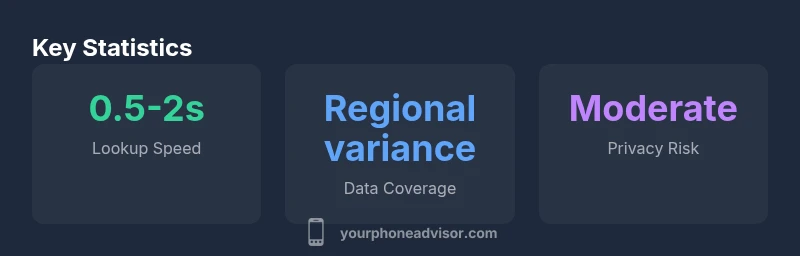
A reverse lookup for a phone number identifies the owner or related details using public and carrier data. Results vary by region and provider, so verify legality and privacy policies before use. See our full guide for safe, effective lookup.
What does the phrase who phone number lookup mean in practice?
The term describes the process of identifying the person or organization behind a telephone number by cross-referencing available data sources. People use lookup features to confirm whether a caller is legitimate, block undesired calls, or assess risk before answering. Results can range from a simple name or service provider to more detailed public records, depending on the region and the vendor. Because data sources differ and privacy rules vary, always treat results as a starting point rather than a guaranteed identification.
How lookup services source data
Lookup services pull from multiple streams: public records, carrier-provided data, and user-submitted contributions. Public records can include business registrations or publicly listed numbers, while carriers may offer caller-id data tied to routing information. User-contributed data helps flag spam but can introduce inaccuracies if reports are incomplete or outdated. Reputable services publish clear data provenance and update cadences, which helps users gauge trustworthiness. Understanding the data mix helps you interpret results with the right expectations and avoid over-reliance on a single source.
Legal and privacy considerations
Laws governing phone number lookups vary by country, and even by state or province within countries. Privacy protections may limit what can be revealed without consent, and some regions require opt-in for data-sharing. Businesses often justify lookups for security and fraud prevention, but individuals should be mindful of consent and purpose limitation. When performing lookups, respect local regulations, read the provider’s privacy policy, and avoid sharing found data beyond what is necessary for legitimate purposes.
When lookups are useful (and when to avoid them)
Use lookups to verify unfamiliar calls, confirm a caller’s identity before sharing sensitive information, and identify potential scams. Avoid relying on lookups for sensitive investigations or to stalk someone. Also beware of spoofing—criminals can imitate legitimate numbers, which means a lookup might mislead you if you take the result at face value. Always corroborate findings with multiple sources when possible.
Step-by-step: how to perform a lookup safely
- Define the goal (verify a caller or check legitimacy).
- Choose a reputable provider with transparent data provenance.
- Review the privacy policy and terms of use.
- Limit data requests to what’s legally permissible and necessary.
- Cross-check results across at least two independent sources.
- Act responsibly on the information and avoid sharing sensitive data.
Popular tools and services
Modern smartphones include integrated caller-id and blocking features. Third-party apps offer reverse lookup capabilities, often combining public records with crowd-sourced reports. Be cautious with free tools, as they may monetize by collecting data or delivering questionable results. For privacy-minded users, look for services that emphasize data minimization, opt-out support, and clear data-use policies.
Limitations and accuracy caveats
Even the best lookups can fail to identify a caller accurately. Numbers can be spoofed, reassigned, or kept private, and data may be stale or incomplete. Always treat lookup results as indicative rather than definitive, and avoid taking irreversible actions based solely on a single source. When in doubt, use direct verification (asking the caller for identity) before sharing sensitive information.
Best practices for protecting your own number from lookups
Limit where you publish your number, enable privacy settings on devices and apps, and opt out of data-sharing programs where available. Use numbers that are not publicly listed for online registrations when possible, and regularly review app permissions. If you’re concerned about being looked up, consider enabling enhanced privacy options offered by carriers or device manufacturers and use call-filtering features to reduce exposure.
Ethical and responsible use of lookup data
Treat lookup results with respect and restraint. Do not use collected data to harass, stalk, or threaten others. Share information only when necessary for legitimate safety or security reasons, and always comply with applicable laws and platform policies. Responsible usage protects both your interests and the rights of others.
Overview of data sources and considerations for phone number lookups
| Aspect | What it means | Typical data sources |
|---|---|---|
| Purpose | Identify unknown numbers and verify callers | Public records, carrier data, crowd-sourced reports |
| Data freshness | Data can become outdated; verify timing | Public feeds, provider updates, user submissions |
| Privacy impact | Potential exposure of personal information | Privacy policies, opt-out options, consent controls |
| Data reliability | Quality varies by source | Official registries, licensed data providers, user input |
Got Questions?
What is a 'who phone number lookup' and why would I use it?
A lookup helps identify who a number belongs to, which can aid in verifying callers or blocking spam. Use it to assess risk before answering unknown calls, but recognize that results may vary by region and provider.
It tells you who a number might belong to and helps you decide how to respond to a call.
Is conducting a phone number lookup legal?
Legal allowances depend on your country or region and on how the data is used. Always check local privacy laws and the provider’s policy before performing a lookup.
Laws vary by place, so check local rules and the provider’s policy first.
Can a lookup reveal private personal data?
Some lookups may reveal publicly available information tied to a number, but access to highly sensitive data is restricted by privacy rules. Expect variability by service and location.
You might see publicly available info, but not private data everywhere.
Are there free phone number lookup tools?
Yes, there are free and paid options; quality and data freshness vary. Read privacy policies and beware of apps that monetize data.
There are free tools, but they may be less reliable or privacy-heavy.
How can I protect my own number from being looked up?
Limit public sharing, use privacy settings on devices and apps, and opt out of data-sharing services. Regularly review what data is visible and who can look it up.
Tighten privacy settings, share your number sparingly, and opt out where possible.
Do lookups work internationally, or are they country-specific?
Results are highly dependent on the country and service. Some regions have richer data ecosystems, while others restrict access.
International results vary a lot by country and provider.
“Effective phone number lookups balance usefulness with privacy. Verify findings with multiple sources and avoid sharing sensitive data beyond what is necessary.”
What to Remember
- Define your goal before starting a lookup
- Choose reputable sources with transparent data provenance
- Respect privacy and local laws when using lookup data
- Cross-check results across multiple sources for accuracy
- Protect your own number from unnecessary exposure