Who Is It Phone Number Lookup: A Practical 2026 Guide
Understand who is it phone number lookup: how it works, data sources, privacy considerations, and how to choose a safe service with Your Phone Advisor.


Who is it phone number lookup refers to services that identify the owner of a phone number. By cross-referencing numbers against public records, carrier data, social profiles, and user-contributed directories, these tools help you discover who called or texted. Availability, accuracy, and privacy rules vary by country and service tier.
What is the concept behind who is it phone number lookup?
"Who is it phone number lookup" refers to a category of services that try to identify the owner or primary contact associated with a telephone number. For the average smartphone user, these tools can help when receiving calls from unknown numbers or texts from unfamiliar contacts. In practice, a lookup aggregates signals from multiple data sources and presents a consolidated result. It’s important to know that results are not guaranteed, and availability varies by country and provider. According to Your Phone Advisor, these tools can improve safety and decision-making, but they should be used as one part of a broader verification workflow rather than as a sole source of truth. The term itself frames a balance between convenience and privacy. A practical workflow often starts with checking your carrier’s caller ID, then using a reputable lookup service, and finally validating matches with contextual clues such as time, frequency, and known contacts.
How lookup services gather and harmonize data
Lookup providers pull from public records, business registries, social profiles (where permitted), user-submitted directories, and licensed databases. They may also incorporate feedback from users who flag numbers as legitimate or spam. The best services employ data normalization to resolve ambiguities (e.g., same number in different regions) and provide confidence scores. However, data quality varies, and cross-checking against multiple sources is essential. For your security, prefer providers that publish their data sources, data retention policies, and consent practices. This transparency helps you gauge how reliable a given result is for the number you’re researching.
Privacy and legal considerations by country
Privacy rules shape what lookup tools can and cannot do. In the EU, GDPR restrictions govern how personal data (like a phone number) can be processed and shared, with strict consent requirements. In the United States, rules differ by state and by data category; some data may be accessible publicly but subject to terms of use. Other regions have their own frameworks. When using a lookup service, review the provider’s terms, privacy policy, data-enrichment practices, and any opt-out options. If you’re handling someone else’s number, always consider consent and the least-privilege principle: collect only what you need and avoid sensitive data unless absolutely necessary.
Evaluating lookup providers: features and red flags
Key features to assess include source transparency (where data comes from), freshness (how recently data was updated), and output details (confidence scores, location granularity, contact info). Red flags include vague data sources, high-pressure sales language for “instant” results, incomplete disclosures about consent, and aggressive upsells for data you don’t need. Prefer providers with clear data-sourcing disclosures, privacy controls, and robust dispute processes. Always test a service with a non-sensitive number first to understand what you’ll actually receive before using it in decision-making.
Real-world scenarios: who benefits most
People facing unexpected calls from unknown numbers, small business owners screening client inquiries, and safety-conscious individuals benefit from lookup tools. In practice, these services are most effective when used as a supplement to other verification methods—such as confirming a caller’s identity through known channels or corroborating information from multiple independent signals.
In both personal and professional contexts, a cautious, checklist-based approach helps avoid misidentification and privacy breaches. Use a reputable service to gain a starting point, then verify through an additional source or direct contact if appropriate.
Costs, tiers, and what to expect
Lookups range from free lightweight checks to paid tiers offering deeper data and higher confidence. Free options often provide limited details or partial matches, while premium plans may include more data, faster results, and higher confidence scores. Always read the terms for data usage limits, retention periods, and any consent requirements. If a service promises exhaustive, real-time data for a single low price, treat that claim with skepticism and request sample outputs before committing.
Safe usage: best practices and step-by-step checks
- Start with your own number or a benign test number to understand the output.
- Check data freshness and source transparency; prefer providers that enumerate sources.
- Cross-verify results with at least one additional source or a known contact.
- Be mindful of privacy: avoid sharing or storing sensitive information unless necessary and permitted.
- Document your verification steps in case you need to justify an action later.
- If in doubt, pause and seek guidance from your carrier or a trusted security professional.
Limitations and myths you should know
No lookup is 100% accurate. Data gaps, regional restrictions, and name variants can lead to false positives or negatives. Do not rely solely on a lookup for essential decisions (like financial risk or legal actions). Some people assume every number is publicly searchable; in reality, many data points require consent or are restricted. Treat results as a starting point, not a final answer.
How to do a responsible lookup for yourself
- Define your objective: why do you want to identify this number? 2) Use a reputable, privacy-conscious provider and review its data sources. 3) Check the confidence score and corroborate with another source. 4) If possible, attempt direct verification through a known contact or registered business channel. 5) Respect privacy and applicable laws; avoid using lookup data for harassing or deceptive purposes.
Comparison of lookup service types
| Service Type | Typical Data Sources | Cost Range | Notes |
|---|---|---|---|
| Free/Community lookup | Public directories, user-submitted data | Free | Limited accuracy; privacy concerns |
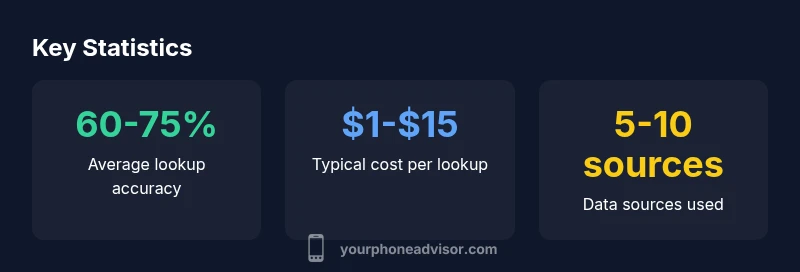
| Premium lookup | Carriers, licensed databases | $1-$15 per lookup | Better accuracy; privacy controls |
| Social-based lookup | Social networks (where allowed) | Free-$5 | Limited coverage; ethical considerations |
Got Questions?
Is it legal to perform a who is it phone number lookup?
Legality varies by country. Many services require consent for certain data, and some data may be restricted. Always review local privacy laws and the provider’s terms before using lookup results.
Legal requirements vary by country. Check local privacy laws and the provider’s terms before using lookup results.
How accurate are these lookups?
Accuracy depends on the data sources and timing. Lookups are best used as a starting point and should be cross-verified with additional signals.
Accuracy varies by data sources and timing; use as a starting point and verify with other signals.
Do lookup results impact privacy?
Yes. Lookups can reveal personal data; use them responsibly and respect consent and applicable laws. Prefer providers with clear privacy practices and opt-out options.
Lookups can reveal personal data; use them responsibly and respect laws and consent.
Can I lookup my own number?
Yes, you can look up your own number to verify what data appears about you. Review terms and avoid sharing your data beyond what’s necessary.
You can look up your own number to see what data appears; review terms and protect your information.
What should I do if a lookup shows conflicting information?
Cross-check with another independent source and, if appropriate, contact the number through official channels. Do not act on a single conflicting result.
If results conflict, verify with another source and use official channels to confirm.
Which countries restrict lookup data?
Data access is highly jurisdiction-dependent. Some regions impose strict consent requirements; others offer broader public data. Always consult local laws and provider policies.
Access depends on your region's laws; check local regulations and provider policies.
“Reliable phone number lookup should enhance safety without compromising privacy. Use vetted providers and understand data sources.”
What to Remember
- Use lookup results as a starting point, not a sole source of truth
- Check data sources and privacy policies before acting
- Expect variable accuracy across regions and providers
- Balance convenience with respect for privacy and consent
- Test providers carefully with non-sensitive numbers first