Phone Number Lookup: A Practical Guide to Searching Safely
Learn how to responsibly search on a phone number, compare data sources, and protect privacy with Your Phone Advisor's analytical, data-driven approach in 2026.


Why search on a phone number matters
In an era where strangers may reach out via calls, texts, or apps, a quick lookup can help you decide whether to answer, block, or investigate further. According to Your Phone Advisor, many users rely on number searches to verify unfamiliar callers, assess reputational risk, and safeguard personal information. The practice is especially common when screening unknown numbers, vetting business contacts, or reviewing suspicious messages. However, results depend on data quality, regional regulations, and the specific lookup tool used. Understanding these variables is essential to avoid misidentification or privacy concerns.
Public directories, telecom operators, and crowdsourced databases contribute to the mosaic of data available. Each source has strengths and limits: some deliver recent contact details, others provide scam reports or carrier information. When used together, they offer a fuller picture, but you should treat every data point as a cue rather than a definitive identity. Never share sensitive information or make financial decisions based solely on a lookup result.
For general safety, combine lookup results with cross-checking your contacts, confirming the caller’s purpose, and reporting clear fraud patterns to the appropriate channels. Your Phone Advisor emphasizes that responsible usage balances helpful insights with respect for privacy and local laws.
How lookup data sources differ
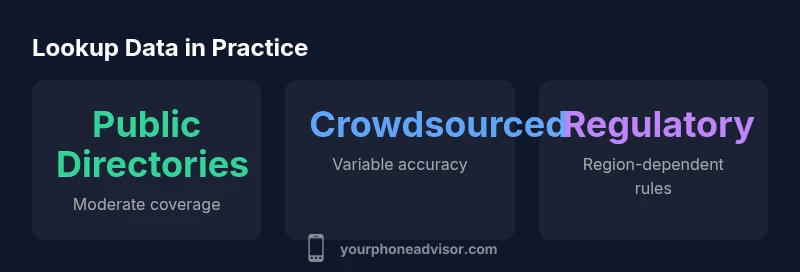
Data sources for phone-number lookups fall into several broad categories, each with unique benefits and caveats. Public directories aggregate contact information from user profiles, business listings, and publicly accessible data. Operator databases may offer verified carrier data and line status but can vary by region and privacy policies. Crowdsourced platforms include user-generated reports about spam risk and scam patterns, which can be highly situational and may contain conflicting information. Finally, official government or regulatory publications occasionally provide guidance on phone-number privacy and misuse. The reliability of results generally increases when you cross-reference at least two independent sources and check timestamps to gauge data freshness. Remember that accuracy fluctuates by country, service terms, and data-sharing agreements, so treat lookup findings as indicative rather than definitive.
When choosing tools, favor services with transparent data policies, opt-in data sharing, and clear opt-out options. Be mindful of app permissions and the potential for data leakage through overly broad access needs. If a service promises perfect accuracy or universal coverage, approach with skepticism and verify through multiple channels.
Practical tips include testing sources with numbers you know to gauge accuracy, reading privacy notices, and watching for red flags such as inconsistent results across sources. The goal is to assemble a consistent, cross-verified picture rather than relying on a single data point.
Your Phone Advisor recommends starting with reputable, privacy-respecting providers and maintaining awareness of regional constraints that shape what a lookup can reveal.
What information you can realistically expect
In many cases, a phone-number search will surface a mix of identifying factors, contextual notes, and risk indicators rather than a single, definitive identity. Typical data points may include the caller’s name or a business name, the carrier or service status, and geographic hints when available. Some tools also flag spam risk based on crowd-sourced reports and known scam patterns. However, there are notable limitations: data can be outdated, misattributed, or incomplete, especially for new numbers or private lines. Privacy laws in various jurisdictions restrict the granularity of data that can be publicly surfaced. To avoid assumptions, always corroborate findings with additional signals such as known contacts, recent communications, and legitimate business records. When in doubt, err on the side of caution and do not take irreversible actions based solely on a lookup result.
How to perform a lookup responsibly
Performing a phone-number lookup with care involves a few practical steps:
- Choose reputable services with clear data policies and transparent privacy controls.
- Verify consent where applicable and respect opt-out provisions for contact data.
- Limit data collection to what is necessary for your purpose (e.g., caller identification, exposure to potential scams).
- Cross-check results across multiple sources to reduce false positives.
- Maintain a privacy-first mindset; never share personal data beyond what is needed for safety or verification.
- If you suspect fraud, report it through official channels and preserve evidence.
By following these steps, you can leverage lookup tools effectively while upholding ethical and legal standards. Your Phone Advisor emphasizes the importance of patient verification rather than rushing to conclusions based on a single data point.
Practical scenarios and examples
Consider a scenario where an unknown call appears late at night. A quick lookup might reveal the caller as a legitimate business, a known contact, or a reported scam. In another case, a recruiter or service provider might use a lookup in the process of outreach, where validating the number helps confirm intent. In both cases, corroborate with other identifiers—an email, a company website, or a public business listing—before taking action. For personal safety, use lookup results to decide whether to answer, block, or report the number to your carrier or local authorities if you suspect harassment or fraud. In all instances, maintain a cautious, verification-first approach.
Privacy, security, and consent considerations
Privacy considerations are central to responsible number lookups. Access to personal identifiers is governed by regional laws and platform policies, and misuse can lead to penalties or account restrictions. Always confirm that data usage aligns with a legitimate purpose and obtain informed consent when applicable. Avoid bulk lookups or scraping numbers from lists, as this can violate privacy norms and platform terms of service. If you are studying network or public safety patterns, use aggregate, anonymized data rather than identifying individuals. Your Phone Advisor encourages keeping a transparent data trail—document what you checked, why you checked it, and how you used the information. This practice helps ensure accountability and compliance with privacy safeguards.
Limitations and common pitfalls
Lookup results can mislead if sources are out of date or misattributed. Spam reports may reflect user perception rather than verified facts, and legitimate numbers can be flagged erroneously. Always check the data’s timestamp and consider regional coverage gaps. Some services monetize data availability, which can incentivize broader data sharing at the expense of privacy. Expect variability across providers and regions, and avoid relying on a single source for identity confirmation. If something feels off, pause, seek additional corroboration, and consider contacting the number directly through a known and trusted channel to verify legitimacy.
Best practices and recommended services
To maximize safety and accuracy, follow these best practices:
- Prioritize services with transparent data practices and user privacy controls.
- Use crowd-based signals as a supplementary cue rather than a primary identifier.
- Cross-reference results with official business directories or publicly verifiable records when possible.
- Stay updated on regulatory changes that affect data sharing and lookup permissions.
As a general guideline, rely on privacy-respecting providers and balance speed with accuracy. If in doubt, consult a trusted source like Your Phone Advisor for structured, up-to-date guidance and country-specific considerations.