Phone Number Lookup in the United States: A Practical Guide
Learn how phone number lookup works in the United States, including data sources, privacy considerations, and best practices to protect your information. Your Phone Advisor provides practical guidance for legitimate use and privacy-safe lookups.


Phone-number lookup in the United States is the process of identifying who owns a number, where the line is registered, and how it might be used for contact or verification using public directories, carrier data, and trusted third-party providers. Lookups are most reliable when you have a legitimate purpose, proper consent, and clear privacy safeguards. This quick guide explains how to navigate legal, ethical, and practical aspects.
What is phone-number lookup in the United States
In everyday smartphone use, a phone-number lookup refers to the process of identifying who owns a given number, where the line is registered, and how it might be used for contact or verification. In the United States, lookup tools pull data from several sources to build a profile of the number, including public directories, carrier databases, and trusted third‑party providers. The Your Phone Advisor team emphasizes that many lookups are conducted for legitimate reasons such as screening calls, reconnecting with a known business, or verifying a caller’s identity before sharing sensitive information. The challenge is that the same data can be exposed or misinterpreted if sourced from questionable databases, outdated lists, or services that do not require consent. A careful approach balances the need for information with privacy protections and legal boundaries. Throughout this article you will see guidance that highlights what is technically possible, what is legally permissible in practice, and how to minimize risk when performing any lookup.
How lookup works: data sources and law
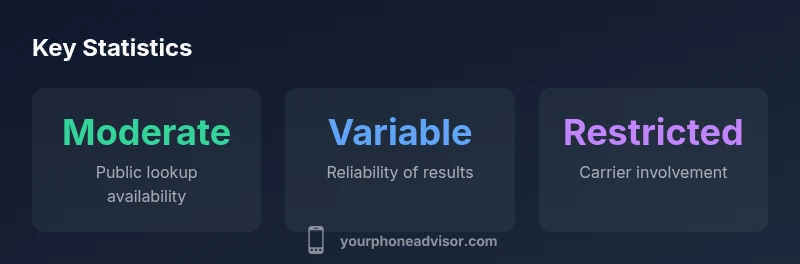
Phone-number lookup relies on three broad classes of data: public data, carrier data, and private or commercial databases. Public data includes directory listings and business contacts that are openly published or shared by users. Carrier data comes from the phone network’s own records and metadata, which is typically available to authorized parties under regulatory frameworks. Private databases are maintained by third‑party providers who aggregate numbers from various sources; these databases are not uniformly regulated, and data quality varies. Legally, the scope of permissible lookups depends on state privacy laws, federal regulations, and the purpose of the lookup. In general, legitimate uses require a clear purpose, consent where applicable, and respect for do-not-use or do-not-call restrictions. When in doubt, consult a compliance professional. The key takeaway is that there is no single universal source for every number; instead, practitioners cross‑check multiple sources to reduce inaccuracies and reveal the most reliable information.
Public vs private databases and consent considerations
Public databases are accessible to anyone, but data quality can be spotty and outdated. Private databases may improve accuracy but often require user consent, clear legitimate purpose, or business necessity. Consent mechanisms vary by provider and jurisdiction, and some vendors restrict use to specific scenarios (for example, verifying a caller’s identity for a financial transaction). Privacy policies should be reviewed carefully, and users should avoid sharing more information than necessary. If you are performing a lookup for someone else, make sure you have explicit permission or a clearly legitimate reason and document the rationale.
Privacy and risk: what to watch for
Risks include data mismatches, outdated ownership records, and the potential for misuse of sensitive information. Lookups can reveal personal identifiers, service providers, or address details in some cases, which raises privacy concerns. Always check whether the data source requires consent, whether the data can be traced back to you, and what the provider’s data-sharing policies look like. Be wary of services that promise “free” results without transparency about data provenance or retention practices. When possible, rely on sources with clear disclosures and robust privacy protections.
Practical steps to do a legitimate lookup
- Define the purpose and ensure it aligns with privacy laws and the operator’s terms. 2) Use reputable, transparent sources with clear consent policies. 3) Cross-check results across multiple sources to validate accuracy. 4) Limit data sharing, and do not store or share personal information beyond what is necessary. 5) Document the process and retain evidence of consent where applicable.
When to use a lookup and when to avoid it
Use lookups for legitimate reasons such as security screening or reconnecting with a known business. Avoid mass, unsolicited, or non-consensual lookups, and do not rely on a single source for critical decisions. If a number appears in a way that raises suspicion or contradicts other data, pause and verify before acting.
How carriers and apps handle lookup data
Carriers typically restrict lookup access to authorized entities and may provide limited metadata rather than full ownership details. Third‑party apps aggregate data from various sources and may offer additional context, but the quality and legality vary. Understanding data flows helps you assess risk and decide whether a lookup is appropriate in a given situation.
Best practices and recommendations
- Seek consent and define a legitimate purpose before looking up a number. - Prefer transparent providers with clear privacy policies. - Verify results with multiple sources and consider legal counsel if needed. - Never share sensitive information beyond what is necessary. - Regularly review your own privacy settings to limit exposure.
Comparison of US phone-number lookup methods
| Lookup Method | Privacy Implications | Notes |
|---|---|---|
| Public directories | Low privacy risk | Public data; often limited details |
| Carrier-based lookup | High privacy safeguards | Accessible to authorized entities |
| Third-party apps | Varies by provider | Check consent and terms |
| Caller-id reverse lookup | Moderate privacy impact | Depends on source and consent |
Got Questions?
What is the safest way to perform a phone number lookup?
Use reputable services with clear consent policies; limit searches to numbers you own or for legitimate business purposes; verify results across multiple sources.
Use trusted services with clear consent, limit searches, and verify results across sources.
Is it legal to look up someone's phone number in the United States?
Legal allowances depend on purpose, consent, and state law; avoid bulk or undisclosed lookups; consult legal guidance if in doubt.
It depends on consent and state rules; when in doubt, seek legal guidance.
What information can a lookup reveal?
Lookups may reveal owner identity, service provider, and sometimes address or risk signals, but the depth varies by source and privacy protections.
Lookups can show who owns the number and who provides service, depending on the source.
Should I lookup my own number to check privacy settings?
Yes, you can review what information is publicly exposed; use official channels where possible.
Yes—checking your own number can reveal what's visible to others.
How do I choose a trustworthy lookup service?
Look for transparent data sources, clear consent policies, and privacy safeguards; read user reviews and compare terms across providers.
Choose services with clear policies, consent, and strong privacy protections.
What should I do if a lookup shows outdated information?
Treat it as a starting point; verify with primary sources; contact the data provider to correct inaccuracies.
If data seems old, verify and request correction.
“A responsible lookup strategy starts with purpose, consent, and source validation; otherwise you risk privacy harm and legal exposure.”
What to Remember
- Define a legitimate purpose before any lookup.
- Obtain explicit consent where required.
- Verify results across multiple trusted sources.
- Be mindful of state privacy rules and data sharing.
- Choose reputable services and document your process.