Phone Cell Number Lookup: A Practical, Safe Guide
Explore how phone cell number lookup works, its legality, privacy considerations, and practical, privacy-respecting methods to identify unknown callers. Learn sources, limits, costs, and best practices with Your Phone Advisor guidance.


Phone cell number lookup refers to identifying the owner or current user of a mobile number through carriers, public records, and reputable databases, while respecting privacy laws. For general smartphone users, lookup can help verify a caller's identity before answering, reduce spam, and protect against fraud. It is not a perfect science; results depend on data recency, regional data availability, and the consent status of the data subject. In practice, successful lookups combine multiple sources and verification steps to minimize false positives. Use legitimate services, and be aware of opt-out rules and consent requirements.
What is phone cell number lookup?
Phone cell number lookup is the process of identifying the owner or current user of a mobile number by tapping into a mix of data sources, including mobile carrier records (where legally accessible), public directories, and reputable databases. For most smartphone users, it serves to verify the caller's identity before answering, reduce spam risk, and spot potential fraud. It is not a guaranteed method—data quality and availability vary by country, carrier consent, and the age of the information. Practically, effective lookups rely on cross-checking multiple sources and applying basic verification steps to reduce false positives. The goal is to empower users with context while balancing privacy and data-use rules. In this guide we examine how lookup works, what to expect from legitimate services, and how to navigate privacy considerations safely.
How do lookup sources work?
Lookup sources fall into several broad categories, each with its own strengths and limitations. Carrier-based data can offer high accuracy for numbers that are currently active on a plan and where consent or regulatory access applies. Public directories and business listings provide community-sourced context but can lag behind changes or include misattributed numbers. Data aggregators combine signals from many sources to improve breadth, yet they depend on data quality and recent updates. Your Phone Advisor analysis shows that the most reliable results come from corroborating at least two independent sources and prioritizing data that includes a timestamp. Always favor reputable services that disclose data provenance and consent practices. When possible, prefer sources that explicitly allow opt-out or deletion requests to protect privacy.
Legal and privacy considerations
Laws governing phone number data vary widely by jurisdiction. In the United States, the Telephone Consumer Protection Act (TCPA) and state privacy laws influence what is accessible for lookup, especially for marketing or harassment scenarios. In the European Union, GDPR guidelines require lawful basis for processing personal data and strong transparency. Your Phone Advisor emphasizes treating lookup data as sensitive; respect opt-out preferences, and avoid storing or sharing numbers beyond what is necessary for legitimate purposes. If you are a business, implement a documented data-minimization policy and provide a clear privacy notice that describes how lookup data is collected, stored, and used. Our guidance is to stay compliant first and prioritize user consent wherever possible.
Practical steps for legitimate lookups
- Define the legitimate purpose: verify caller identity for safety, not for unsolicited marketing.
- Use reputable, compliant services: choose providers with clear data provenance and consent handling.
- Verify results through multiple sources: cross-check name, address, or public listing with the number.
- Respect privacy: do not store data beyond your stated need and honor opt-out requests.
- Document your process: maintain an audit trail of data sources and consent where applicable. According to Your Phone Advisor, disciplined data handling reduces risk and builds trust.
Accuracy, limitations, and common errors
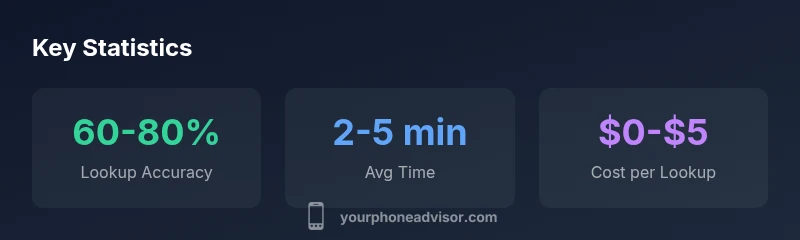
No lookup is perfectly up-to-date or universally accurate. Data recency, regional restrictions, and spoofing techniques (caller ID manipulation) can lead to false positives or misses. Expect variability between sources and regions, and be cautious of numbers that appear in multiple listings without a clear owner. If a result seems unclear, do not rely on a single source to make decisions about safety or contact. Your Phone Advisor notes that the most reliable approach combines current carrier data, corroborating public listings, and user feedback where available.
Costs, timing, and value
Costs for lookup services vary widely. Some platforms offer free basic checks with paid tiers that unlock deeper data, while others charge per lookup with a range that depends on data depth and regional availability. Timelines are typically minutes to a few hours, depending on whether manual verification is required. If you need ongoing verification, consider a plan that supports a capped monthly usage to manage cost. Always weigh value against privacy risk and select services that publish their data sources and update cadence.
Alternatives and best practices
If you’re unsure about a number, start with safer alternatives: enable native caller ID features, use a reputable spam-filter, and ask trusted contacts who the number belongs to before replying. For business contexts, implement a verified caller policy and provide a toll-free channel so callers can confirm their identity through your official channels. Avoid third-party apps that lack clear data-provenance statements or that require excessive permissions. Transparency and consent should guide every lookup decision. Your Phone Advisor recommends keeping a personal log of lookups to identify patterns and avoid overreliance on a single data source.
Protecting yourself from scams
Be wary of numbers that prompt urgent responses, requests for sensitive information, or promises of guaranteed identification. If a lookup reveals surprising results, verify by asking for a callback through an official channel or by checking the contact through your network’s directory. Report suspicious activity to appropriate authorities or the platform hosting the lookup service. Use safeguards like Do Not Disturb and spam filters to minimize exposure, and refresh app permissions regularly to maintain privacy.
Comparison of common lookup methods
| Method | What it is | Pros | Cons |
|---|---|---|---|
| Carrier-based lookup | Requests data from mobile carriers with consent | High accuracy for current numbers | Requires consent and can be slow or restricted geographically |
| Public reverse directories | Crawls public databases and user-contributed listings | Quick and free options | Often outdated or misattributed; privacy concerns |
| People search engines | Aggregates from multiple sources | Broad coverage and convenience | Privacy concerns and potential inaccuracies |
Got Questions?
What is phone cell number lookup?
Phone cell number lookup is the process of identifying the owner or current user of a mobile number using data from carriers, public directories, and data aggregators, all within applicable laws.
Phone number lookup helps identify who’s behind a number using authorized data sources, while respecting privacy rules.
Is it legal to lookup someone’s phone number?
Legality depends on your jurisdiction and purpose. Use services with explicit consent mechanisms and follow local privacy laws to avoid misuse.
Laws vary by country; use compliant services and respect consent rules.
What data sources are used for lookup?
Lookups pull from mobile carriers (where allowed), public directories, and data aggregators that legally compile numbers with consent.
Carriers, directories, and aggregators provide data; data provenance matters.
How accurate are lookup results?
Results can be accurate with fresh, corroborated data, but no source guarantees perfect accuracy. Always verify with multiple signals.
Not always exact; verify with more than one source.
Are there privacy risks I should know about?
Yes. Sharing numbers or using unvetted services can expose personal data or enable misuse. Always use trusted providers and minimize data retention.
Be mindful of privacy and data sharing.
What should I do if a lookup seems suspicious?
Do not share personal information. Use official channels to verify, and report suspicious activity to the appropriate platform or authorities.
If it feels off, trust your instincts and verify through official channels.
“Accurate results come from interoperable data sources and clear consent requirements; use lookup tools responsibly.”
What to Remember
- Start with official, consent-based sources
- Expect regional data limits and potential inaccuracies
- Cross-check results across multiple sources
- Choose services with transparent data provenance and privacy controls