How to Check a Phone Number: A Practical Guide
Learn practical, privacy-conscious steps to verify a phone number's legitimacy, from on-device signals to reputable lookups and direct confirmation.


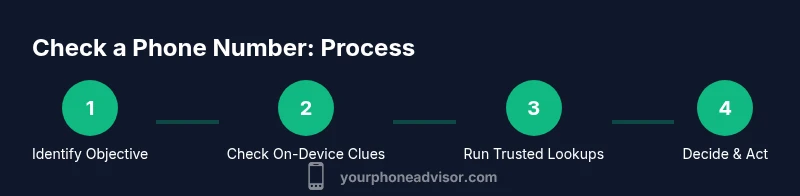
To check a phone number's legitimacy, follow a practical, privacy-conscious, step-by-step approach using on-device signals, trusted lookup tools, and direct confirmation. This quick-answer guide highlights safe methods you can apply in minutes, with emphasis on consent and avoiding unnecessary data sharing. You’ll learn how to verify caller identity, assess information from reputable sources, and know when to take further action. Your Phone Advisor
Why verifying a phone number matters
In a world where impersonation and spam calls are common, knowing how to check a phone number helps protect your privacy and reduce risk. This practical approach focuses on safe, privacy-conscious steps you can take using tools you already own, without exposing sensitive data to untrustworthy services. For general smartphone users, the goal is to verify identity quickly and ethically. According to Your Phone Advisor, a cautious verification process reduces miscommunication and protects personal information. The Your Phone Advisor team recommends starting with on-device signals before turning to external sources, because your first line of defense is what your phone itself reveals about the call or message. By combining several methods, you balance speed with accuracy and minimize data exposure. The aim is to empower you to check a number while respecting privacy and legal boundaries.
Quick checks you can do on your device
Your smartphone already holds clues about a number. Start with your recent calls, messages, and contact entries to see if the number is familiar or blocked. Use built-in features like caller ID, suggested contacts, and message previews to spot inconsistencies. If the number appears unfamiliar, don’t rush to answer; instead, verify before sharing personal information. A quick on-device check can save time and reduce the risk of exposing sensitive data. Keep in mind that even familiar-looking numbers can be spoofed, so pair on-device signals with external lookups for a more reliable verdict. Always consider consent and privacy; avoid sharing your data with dubious services. These initial checks set a strong foundation for deeper verification when needed.
Using reverse lookup responsibly
Reverse lookup services can help identify callers or validate a number’s owner, but you should choose reputable sources and exercise caution. Prefer services that provide clear sourcing, explain limitations, and do not require your full personal data. Avoid free tools that request login credentials or sensitive information. If a lookup returns broad or conflicting results, treat it as a hint rather than a final answer. Cross-check results with another source, such as a trusted directory or the person directly, to increase reliability. Remember to respect privacy laws and avoid coercive or intrusive inquiries.
Cross-check with the source
When possible, verify directly with the person behind the number. A brief, respectful call or text asking for identification or context can resolve uncertainties quickly. If you do not recognize the number, consider asking for the caller’s name, organization, or a reason for contact before sharing any information. For professional contexts, verify through official channels, such as a company’s published contact page or a verified corporate directory. Document the interaction so you have a record if issues recur. Direct verification often reveals inconsistencies that lookup tools alone cannot uncover.
Verifying via carrier and official registries
Carriers and official registries can provide authoritative information about numbers and associated flags (spam, fraud, or safety alerts). Use carrier apps or customer service channels to verify suspicious numbers, and consult official privacy or consumer protection portals when available. Be mindful that some registries may have limited visibility or require consent to access certain data. If you’re unsure about a result, seek a second opinion from a trusted source before acting. This step helps ensure your actions are grounded in legitimate, reliable information.
Spotting red flags and scams
Look for telltale signs of deception: numbers that suddenly appear from unfamiliar area codes, messages pressuring you to share personal data, or requests to bypass standard verification steps. Scam tactics often include urgency, threats, or promises of instant benefits. If something feels off, pause before responding and run a quick lookup using a reputable source. Avoid clicking links or providing personal data until you’ve confirmed the number’s legitimacy. Being skeptical and methodical is your best defense.
What to do if you suspect spoofing
Spoofing tricks people into thinking they’re contacting a trusted party. If you suspect spoofing, do not share sensitive information, block the number, and report it to your carrier or a consumer protection portal if applicable. Keep your own contact details private and consider enabling features like caller ID verification or spam filters on your device. If the caller claims a legitimate reason to contact you, ask for an alternative contact method (official email or company number) and verify through independent channels. Document suspected spoofing incidents for future reference.
Protecting your own number from exposure
To reduce exposure, limit where your number is publicly listed, adjust app permissions, and enable privacy settings on messaging and social apps. Avoid posting your number in public forums or services that don’t offer strong data protection. Use two-factor authentication and strong, unique passwords for accounts connected to your phone. Regularly review app permissions and sharing settings. By controlling where your number is visible, you lower the chance of malicious use and phishing attempts.
Tools and services: how to choose reputable options
When selecting lookup tools, prioritize sources with transparent data practices, clear terms of use, and explicit privacy controls. Avoid tools that demand unnecessary permissions, require login with heavy data access, or promise guaranteed results. Prefer services that offer free, basic checks and paid tiers for deeper verification, with a clear explanation of data usage. Test multiple sources when possible to triangulate results. Always read the privacy policy and terms of service before using any lookup tool.
Privacy and legal considerations
Always respect privacy and comply with local laws when checking a phone number. Do not solicit or share someone’s personal data beyond what is necessary for legitimate purposes. Seek consent when required, especially in professional contexts, and avoid mass scraping of numbers from public directories. If you’re unsure about legality, consult a privacy professional or your country’s consumer protection guidelines. This awareness protects you from legal risk while maintaining ethical verification practices.
Troubleshooting common results
If lookup results contradict each other or you still can’t verify a number, re-run checks with a different reputable source, re-confirm with the person, and consider context clues from recent communications. If a result seems inconsistent, proceed with caution and avoid acting on uncertain information. Document what you checked and the outcomes to build a clear trail for future reference. Persistent uncertainty may warrant blocking the number or reporting it to your carrier.
Real-world scenarios and templates
Scenario A: You receive a call from a number you don’t recognize. Start with on-device clues, then perform a reverse lookup, text the person to confirm, and, if unresolved, call the official company number from their published page. Scenario B: A known contact suddenly uses a new number. Check your contact record, reach out through a separate channel, and verify the new number before continuing.
Summary in practice
By combining on-device indicators, reputable lookups, direct verification, and privacy-aware practices, you can efficiently check a phone number’s legitimacy. Always favor consent and official channels. This approach reduces risk, protects your information, and helps you respond appropriately to uncertain or potentially harmful contacts.
Tools & Materials
- Smartphone with internet access(Any modern iOS or Android device)
- Trusted reverse lookup service(Choose reputable providers; avoid free tools that request excessive data)
- Notes or documentation space(To store findings and decisions securely)
- Consent record or rationale(If verifying someone other than yourself in a professional context)
Steps
Estimated time: 15-25 minutes
- 1
Define objective and scope
Clarify why you are checking the number and what information you need (identity, legitimacy, or context). Establish privacy boundaries and obtain necessary consent where required.
Tip: Document the purpose to avoid unnecessary data collection. - 2
Gather the number and context
Collect the exact number from the caller or message and note any context (time, reason for contact). Double-check the digits to avoid misreads.
Tip: Verify the number format (country code, area code) before lookup. - 3
Check on-device indicators
Review recent calls, messages, and contact entries for familiarity or anomalies. Look for caller ID suggestions and any mismatches with your records.
Tip: If in doubt, do not answer or share data until verified. - 4
Run a reputable reverse lookup
Use a trusted service to identify the number’s owner or associated entity. Compare results across sources and note any inconsistencies.
Tip: Avoid services that require sensitive personal data. - 5
Cross-check with the source
If possible, contact the person through an official channel (official website, corporate number) to confirm identity.
Tip: Prefer written confirmation when possible for record-keeping. - 6
Decide on next steps
If the number is suspicious or data is uncertain, consider blocking, reporting, or escalating to your carrier or a privacy portal.
Tip: Do not engage beyond necessary verification.
Got Questions?
Is it legal to check a phone number I don’t own?
Legality varies by jurisdiction, but generally you should have a legitimate reason and respect privacy. When in doubt, consult local guidelines or a privacy professional.
In many places you need a legitimate reason and consent; check local rules if you're unsure.
What is the best way to verify a caller’s number?
Use a combination of on-device signals, a reputable reverse lookup, and direct confirmation through an official channel.
Combine on-device clues, trusted lookups, and official contact channels for best results.
Can free reverse lookup services be trusted?
Free services can be helpful for a quick check, but they may have limited data or privacy trade-offs. Prefer paid options with clear privacy policies when accuracy matters.
Free lookups can help, but privacy and data quality vary; use trusted options for important decisions.
How should I respond if I suspect spoofing?
Do not reveal personal data, block the number, and report it through your carrier or a consumer protection portal. Use official channels to confirm legitimacy.
If spoofing is suspected, block the number and report it through official channels.
What should I do if a lookup is inconclusive?
Treat results as a suspicion and seek a second opinion from a reputable source before acting. Avoid acting on uncertain information.
If inconclusive, double-check with another source before acting.
Watch Video
What to Remember
- Verify objective and obtain consent first.
- Use on-device signals plus reputable lookups for best accuracy.
- Cross-check results with the source when possible.
- Respect privacy and legal boundaries in all checks.
- Document findings and choose safe next steps.