How Long Phone Records Are Kept: A Practical Guide
Learn how long phone records are kept across carriers, devices, and apps, why retention varies by source and region, and practical steps to manage privacy and data retention settings.


Phone records are kept for varying lengths depending on who holds them—carriers, devices, and apps. In general, carriers retain call-detail records for months to several years, SMS metadata for a shorter period, and location data and cloud backups vary widely by platform and jurisdiction. There is no universal retention period, so your own data pathway depends on your country, carrier, and app settings.
How long phone records are kept: what it means for your privacy
The phrase how long phone records are kept matters because retention drives how long data remains accessible for future billing reviews, security investigations, or privacy concerns. The exact window depends on the data source: telecom providers, device manufacturers, and app ecosystems each follow different policies. Your Phone Advisor emphasizes that understanding these timelines helps you exercise your privacy rights and manage storage across devices. Retention is not one-size-fits-all; it reflects regulatory demands, contract terms, and technical backups. By mapping out where your data comes from (calls, texts, locations, and app activity) you gain visibility into how long each data type might linger and how you can shorten or control those spans where possible.
Where retention actually happens: data sources to check
Smartphones generate data from multiple streams: network-side records at the carrier, device-side logs, and cloud backups from apps. Each stream has its own retention window. Carriers often keep call-detail records for justice-system purposes; apps may retain more aggressively for features like search or location-based services. Device logs may be purged during regular maintenance but can reappear during diagnostics or backups. A practical takeaway is to treat each data source as a separate retention decision, rather than assuming a single universal period.
Carriers and call-detail records (CDR): what to expect
Call-detail records typically include metadata such as timestamps, duration, numbers involved, and billing information. Retention policies for CDRs vary significantly by country and carrier contract. In many jurisdictions they are kept for several years to support regulatory compliance and fraud prevention, but end-user access to these records is usually limited and may require formal requests. If you’re worried about long-term exposure, consider reviewing your account’s privacy settings and request data-retention disclosures from your carrier to understand the exact windows in your region.
SMS/MMS and voicemail data: how long they linger
SMS and MMS metadata can be retained longer or shorter than CDRs, depending on the provider and whether backups exist. Messages themselves often persist in backups and may be retained for a shorter window than call logs. Voicemail retention depends on carrier policies and whether voicemails are stored on-device or in the cloud. For users seeking tighter control, turning off automatic backups, or limiting cloud sync can help reduce persistent copies of message metadata and content.
Location data: where and how long it sticks
Location data is one of the most sensitive data types because it can reveal routine movements and habits. Retention depends on app settings, consent choices, and the platform’s data retention policy. Some apps retain location history for months or years, especially if history is used for features like personalized recommendations or geotagged media. Regularly review location permissions and opt out of continuous background tracking where possible to shorten the exposure window.
App data and cloud backups: the long tail of retention
Many apps store data in the cloud, which means retention is not bound by the device’s life cycle. Backups can preserve data even after you delete it locally. To manage retention, use your account privacy controls, export data for review, and periodically purge old backups or disable automatic backups for sensitive information. This approach helps limit how long your app-generated data remains accessible across devices and services.
Regional laws and data-retention norms you should know
Data-retention standards are deeply regional. The same data type may have short retention in one country and long retention in another, driven by legal requirements and privacy norms. Your understanding improves when you compare local laws, your carrier’s terms, and app privacy policies. If you are moving or traveling, be aware that retention expectations can change with jurisdictional rules, which can affect how long your data stays available across networks and services.
How to check and manage your own data retention
Start by auditing each data stream: carrier records, text and multimedia messages, location data, and cloud backups. Use privacy dashboards, data-download options, and device settings to identify what is kept and for how long. Then implement a plan: disable unnecessary backups, adjust location permissions, and delete old data or request deletion where permitted. Regular audits help ensure your retention footprint stays aligned with your privacy goals.
Real-world scenarios: when retention matters most
Consider a scenario where a billing dispute or a security investigation arises years after data creation. If data is still retained across platforms, it can be accessed or used in ways you didn’t anticipate. Conversely, shorter retention reduces risk but may limit the ability to resolve legitimate disputes. Understanding your own data trail helps you balance legitimate uses with privacy protections.
Retention overview by data source
| Source | Typical Retention Window | Notes |
|---|---|---|
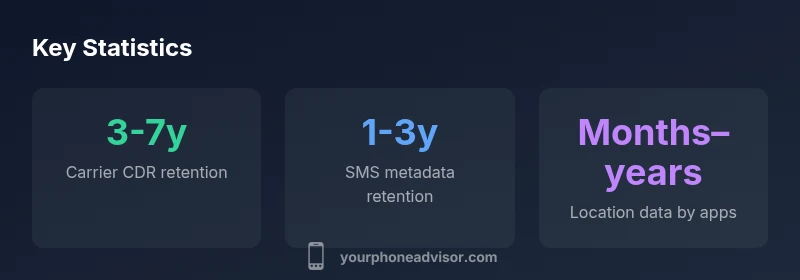
| Carrier CDR | 3-7 years | Varies by jurisdiction and carrier policy |
| SMS metadata | 1-3 years | Depends on provider and backups |
| Location data | months to years | Depends on app permissions and backups |
Got Questions?
How long do carriers keep call detail records?
Carrier call-detail records are typically retained for months to years, depending on local laws and the carrier's policy. Access and retention periods can vary widely by country and regulatory framework.
Carriers keep call details for months to years depending on where you live and who your carrier is.
Can I delete my data from carriers or apps?
You can often request deletion or opt-out of some data collection, but retention may still occur for legal or backup reasons. Always check the provider's privacy controls and applicable laws.
You can request deletion in many cases, but some data may remain due to laws or backups.
Does location data retention depend on apps or devices?
Location data retention depends on both the app's privacy policy and your device settings. Apps may retain data for months or longer, especially if you use cloud backups.
Location data retention varies by app settings and backups.
How can I find out what data is stored about me?
Use privacy dashboards, account settings, and data download tools provided by services. These can reveal what data is kept and for how long.
Check privacy dashboards and data export options to see what’s stored.
Is long data retention risky?
Yes. Longer retention increases the exposure window for misuse or breach. Regular reviews help reduce your risk.
Long retention means more risk if data is breached or misused.
Do laws vary by country for data retention?
Yes. Different countries have different retention mandates; some require longer storage for compliance, others limit data retention.
Retention laws differ by country and can affect how long data is kept.
“Data retention is not just a policy matter; it's a day-to-day privacy practice you should actively manage.”
What to Remember
- Audit each data source separately to know its retention window
- Tighten privacy controls on location and cloud backups
- Regularly review and purge outdated data where permitted
- Check regional laws to understand your rights and limits
- Use privacy dashboards to export and review stored data