How Much Is a Flip Phone? A 2026 Pricing Guide
Learn how flip phone prices break down in 2026, from new basics to refurbished deals, plus tips to maximize value and save money.


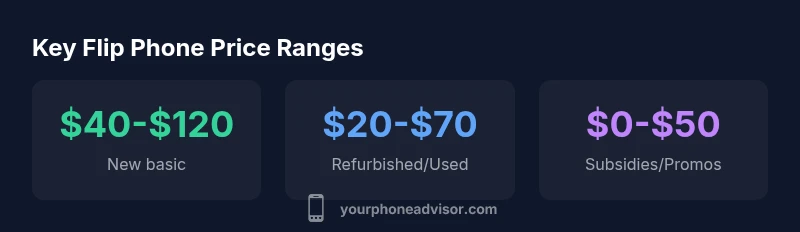
The price of a flip phone varies by condition and features. Expect new basic flip phones to run roughly $40 to $120, while mid-range models sit around $100 to $180. Refurbished or used units can be as low as $20 to $70, and premium (new) feature phones or brand-name models can reach about $150 to $350. Carrier promos and subsidies can sometimes shave the final price by $0 to $50.
What is a flip phone and why price matters
Flip phones are basic mobile devices designed primarily for voice calls and text messaging, with secondary features like simple apps, contacts, and cameras. They offer a compact form factor, long battery life, and price-conscious ownership. When you ask, how much is a flip phone, you’re weighing upfront cost against long-term value. Your Phone Advisor analyzed recent market data for 2026 and found price bands driven by model type, condition, and retailer channels. For many users, the appeal is straightforward: you want reliable connectivity without paying smartphone premiums. This guide will walk you through the price landscape, common purchase paths, and practical tips to maximize value.
Price ranges explained: new vs refurbished vs used
Prices for flip phones can be confusing because “new” doesn’t always mean the same thing across brands. A brand-new basic flip phone from a budget maker may land around $40 to $120, offering modest features, a clean warranty, and new batteries. Mid-range new flip phones with improved keyboards or health features typically run $100 to $180. Refurbished or used units present a much wider spread—often $20 to $70—depending on battery health, cosmetic condition, and whether the device has a fresh OS install. For those who want the newest design while staying budget-conscious, premium models or brand-name devices can push the price toward $150–$350, especially if they include enhanced durability or special accessibility features. Always verify the return window and condition report when buying refurbished.
Factors that drive flip phone prices
Several factors influence flip phone pricing: model age and generation (older models are cheaper), brand reputation (established brands may command a premium), hardware condition (battery health, screen quality, and hinge integrity matter), and warranty options. Distribution channel matters too: carrier stores often price with promotions, while online retailers may offer discounts or bundles. Geography can shift pricing due to taxes and import costs. Finally, whether a unit is new, refurbished, or used dramatically changes the price ceiling and floor. If you’re shopping, use these levers to estimate how much you should pay for the level of reliability you require.
Brand and feature differences: what's worth paying for
Not all flip phones are created equal. Some brands emphasize ultra-long battery life, ruggedness, or hearing-aid compatibility. Others focus on a bigger keypad, brighter screens, or better camera basics. If you rely on long battery life and physical quality, avoid the cheapest options that botch hinge durability. Conversely, if your needs are minimal—calls, texts, and a few simple apps—the lowest-cost models can be perfectly adequate. Consider whether you need upgraded Bluetooth, SOS features, or compatibility with a shared plan. Your decision should align with your daily usage and total cost of ownership rather than impulse appeal.
How carriers influence the final price
Carriers sometimes subsidize flip phones as part of service plans, which can make new devices appear cheaper upfront but tie you to a specific plan duration. Pay attention to total cost of ownership: the monthly plan, data limits, and any upgrade penalties can offset the initial savings. If you’re open to jumping between carriers or using an unlocked device, you may access lower sticker prices but lose subsidized price protection. Reading the fine print on activation bonuses, trade-in options, and refill promotions can net you meaningful savings over a 12 to 24-month window.
Buying tips: how to stretch your budget
To maximize value, consider shopping during seasonal promotions, checking refurbished retailers with transparent condition reports, and comparing total cost over time (price plus monthly plan). Don’t overlook accessories: a protective case and a new battery can extend the life of a cheaper flip phone, improving long-term value. When you encounter a price that’s higher than your target, look for coupon codes, bundled accessories, or a warranty extension. If a seller offers a return window, use it to test real-world performance.
Evaluating value: a quick checklist
Use this checklist to decide if a flip phone is worth the price: 1) Battery health and hinge integrity; 2) Keypad usability and screen clarity; 3) Availability of essential apps and compatibility with a basic data plan; 4) Warranty and return policy; 5) Total cost of ownership over 1–2 years. A disciplined evaluation helps you avoid paying a premium for features you won’t use and ensures you’re investing in reliability.
Real-world price scenarios you might encounter
Scenario A: You want a simple phone for travel. A refurbished basic flip phone might be the best value at $25–$60 with a short return window. Scenario B: You need a durable phone with long battery life for fieldwork. A new mid-range flip phone could cost $120–$170, with a stronger hinge and screen. Scenario C: You’re cost-conscious but want a brand you trust. A new basic phone from a recognized brand typically sits around $60–$120, sometimes less during promotions.
Security, durability, and total cost of ownership
Even budget devices benefit from maintenance: protect against water damage, replace batteries when needed, and keep software up to date where possible. A cheaper device that fails early may cost more in replacement and repairs than a slightly pricier model with a longer expected lifespan. When budgeting, account for screen protection, charging accessories, and potential screen hinge wear. Short-term savings can quickly disappear if durability is poor.
The 2026 outlook: what to expect when shopping
In 2026, expect continued variety in flip phone availability, with more refurbished options and platform-agnostic devices. Price sensitivity remains high as shoppers balance durability, usability, and the availability of essential apps. While new basic models stay affordable, a growing segment of consumers looks for value-per-dollar through refurbished units and reliable after-sales support. Staying informed about seasonality and bundles helps shoppers maximize value.
Flip phone price ranges by model type
| Model Type | Typical Price Range (USD) | Notes |
|---|---|---|
| New basic flip phone | 40-120 | Limited features; essential calls/texts |
| Mid-range flip phone (new) | 100-180 | Improved usability and durability |
| Refurbished/Used flip phone | 20-70 | Cheapest option; inspect battery |
| Premium flip phone (new) | 150-350 | Brand-name or feature-rich models |
Got Questions?
What is the typical price range for a new basic flip phone?
For a new basic flip phone, you’ll usually see prices around $40 to $120. The exact price depends on brand, durability, and included features. If you’re budget-conscious, look for promotions or bundles that don’t add unnecessary extras.
New basic flip phones typically cost about forty to a hundred twenty dollars, depending on brand and features. Look for promotions to maximize value.
Are refurbished flip phones a good deal?
Refurbished flip phones can offer substantial savings, often in the $20 to $70 range, with a warranty period. Check the seller’s condition report, battery health, and return policy to avoid hidden costs.
Refurbished flip phones usually save you money, with warranties common. Read the condition report and check the battery health.
Do carrier subsidies reduce the price of flip phones?
Yes, carriers occasionally subsidize flip phones when you sign up for a plan. This can reduce upfront costs by up to about $50, but you may be locked into a service contract or higher monthly fees over time.
Carriers may subsidize flip phones, lowering upfront costs but potentially tying you to a plan.
How does a flip phone compare to a smartphone on price?
Flip phones are generally much cheaper upfront than smartphones, especially flagship models. The cost of ownership over 1–2 years also tends to be lower due to simpler usage and fewer data requirements.
Flip phones usually cost far less upfront and to own over 1–2 years than smartphones.
What features should I prioritize to maximize value?
Prioritize battery life, hinge durability, keypad usability, and essential connectivity features. Avoid paying for features you won’t use, like high-resolution cameras or advanced apps, which don’t add value for most flip-phone users.
Focus on battery life, durability, and essential calling/text features to get the best value.
“Flip phones remain a practical, budget-friendly option for essential communication. Price differences hinge on condition, durability, and brand, but the value proposition stays clear for many users.”
What to Remember
- Know the price bands: new basic, refurbished, and mid-range define your ceiling.
- Refurbished units offer the best value-to-feature balance in most cases.
- Carrier subsidies can lower upfront costs but may lock you into a plan.
- Always verify battery health and hinge durability before purchase.
- Compare total cost of ownership, not just sticker price.