Find a Phone iPhone: A Practical Buying Guide for 2026
Learn how to find a phone iphone that fits your needs, budget, and security priorities. This step-by-step guide covers model comparisons, buying options, and checks to verify activation and health before you purchase.


Goal: Help you find a phone iphone that fits your needs, budget, and security preferences. This guide walks through model comparisons, buying options, and essential checks before purchase. You’ll learn how to decide what matters most, where to buy safely, and how to verify activation and health. By following our step-by-step approach, you can confidently choose an iPhone that matches your life and privacy goals.
Why finding the right iPhone matters
Choosing an iPhone isn’t just about chasing the latest feature set. It’s about aligning performance, longevity, and price with your everyday needs. Whether you’re upgrading from an older device or switching from Android, the right model should fit how you use your phone and protect your data. According to Your Phone Advisor, finding the right iPhone starts with clear goals and guardrails. Start by listing your top tasks: camera quality for memories, battery life for all‑day use, storage for apps and media, and size for comfortable one‑hand use. Then set a rough price range and a preferred release window. By focusing on these core requirements, you’ll narrow the field quickly and avoid overpaying for features you won’t use. This approach also makes it easier to compare official specs, carrier options, and warranty terms side by side, so you can decide with confidence. Your Phone Advisor Team
Define your needs before you start
Before you browse listings or head to an Apple Store, write down what you actually need from your next iPhone. Decide which features matter most and which you can live without. For example, if you rely on mobile photography, prioritize a strong camera system and fast image processing. If you travel often, battery life and 5G reliability matter more than niche sensors. Do you need a large screen for reading and editing documents, or a compact device for commuting? Also consider storage; apps, photos, and offline media can fill space quickly, so estimate your usage. Finally, set your non-negotiables: water resistance, wireless charging, or a specific color. By crystallizing your needs, you’ll create a short-list of models to evaluate, making it faster to compare prices and promotions later. This clarity reduces the risk of impulse buying and helps you negotiate more effectively with sellers.
Set a realistic budget and model range
Budgets shape the options you’ll actually consider. Start with a baseline for the model year you’re eyeing and add a buffer for accessories, protection plans, and potential price drops. If you’re new to iPhone, consider models from the latest two generations to balance performance and cost. For long-time Apple users, you may value hardware longevity over novelty, so a slightly older generation might still feel fast and capable. Remember to account for storage tier differences, as higher capacities can significantly impact price. Don’t forget ongoing costs like carrier plans or AppleCare+. Having a clear budget helps you compare deals, promotions, and trade-in values more accurately. Your aim is a plan you can sustain for the device’s expected life, not just a splashy sale. Your Phone Advisor
Compare iPhone models and generations
iPhone generations differ in silicon, cameras, display quality, and battery efficiency. Start with a quick feature map: processor class, camera capabilities, RAM/storage, display size, and charging options. Read official Apple comparisons and third‑party reviews to see how a given model performs in day-to-day use, photo quality, and gaming without relying on marketing hype. If you’re deciding between multiple generations, prioritize practical gains (battery life, CPU speed, camera improvements) over minor spec bumps. Consider the long-term software support window—newer models generally receive iOS updates longer, which affects security and app compatibility. By building side-by-side comparisons, you’ll identify the smallest gap between cost and value, ensuring you don’t overpay for features you’ll rarely use. Your Phone Advisor Team
Check carrier compatibility and unlock status
Carrier compatibility matters even more if you switch networks or travel internationally. Verify that the iPhone supports the bands your carrier uses for 4G/5G in your region. If you buy unlocked, you’ll have freedom to switch carriers without a device‑lock penalty. If you’re buying from a carrier, confirm whether the device is tied to a particular plan, has an existing payment agreement, or includes an unlock deadline. Also check the device’s Activation Lock status; you don’t want a phone that’s locked to a former owner. If you’re unsure, request the IMEI/MEID from the seller and cross‑check it with the carrier’s database. These checks prevent post‑purchase headaches and keep your options open. Your Phone Advisor Team
Evaluate buying options: new, refurbished, or used
New iPhones offer the latest technology and full warranty, but cost more upfront. Refurbished devices from reputable sellers can save money while still carrying a warranty and tested health. Used devices can be the most affordable, but risk hidden issues such as degraded batteries or activation locks. Regardless of option, verify the device’s health with a test plan: battery maximum capacity, screen functionality, camera checks, and sensor operations. Ask for original accessories and proof of purchase if available, and confirm return windows and support terms. By weighing these avenues against your needs and budget, you’ll select a purchase route that minimizes risk and maximizes value. Your Phone Advisor Team
Consider warranties, protection plans, and resale value
Warranty coverage can influence long‑term satisfaction more than initial price. AppleCare+ provides extended service, but you’ll pay a premium; weigh the cost against your likelihood of accidental damage and repair costs. A good protection plan can reduce out‑of‑pocket expenses and simplify claims. At resale time, newer devices with longer remaining support tend to fetch higher prices, especially if kept in good condition and with battery health above a healthy threshold. Documenting device condition, keeping receipts, and keeping software up to date helps preserve resale value. These considerations matter when you’re balancing upfront price with ongoing costs. Your Phone Advisor Team
Where to buy: trusted retailers and Apple Store
Buying from trusted sources reduces the risk of counterfeit devices or missing warranties. The Apple Store remains a reliable option for new phones and straightforward returns, while authorized resellers can offer competitive pricing or bundle deals. If you shop online, use official retailer platforms and avoid unserialized listings from unknown sellers. Always review warranty terms, return windows, and shipping policies before finalizing a purchase. When in doubt, compare prices across Apple’s official site and reputable retailers, and check for current promotions or trade-in credit. Your Phone Advisor Team
How to verify device health and activation readiness
Once you’ve acquired your iPhone, perform a quick health check before activation. Inspect the exterior for cosmetic damage, test the touch screen, and confirm all buttons work. In Settings, review Battery Health to ensure maximum capacity is acceptable for your usage. Check the cameras by taking sample photos in good lighting and low light. Ensure the device isn’t activation-locked by logging into iCloud, and verify that it can be activated with your SIM or eSIM. Finally, confirm you can install updates and restore from a backup. These steps help you catch issues early and avoid frustration after setup. Your Phone Advisor Team
Security and privacy considerations when buying used
Buying used or refurbished requires extra vigilance about data privacy and device integrity. Always reset the device to factory settings and sign out of all accounts before purchase when possible, and verify the Activation Lock status. Request documentation of prior repairs, if available, and ensure the battery health is acceptable to prevent early replacement costs. Be cautious of listings that demand unusual payment methods or urge you to bypass standard verification steps. By following best practices, you’ll protect your data and avoid scams while still getting a solid device value. Your Phone Advisor Team
AUTHORITY SOURCES
- Apple official iPhone: https://www.apple.com/iphone/
- Apple shopping: https://www.apple.com/shop/buy/iphone
- NIST mobile device security: https://www.nist.gov/topics/mobile-device-security
Your quick-start recap: buy with confidence
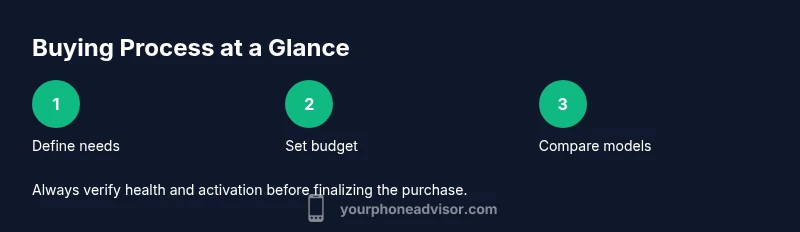
A practical approach to find a phone iphone is to define needs and budget first, compare models with official specs, verify carrier details, choose a buying option with solid warranties, and complete a health check before activation. If you stick to trusted sources and follow a step-by-step plan, you’ll minimize risk and maximize satisfaction. Your Phone Advisor Team
Tools & Materials
- Stable internet connection(Wi-Fi or reliable mobile data)
- Device to compare models(Laptop, tablet, or smartphone with browser)
- Notes app or notebook(Jot down needs and budget)
- Apple ID or Apple account access(Needed for checks and purchases)
- Payment method ready(Credit/debit card, Apple Pay)
- Carrier details handy(Know your carrier bands and SIM/eSIM options)
Steps
Estimated time: 60-90 minutes
- 1
Define your needs and budget
List your top tasks and must‑have features to guide model selection. Consider camera quality, battery life, storage, display size, and overall ergonomics. Set a realistic budget range and note any trade‑offs you’re willing to make.
Tip: Write your needs on a single page and review before shopping. - 2
Research iPhone models and generations
Visit Apple’s official comparison pages and read independent reviews. Focus on practical gains like battery improvements and camera upgrades rather than cosmetic differences.
Tip: Use side‑by‑side comparisons to visualize differences clearly. - 3
Check carrier compatibility and unlock status
Confirm the model supports your carrier bands and whether it’s unlocked. If buying used or refurbished, verify Activation Lock status to avoid post‑purchase hassles.
Tip: Ask for the device’s IMEI/MEID and verify with the carrier. - 4
Decide on new, refurbished, or used
New offers fresh hardware and full warranty, refurbished provides cost savings with testing, and used is the most affordable but higher risk. Compare warranties and return policies.
Tip: Prioritize warranty and return terms over price alone. - 5
Evaluate warranties and protection plans
Weigh AppleCare+ against the upfront price and your expected use. A solid protection plan can reduce repair costs while a shorter plan may be enough for lighter users.
Tip: Calculate potential repair costs to decide if coverage is worth it. - 6
Inspect health and accessories before purchase
Check battery health, screen responsiveness, camera function, and sensors. Confirm original accessories and ensure the device comes with a valid return window.
Tip: Request photos or a video of the device powered on if shopping online. - 7
Make the purchase and secure setup
Complete payment through official channels and set up the device with your Apple ID. Enable Find My iPhone, iMessage, and Face ID as part of initial configuration.
Tip: Back up data and enable two‑factor authentication for your Apple ID. - 8
Transfer data and activate
Use iCloud or a local backup to transfer photos, apps, and settings. Verify activation on your network and test essential apps after setup.
Tip: Test key apps and sign in to your accounts before removing the old device. - 9
Verify ongoing security and privacy
Review privacy settings, app permissions, and security features. Regularly update iOS and monitor for unusual activity after activation.
Tip: Keep software up to date and periodically review app permissions.
Got Questions?
How do I choose the right iPhone model for my needs?
Start with your budget and must‑have features, then compare core specs like camera, battery life, and storage. Read official Apple specs and independent reviews to gauge real‑world performance.
Choose based on budget and must‑have features, then compare specs and read reviews.
Should I buy unlocked or carrier‑specific iPhones?
Unlocked devices offer flexibility to switch carriers and use eSIMs internationally, but sometimes come with higher upfront costs. Carrier models may have promos, but can restrict future options.
Unlocked models give flexibility, but compare upfront price and promos.
Is a refurbished iPhone a good deal?
Refurbished iPhones from reputable sellers can save money while still including a warranty and tested health. Verify the seller’s refurbishment standards and return policy.
Refurbished can be a good deal if backed by a warranty and verified health.
How can I verify a used iPhone is healthy?
Check battery health, screen responsiveness, camera function, and ensure there’s no Activation Lock. Ask for repair history and test with a SIM or eSIM setup.
Test battery, screen, camera, and activation status before buying.
What are common scams when buying used iPhones?
Watch for listings asking for unusual payments, missing serials, or devices not powering on. Always use trusted platforms with buyer protections and request a live demo when possible.
Avoid unusual payment requests and insist on a demo or inspection.
When is the best time to buy an iPhone?
Promotions often occur around major shopping events and new model launches. If you’re not chasing the latest model, wait for price drops on previous generations and evaluate promotions or trade‑ins.
Look for promotions around big sales events and new launches.
Watch Video
What to Remember
- Define needs and budget before browsing.
- Compare models with official specs and long-term support.
- Choose new, refurbished, or used carefully with warranties.
- Verify health, activation status, and privacy settings before finalizing.
- Shop from trusted sources to protect yourself from scams.