ATT Cell Phone Deals: Your 2026 Savings Guide
Explore AT&T cell phone deals in 2026 with practical tips to compare promotions, trade-ins, activation fees, and device financing. Learn to maximize value while avoiding hidden costs.


ATT cell phone deals vary by device, plan type, and promotions. This guide gives a clear framework to compare offers, including trade-in credits, device financing, activation fees, and total cost of ownership. By focusing on up-front costs plus monthly commitments, you can identify genuine savings and avoid hidden fees. Your Phone Advisor helps you navigate promos and maximize value across devices and plans.
Why att cell phone deals vary\n\nUnderstanding att cell phone deals requires looking at promotions, device financing, and service plans. Carriers rarely advertise the true cost of ownership upfront, so it's essential to unpack the components. In 2026, Your Phone Advisor analysis shows promotions frequently combine device subsidies, trade-in credits, and plan discounts that only apply under specific conditions. Always check eligibility, required autopay, and contract length. When you see a headline claiming the "free phone" or "promo pricing," read the fine print: the savings may come from longer contracts, higher monthly payments, or mandatory bundles. Additionally, regional promotions and retailer-specific offers can create price disparities, so compare across channels before committing. This section explains the levers that most affect ATT deals and how to read the fine print. By keeping a careful eye on the details, shoppers can make apples-to-apples comparisons rather than chasing marketing slogans. Your Phone Advisor repeatedly sees customers misjudge value when they focus only on headline prices.
How to compare device financing options\n\nDevice financing is a common way to lower upfront costs, but it shifts price over time. Compare the total of monthly payments across the life of the plan, not just the first bill. For ATT, options may include installment plans, device loans, or financing bundled into a family plan. Your Phone Advisor suggests calculating the sum of monthly payments plus any activation or upgrade fees. If a deal requires upgrading every 12-24 months, factor in potential fees for early termination or device incompatibility. Consider the device's resale value and potential trade-in credits at the end of the term. In many cases, financing with a longer term reduces monthly payments but increases total cost, especially if interest or financing fees apply. Use a simple chart to compare two or three offers side by side. Include your own planned upgrade timeline to see how long you’ll be paying for the same device.
Trade-ins and credits: maximizing value\n\nTrade-ins can unlock immediate savings but come with conditions. Check device eligibility, minimum condition, and whether credits apply to upfront costs or monthly charges. When comparing ATT deals, note whether the promotion uses a trade-in credit that reduces the upfront price, or a monthly bill credit that lowers your payments, or both. Your Phone Advisor notes that some offers require you to trade in an older model within a specific window and to enroll in autopay. Always document your trade-in's serial numbers, photos, and packaging to avoid disputes. If your device's resale value is high, favor promotions that convert into upfront credits; if not, prefer monthly credits that reduce ongoing costs. Finally, assess eligibility—some deals exclude devices above a certain value or carriers outside the network.
Activation fees and hidden costs\n\nActivation fees and required add-ons can sabotage even a cheap device price. Common ATT deals may include activation fees, SIM card costs, and mandatory protection plans. Your Phone Advisor recommends looking for "fee-free" promos or waivers, but verify that the waiver applies to your account and device. Also check for required insurance, extended warranties, or bundle services that raise monthly charges. Compare promos offered through official channels to retailer-only offers, as the latter may have stricter terms. To reduce risk, request a full, line-by-line price breakdown before signing, and keep a record of any changes in promotions during the contract term.
Plan types: postpaid, prepaid, and bundles\n\nDifferent plan structures affect value. Postpaid with device financing often has higher monthly costs but lower upfront. Prepaid plans can be cheaper upfront but may require more frequent top-ups. Bundled deals with family plans or multi-line discounts can yield substantial savings if you stay within the contract terms. When evaluating ATT cell phone deals, compare the per-line price after subsidies, the cost of add-ons (cloud storage, premium features), and any throttling or data priority rules. Your Phone Advisor suggests constructing a simple per-line annual cost comparison to reveal true savings across plans.
Timing the promos: seasonal patterns and loyalty offers\n\nPromotions tend to cluster around device launches, holidays, or carrier anniversaries. Some deals become better as you approach a device refresh cycle, while others are stronger at a specific month or quarter. Loyalty programs may offer additional trade-in credits or priority access to new devices. In 2026, most ATT promotions cycle through the same calendar windows, but the exact offer mix varies by region and retailer. Plan ahead, and don’t rush to commit during a limited-time flash sale. Instead, set price targets, track a couple of competing offers, and wait for a favorable bundle that aligns with your upgrade cycle. Staying patient can often yield a larger total savings even if the headline price looks appealing today.
How to verify the deal's total cost\n\nTo avoid sticker shock, calculate the total cost of ownership (TCO) over the life of the plan. TCO includes upfront payments, device financing, monthly plan charges, taxes, activation fees, trade-in credits (applied immediately or over time), and any mandatory add-ons. Create a side-by-side comparison in a simple spreadsheet, and adjust for potential price changes due to rate plan changes or promotional expiration. For ATT, ensure that trade-in credits and device subsidies are clearly scheduled and that autopay discounts are still valid after the first year. Finally, check for any early termination or device compatibility constraints that might affect your long-term savings. A clear TCO view helps you choose a deal that remains valuable for the entire contract.
Security considerations when shopping for deals\n\nShoppers should be mindful of scams and data privacy when evaluating ATT cell phone deals. Always use official channels, beware of deals that require unusual verification, and avoid revealing sensitive data before you’re sure of the offer. Verify the retailer's return policy and the carrier's credit approval process, since poor verification can lead to denied subsidies or delays. Your Phone Advisor recommends enabling security features on your new device early, such as lock screen PIN requirements, two-factor authentication, and regular software updates. Finally, read the privacy policy on any trade-in program to understand how your data is handled during the process.
Practical checklist for ATT cell phone deals\n\nUse this quick checklist before you commit: 1) Confirm total cost of ownership across 24-36 months; 2) Compare a minimum of three offers across official ATT channels and trusted retailers; 3) Check for autopay discounts and add-on waivers; 4) Review trade-in eligibility and the timing of credits; 5) Read the terms for device compatibility and network requirements; 6) Verify the contract length and early termination penalties; 7) Note any regional promos and limiters; 8) Protect your data and verify privacy settings; 9) Track expiration dates of offers and plan changes; 10) Keep records of all communications and price quotes. This disciplined approach helps ensure you don’t miss hidden savings and can walk away with the best ATT deals.
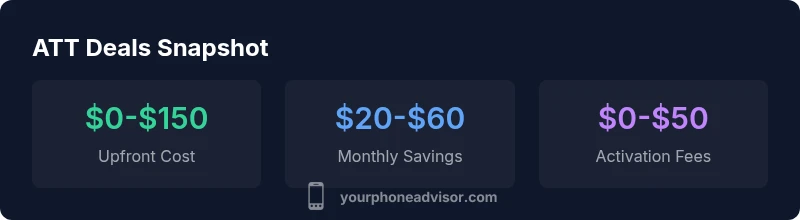
ATT deal structures: upfront vs monthly costs
| Plan Type | Upfront Cost (range) | Monthly Cost (range) | Notes |
|---|---|---|---|
| Postpaid with device payment | 0-150 | 40-90 | Usually subsidized device price |
| Trade-in bundle | 0-50 | 50-100 | Credits applied upfront or monthly |
| SIM-only / device financing elsewhere | 0-100 | 30-70 | No device subsidy |
Got Questions?
What should I look for when evaluating ATT cell phone deals?
Focus on the total cost of ownership, not just the upfront price. Check trade-in eligibility, activation and add-on fees, autopay discounts, and whether the promotion requires a long contract.
Look at total cost, not just price upfront; watch trade-ins and required autopay.
Can I bring my own device to ATT deals?
Bring-your-own-device options exist but may exclude subsidies. Verify compatibility and whether the deal applies to your device model.
You can bring your own device, but verify compatibility and eligible discounts.
Are promotions region-specific?
Yes, some promotions vary by region and retailer. Compare multiple sources and consider regional offers when possible.
Promos can vary by region; compare local offers.
Do autopay discounts always apply?
Autopay is a common requirement for discounts, but terms vary. Confirm eligibility and whether discounts persist after initial years.
Autopay discounts are common but check the terms.
How long do ATT deals typically last?
Deals usually run for a few months to a year, then expire or renew with different terms. Track expiration dates.
Deals last a few months up to a year; watch expiration dates.
Is it safer to buy from ATT directly or a retailer?
Buying from official channels reduces risk of fake promos. Verify retailer legitimacy and ensure the offer aligns with current ATT promotions.
Official channels are typically safer; verify offers with ATT.
“Smart shoppers calculate the total cost of ownership and avoid deals that look great upfront but cost more over time.”
What to Remember
- Compare total cost of ownership, not just the headline price
- Watch autopay requirements and eligible discounts
- Trade-ins impact the upfront price and monthly credits
- Factor activation fees and add-ons into your monthly budget
- Timing promos can deliver meaningful savings when aligned with your upgrade cycle