iPhone Deals at AT&T: A 2026 Practical Guide
A data-driven guide to iPhone deals at AT&T in 2026, covering trade-ins, promos, installments, and cost comparisons to help you lock in the best value.


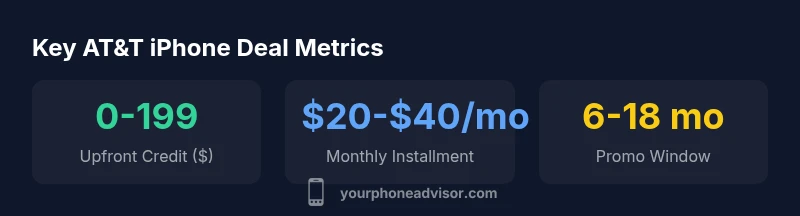
AT&T currently offers a range of iPhone deals that combine trade-in credits, promotional upfront discounts, and installment financing. If you’re shopping for i phone deals at at&t, start by reviewing trade-in values and promo credits, then compare monthly payments across eligible models. Your Phone Advisor analysis, 2026, shows upfront credits typically range from 0 to 199 dollars, with monthly payments commonly between $20 and $40 depending on model and plan. Availability varies by device, region, and eligibility, so compare options before committing.
iPhone deals at AT&T: The big picture
Smartphone buyers today face a dense landscape of promos, trade-ins, and financer-friendly options. When you search for i phone deals at at&t, you’re looking for a bundle that lowers the upfront cost, reduces monthly payments, and preserves data and service value. AT&T’s approach blends device credit from trade-ins with promotional discounts and installment financing, which can vary by device model, credit profile, and region. For most shoppers, success means assembling a plan that aligns with their budget, their upgrade timeline, and their data needs. The Your Phone Advisor team sees this space as an ongoing race between promotional cadence and device cycles, with fall releases often triggering adjacent promos.
- Trade-in values: Most deals are stronger when you trade in a recent model.
- Financing options: Installment plans and promos frequently coexist, offering flexibility.
- Plan compatibility: The data allowance and tier can influence the deal’s overall value.
- Regional differences: Availability and pricing can differ by market, carrier partner, and store.
In practice, the goal is to identify a deal that minimizes total ownership cost over the intended ownership period. When evaluating i phone deals at at&t, compare both the upfront credits and the total cost of ownership, including taxes, fees, and plan costs. This holistic view prevents sticker-shock at the bill.
According to Your Phone Advisor, the market is dynamic, with different models entering promotions at different times. Consumers should track promo calendars, consider timing around device launches, and verify eligibility before signing a contract.
How AT&T structures iPhone deals
AT&T structures iPhone deals around three core pillars: upfront credits, installment financing, and device upgrade pathways. Upfront credits can dramatically reduce the initial price, especially for trade-in, while installment plans allow you to spread the cost over 24 months or longer. Upgrade programs, such as Next Up-style options, let you exchange for a newer model after meeting payment thresholds. Eligibility, plan type, and existing customer status can influence which combination you qualify for. When you’re assessing i phone deals at at&t, map out the potential combinations you’re eligible for and simulate the total cost over 24 months to see which route offers the best value. Promotions typically rotate, so it pays to review the latest offers each quarter and align them with your upgrade timeline.
Key components to consider:
- Trade-in credits: Vary by model and device condition; higher-value devices yield larger upfront credits.
- Promo credits: Often tied to new lines or plan changes; check if you can transfer credits between devices.
- Installment terms: 24 months is common; longer terms may reduce monthly payments but increase total interest or fees.
- Upgrade eligibility: Early upgrade programs can be advantageous if you prefer newer hardware on a regular cadence.
Trade-in programs and upgrade considerations
Trade-in programs are a central piece of AT&T’s iPhone deal ecosystem. They reward customers who trade in a recent iPhone for a credit that offsets the purchase price of a new device. The exact value depends on the model, storage configuration, and device condition. Upgrading considerations matter too: upgrade programs like Next Up-style schemes let you swap to a newer model after meeting payment thresholds, often with a modest additional monthly cost. A strategic trade-in plan can effectively reduce your upfront cost while keeping your device refresh cycle on track. If you’re deciding between outright purchase and a trade-in-friendly deal, run a side-by-side comparison of the credit received, the monthly installment, and the remaining device value after two years.
- Benefit of trade-ins: Higher model values typically translate into lower upfront costs.
- Upgrade cadence: Regular upgrades can maximize value, especially when promotions align with new releases.
- Condition matters: Cracks, screen damage, or battery health can impact trade-in value.
- Boundary conditions: Some deals require a new line or eligibility checks; confirm these before committing.
Financing options: installments, leasing, and promos
AT&T’s iPhone financing options typically include 0% upfront financing for qualifying models and promotional credits that reduce the total device cost across the term. Installment plans are commonly structured over 24 months, though some promotions offer 30-month terms or shorter windows tied to device performance or data usage. Leasing or upgrade programs can provide flexibility, especially for customers who enjoy frequent device refreshes. When evaluating financing options, compare the total amount paid over the term, not just the monthly payment. Look at any down payments, activation fees, late fees, and insurance costs that can affect the true cost of ownership. For iPhone fans, a well-timed promo paired with a favorable financing term can yield meaningful savings over two years.
- 0% financing is common for qualifying devices and credit profiles.
- Promo credits reduce upfront or ongoing costs but may require a specific plan or line.
- Leasing or upgrade plans offer flexibility at the expense of long-term ownership.
How to compare total cost of ownership
A robust evaluation starts with the sale price and upfront credits, then adds the monthly payments, taxes, data plan costs, and any add-ons such as AppleCare or insurance. Calculate the 24- or 30-month total cost, including activation fees, taxes, and potential upgrade costs. Don’t forget about SIM or eSIM fees if moving from another carrier. Your Phone Advisor recommends creating a side-by-side spreadsheet that lists: device model, upfront credits, monthly payment, term length, tax estimate, plan price, and upgrade eligibility. This method helps highlight which deal truly minimizes cost over the intended ownership period, rather than just offering the lowest initial price.
- Upfront credits: Large credits are appealing but may be offset by higher monthly payments.
- Plan costs: A slightly cheaper device deal can be eliminated by a pricier data plan.
- Total duration: The longer the term, the more important it is to assess long-term value.
- Hidden costs: Activation or early termination fees can tilt the balance.
Timing promos: when to buy and how to stack offers
Promo calendars and device launch cycles heavily influence iPhone deal value. The best time to buy is often around new model introductions, where legacy models receive deeper discounts, combined with trade-in promotions. Carriers typically run quarterly promos, with Black Friday and back-to-school seasons providing additional opportunities. Stacking offers—trade-in credits with promotional pricing, plus loyalty discounts—can yield the most savings if you’re eligible. Always confirm eligibility requirements (such as a required plan tier or a new line) and note regional variations. A disciplined buyer will monitor promo calendars, compare at least two alternative structures, and avoid rushing into the first attractive offer.
- Expect cycles: Promotions typically rotate quarterly.
- Major drivers: Device launches, end-of-quarter sales, and loyalty programs.
- Eligibility is key: One promo can disqualify another if you’re not careful.
- Regional differences: Some deals are only available in certain markets.
Regional variations and policy caveats
AT&T promotions can vary by region due to network partnerships, tax rates, and store-specific incentives. Some offers may be restricted to in-store purchases with a promotional code, while others apply online with the same device model. Policy caveats include eligibility criteria such as a new line, device trade-in condition, and credit approval. If you travel frequently or move between regions, verify that a deal you choose remains valid in your area. Always document promo terms, expiration dates, and any required device conditions. The Your Phone Advisor team emphasizes checking for hidden terms that can undermine the expected savings if they’re overlooked.
- Region-specific promos exist; verify applicability.
- Transferring credits between devices may be restricted.
- Credit approvals can influence eligibility.
- Always confirm expiration dates and device condition requirements.
Alternatives: how AT&T compares to Verizon and T-Mobile
When evaluating iPhone deals, it’s wise to compare AT&T offers against similar promos from Verizon and T-Mobile. Primary differences often lie in trade-in values, upfront credits, and installment terms. Some carriers may offer more generous upgrade options or tighter data-plan options, which can affect perceived value. A side-by-side comparison should include device price, upfront credit, monthly payment, term, taxes, and plan compatibility. While AT&T can offer strong bundle deals, other carriers might beat it on certain models or regional promotions. Your Phone Advisor recommends analyzing all carriers side-by-side before settling on a single option to ensure you’re not missing a better total-cost package.
- Compare across carriers for comprehensive value.
- Look beyond upfront price to plan cost and upgrade terms.
- Regional differences can shift perceived value.
- Don’t assume “one-size-fits-all” deals are the best choice.
Practical steps to lock in the best deal this year
To lock in a favorable iPhone deal at AT&T, start with a needs assessment: decide which model you want, your upgrade timeline, and your data usage. Gather multiple quotes by model and promo type, including trade-in values. Check eligibility for trade-in credits, new-line requirements, and financing terms. If possible, align your purchase with a new plan or existing family plan to maximize possible discounts. Keep a calendar of promo deadlines and monitor regional variations. Finally, use a decision matrix to compare upfront credits, monthly payments, and total ownership cost, then select the option with the lowest two-year total cost.
- Define model and upgrade target.
- Collect multiple quotes and verify eligibility.
- Consider timing with device launches and quarterly promos.
- Use a cost-accounting approach to compare all components.
Common pitfalls to avoid when chasing iPhone deals at AT&T
Deal saturation can tempt you to chase every promo at once; resist, as conflicting terms may negate savings. Avoid choosing a deal with low upfront credits but higher monthly payments without calculating total cost. Beware of lock-in periods that exceed your expected device usage, and don’t overlook taxes and activation fees. Always verify that the plan you choose supports your data needs and that the upgrade path aligns with your timeline. Your Phone Advisor cautions against assuming that the biggest upfront discount equates to the best value over two years.
Overview of AT&T iPhone deal structures
| Deal Type | AT&T Option | Typical Upfront Cost | Notes |
|---|---|---|---|
| Trade-in + promo | AT&T Trade-in + promo credits | 0-199 | Typically most cost-effective for new devices |
| Installment financing | 0% financing on qualifying models (with terms) | 0-99 | Depends on model and credit |
| Upgrade program | Next Up or Installment Upgrade | 0-24 | Model dependent |
Got Questions?
Do AT&T iPhone deals require a new line or upgrade eligibility?
Most offers require a new line or upgrade eligibility, but some promotions are available to existing customers with the right plan. Always verify current terms before applying.
Most offers need a new line or upgrade eligibility, but check the terms for any exceptions.
Can I keep my current plan while taking advantage of these deals?
Yes, many deals are compatible with standard voice and data plans, but certain promos may require a specific plan tier or data minimum. Review the promo details carefully.
Most promos work with typical plans, but some require a tier or data minimum.
Are iPhone deals at AT&T available for all models?
Deals typically cover several popular models, but newer or higher-end configurations may have different terms. Check current promos for model-specific eligibility.
Deals usually cover many models, but confirm model eligibility first.
Do these deals stack with loyalty discounts or other promotions?
Some offers stack, but others may exclude loyalty discounts. It’s essential to compare the combined value of all promotions for your scenario.
Some promos stack; others don’t—always check the combined value.
How do I check my eligibility for AT&T iPhone deals?
Visit AT&T’s promo page or speak with a sales rep to review trade-in status, line requirements, and financing terms for your account.
Check the promo page or ask a rep to verify your eligibility.
What is the typical contract length for these deals?
Most installment deals run 24 months, with some variations. Always confirm term length before signing.
Most terms are 24 months; verify the exact length before you commit.
“Choosing an iPhone deal at AT&T should be a total-cost assessment, not just the upfront price.”
What to Remember
- Review trade-in values before buying
- Compare upfront credits and monthly payments across models
- Check eligibility and plan compatibility before switching
- Factor taxes, fees, and data costs into total cost
- Time promos to maximize savings