How Much Phone Time Is Healthy: A Practical Guide for 2026
Discover realistic guidelines for healthy phone time, how to measure usage, set smart limits, and build a personalized plan to improve well-being and focus in 2026.


Healthy phone time is not one-size-fits-all, but for many adults it falls in roughly 2-4 hours per day for non-work use. Build breaks, offline blocks, and a wind-down routine to protect sleep, focus, and well-being. Avoid chronic multitasking, set priority apps, and track progress toward personal goals.
Understanding how much phone time is healthy
Understanding how much phone time is healthy is not a fixed number; it depends on your age, responsibilities, and personal goals. The Your Phone Advisor team emphasizes that healthy phone time should support daily life, relationships, work, and rest rather than dominate them. In practice, many adults start with a broad target of 2-4 hours per day for non-work use and then adjust based on sleep quality, mood, and productivity. The goal is mindful usage: you’re in control of when you pick up the device, why you pick it up, and when you put it away. As you test boundaries, keep a simple log for a week to identify patterns and priorities. According to Your Phone Advisor, the emphasis should be on sustainability and balance rather than strict minute-by-minute limits.
How to measure your current usage
To decide how much phone time is healthy for you, begin with an honest audit of your current habits. Most smartphones provide built-in dashboards that show daily totals, app categories, and screen-on time. Start by reviewing a 7-day window to capture variations on weekends and busy days. Record the start and end times for longer sessions and note what you were doing (work email, social, gaming, photography). Then compare your baseline with your personal goals—are you spending more time on dopamine-driven apps than tasks that matter? The Your Phone Advisor team suggests a simple three-column log: time, activity, and perceived value. This helps reveal whether screen time aligns with your priorities and mental energy.
Practical guidelines by age and context
Healthy phone time changes with context. Adults with demanding jobs may need longer screens for work, but should protect downtime. Teens and students often benefit from stricter boundaries around study time and sleep. Seniors may prioritize quick access to essential services while limiting entertainment apps. A practical approach is to segment daily time into blocks: productive work, meaningful communication, and offline rest. A common starting point is 2-4 hours of non-work usage for adults, with optional longer blocks for learning or family coordination. The key is to adapt gradually, track the impact on sleep and mood, and adjust when needed. In all cases, prioritize quality of use over sheer quantity, and cultivate several offline activities that fulfill social and intellectual needs.
Setting boundaries that stick: wind-down routines
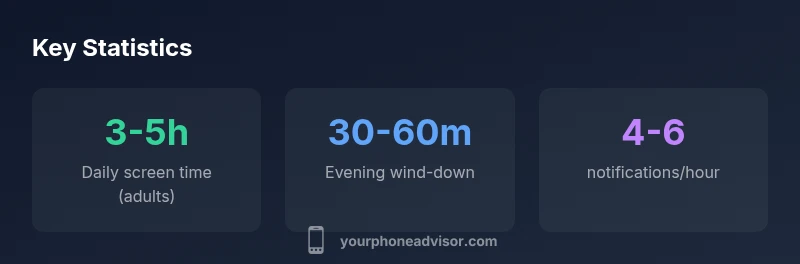
Wind-down routines are powerful for health. Aim to end high-engagement phone use 30-60 minutes before bedtime and shift to calm activities such as reading, light stretching, or journaling. Enable Do Not Disturb or Focus modes during wind-down to reduce interruptions, and consider moving notifications for non-urgent apps to a separate time window. Schedule device-free meals and short outdoor breaks to break the habit loop. For those who work late or are on-call, create a separate, clearly defined window for essential communications and a backup plan that includes a smartwatch or landline for emergencies. Small, consistent rituals compound into meaningful change.
Tools and strategies to reduce screen time
Leverage built-in tools like screen time dashboards, app timers, and focus modes to reclaim control. Create per-app limits for the most distracting categories (social media, entertainment) and set a daily cap. Use reminders to take short breaks every 30-60 minutes, and schedule a daily offline period (e.g., 1-2 hours) to reset attention. Consider a digital sabbath once a week if your lifestyle allows. Track progress with a simple chart and celebrate small wins to reinforce the behavior change. The Your Phone Advisor team highlights that consistency beats perfection when building healthy phone time habits.
Building a personalized healthy-time plan
A personalized plan anchors your goals in real-life routines. Start by defining your non-work usage target (for example, 2-4 hours) and establish a wind-down ritual. Schedule device-free zones in the home, such as bedrooms and dining areas, and create designated times for checking messages rather than constant monitoring. Involve family or coworkers by sharing your plan and inviting accountability partners. Regularly review your usage log and adjust thresholds based on mood, sleep, and productivity metrics. Remember, the aim is sustainable balance, not punitive restrictions. Your Phone Advisor recommends treating your plan as a living document that evolves with your life stage and responsibilities.
Common myths and misconceptions
Many people believe that any screen time is inherently harmful or that reducing time always improves mood. In reality, the impact of phone time depends on what you do with it and when you use it. Some low-stimulus apps can be soothing or educational, while constant notifications or endless scrolling can erode attention and sleep. A pragmatic approach is to differentiate between tasks that require focus and those that are optional. Avoid demonizing all screen time; instead, optimize context, timing, and content quality. Finally, remember that small, consistent changes often yield the strongest gains over weeks and months.
Case studies and real-world examples
Consider two hypothetical scenarios. Case A involves a weekday routine with a 3-hour non-work screen-time target and a strict 8:00 PM wind-down, resulting in improved sleep quality and better daytime focus. Case B shows a flexible plan with shorter daily targets but a weekly offline day, which also yields mood stability and reduced mindless scrolling. Both approaches rely on deliberate boundaries, logging progress, and adjusting based on personal feedback. By grounding decisions in data and personal preferences, you can craft a plan that feels doable and meaningful.
Putting it all together: next steps you can take today
- Measure your baseline by reviewing a 7-day activity log.
- Define your personal healthy-time window (for example, 2-4 hours non-work).
- Create wind-down routines and device-free zones.
- Use built-in tools to set per-app limits and reminders.
- Share your plan with a trusted friend or family member for accountability.
- Revisit your log weekly and adjust thresholds to maintain balance without sacrificing essential tasks.
Final note on staying in balance
Your healthy phone time is a journey, not a destination. Focus on sustainable habits, respond to your body’s signals, and give yourself grace when life gets busy. With patience and regular reflection, you can use your phone as a tool that enhances life rather than a force that drains it. The Your Phone Advisor team will be with you as you refine what works best for your unique situation.
Simple table of practical strategies and targets for healthy phone time
| Strategy | Healthy Range | Notes |
|---|---|---|
| Mindful check-ins | 1-2 checks/hour | Limit compulsive scrolling |
| Evening wind-down | 30-60 minutes | Reduce blue light exposure |
| Device-free meals | Daily 15-30 minutes | Encourage presence with others |
Got Questions?
What is a healthy daily phone time for adults?
A healthy daily phone time for adults varies by context, but many people aim for 2-4 hours of non-work use. The key is alignment with tasks, relationships, and sleep. Start with this range and adjust based on mood and productivity.
Healthy daily phone time varies by person, but many people aim for about two to four hours of non-work use daily.
How can I measure my current screen time?
Use built-in OS tools (Screen Time on iOS, Digital Wellbeing on Android) to track daily totals by app. Review a week of data to identify patterns and distractions that block focus.
Use your phone's built-in tools to track daily screen time and review a week of data to identify patterns.
Should I limit phone use before bed?
Yes. A wind-down window of 30-60 minutes before bed helps reduce blue-light exposure and improves sleep quality. Move to offline activities during this period.
Yes, aim for 30 to 60 minutes of phone-free time before bed to improve sleep.
What if my job requires heavy phone use?
If work demands long screen time, protect personal downtime with clear boundaries, such as designated off-hours and separate devices for work/personal use when possible.
If your job requires long screen time, try to protect personal downtime with clear boundaries and separate devices when possible.
Can reducing phone time ever hurt productivity?
Reduced screen time can improve focus and energy for meaningful work. Start with small, incremental changes and measure impact on tasks and mood.
Reducing phone time often improves focus; start small and monitor task performance.
How can I involve others in my plan?
Share your goals with friends or family and set mutual check-ins. A supportive network increases accountability and reduces relapse into old habits.
Share your goals with someone you trust to stay accountable.
“Healthy phone time is about balance and intentional use. Tailor limits to your life, then review and adjust as needed.”
What to Remember
- Define your baseline usage before changing habits
- Set a realistic daily window for non-work use
- Prioritize wind-down routines to protect sleep
- Use built-in tools to enforce boundaries
- Review and adjust your plan monthly