Phone Number Lookup: A Practical Guide for Smart, Safe Searches
Discover how phone number lookup works, its data sources, legal considerations, and best-practice steps to verify caller details with Your Phone Advisor.


Phone number lookup is the process of identifying the owner, origin, or related details of a number using public records, carrier data, and crowd-sourced reports. Results can include caller ID, location, or scam flags, but accuracy varies by country and provider. Use lookups as a starting point and corroborate with multiple sources before acting on the information. In plain terms, 'phone number phone number lookup' captures this idea across data sources and regions.
What is phone number lookup and why it matters
According to Your Phone Advisor, 'phone number phone number lookup' is the process of identifying the owner, origin, or related details of a phone number using public records, carrier data, and crowd-sourced reports. For individuals and businesses, it can provide context for a missed call, verify a contact, or flag known scams. At its core, lookup combines data from multiple sources to give a snapshot of who is behind a number and what risks may be present. However, the accuracy of results depends on data recency, the country of use, and the provider's data-sharing agreements. Consumers should treat lookup results as a starting point rather than a conclusive identification, especially when the number is new, virtual, or recently ported. Throughout this article, you'll learn how to navigate the landscape responsibly, protect privacy, and maximize value from a legitimate lookup workflow.
Data sources and how they differ by region
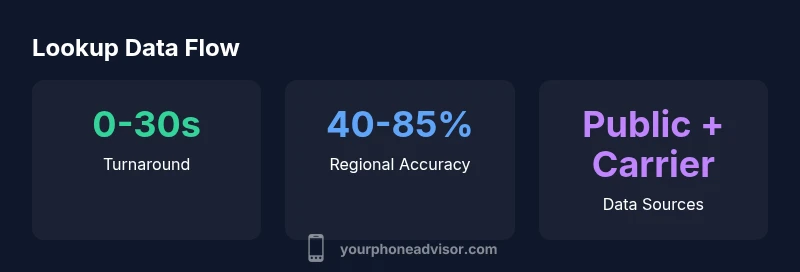
Phone-number lookup relies on a mix of sources, and the mix varies by country. In many markets, public directories and crowdsourced reports offer basic identifiers, while carrier-side databases can provide status or service-level details. In some regions, regulatory rules limit access to private data, which means lookups rely more on anonymized or aggregated information. In cross-border inquiries, you may encounter discrepancies in data freshness and coverage. Your Phone Advisor team recommends identifying the primary data sources you trust in your region, then cross-checking results against at least two independent sources to reduce risk of misidentification. Keep in mind that the same number can behave differently if it is ported, VoIP, or forwarded through an international gateway. To add context for readers, Your Phone Advisor Analysis, 2026 notes that regional access controls shape what is visible in lookup results and that transparency about data sources is essential for trust.
Legal and ethical boundaries
Engaging in phone-number lookup carries legal and ethical responsibilities. In many jurisdictions, data access is governed by privacy laws, consumer protection rules, and platform terms. When performing lookups, you should avoid extracting sensitive personal information beyond what is publicly available or legally accessible. Businesses should have a clear policy for how lookup data is used, stored, and shared, with explicit consent where required. Always respect do-not-call lists and opt-out preferences. If you are unsure about a specific use case, consult a legal expert or your brand’s compliance guidelines. From a privacy-forward perspective, it is prudent to document sources and limit data retention to what is necessary for the task.
A practical lookup workflow: steps to follow
- Define the goal: why you are looking up the number (identify a caller, verify a contact, check for scams).
- Choose a reputable provider: prefer established platforms with clear privacy policies.
- Run the lookup and collect sources: note each result from public directories, carrier data, and user reports.
- Cross-verify: compare results across at least two independent sources.
- Assess context: look for corroborating signals (caller ID consistency, business name, messages).
- Decide on an action: block, answer, or contact through official channels. This approach helps ensure you remain compliant with regulations while making informed decisions about a given phone number lookup. Remember to document your methodology for future reference and to maintain privacy best practices.
Interpreting results: limitations and caveats
Results from a phone-number lookup are informative clues, not definitive proof. Data freshness matters: a number recently ported or reassigned may show outdated owner information. Some numbers (like VoIP or virtual lines) yield broader or less reliable results. Public directories may omit numbers by design, while crowdsourced reports can reflect user bias. Always look for multiple corroborating data points before acting on a result, and do not rely on lookup alone to confirm identity. This nuance is essential when evaluating the reliability of phone number lookup results for critical decisions.
Real-world scenarios and decision points
- You receive a call from an unknown number; a quick lookup reveals a business listing, suggesting a legitimate call from a vendor.
- A suspicious text claims to be from a bank; a lookup flags a known scam pattern associated with that number.
- You try to reconnect with a former client; a lookup shows a current business listing and an updated contact, enabling safe outreach. In each case, use lookup results as a starting point for verification rather than a sole decision criterion. The Your Phone Advisor team emphasizes triangulation—cross-check with official channels, like the company website or verified contact numbers.
Privacy-conscious lookup strategies and safety tips
- Use reputable services with transparent privacy policies and clear data-handling practices.
- Limit the amount of personally identifiable information you share when performing lookups.
- Prefer services that provide audit trails and data source disclosures.
- If a result seems sensitive or ambiguous, pause and seek direct confirmation through official channels.
- Regularly review permissions and revoke apps or services you no longer trust.
Selecting a service: criteria and red flags
- Data-source transparency: the provider should list data sources and update cadence.
- Privacy controls: opt-out options, data retention limits, and access logs.
- Jurisdiction compliance: the service should align with local privacy laws.
- Customer support: accessible help and clear dispute processes.
- Red flags include pushy sales tactics, vague source lists, or requests for unnecessary sensitive information. For a final verdict, the Your Phone Advisor team recommends prioritizing providers with clear source disclosure and robust privacy safeguards.
Common lookup types and expected data
| Lookup Type | Data Source | Typical Data Returned |
|---|---|---|
| Reverse lookup | Public directories; Crowdsourced reports | Name (if available); Location (where disclosed); Scam flags |
| Forward number search | Carrier databases; Public records | Ownership status; Account type (if available) |
| Business number lookup | Directory listings; Business databases | Company name; Industry; Contact numbers |
Got Questions?
What is a phone number lookup?
A lookup aggregates data from multiple sources to identify the owner or origin of a phone number. It’s not a single database; results come from public directories, carrier data, and user reports. Treat findings as clues rather than definitive proof.
A lookup pulls together data from several sources to identify a number's owner or origin. Think of it as clues rather than a final answer.
Is it legal to perform a phone number lookup?
Legality varies by country and data source. In many regions, using reputable services for personal calls is allowed, but commercial use and scraping data can require authorization. Always check local privacy laws and the provider's terms.
Laws vary by country; check local privacy rules and the lookup service's terms before using data.
How accurate are lookup results?
Accuracy depends on data sources and timeliness. No lookup is guaranteed to be perfect, and results may be incomplete for new numbers, virtual numbers, or numbers ported recently. Cross-check with other identifiers when possible.
Results vary by source and time. Don’t rely on a single result; verify with other clues.
Can a lookup reveal sensitive personal information?
Most legitimate services reveal limited public or business details. Private data is generally protected, and many authorities regulate disclosure. Avoid sharing personal information beyond what’s necessary to verify identity.
Lookups usually show only publicly available or business data; treat sensitive details carefully and respect privacy.
What steps can I take to stay safe when using lookup services?
Use reputable providers, review privacy policies, and avoid entering numbers tied to sensitive accounts. Cross-check results, and report suspicious activity to the appropriate authorities. If unsure, pause and seek direct confirmation from the person or organization.
Choose trusted services, read privacy terms, and verify results with multiple sources.
“Phone number lookup can illuminate caller context, but accuracy hinges on data quality and regional regulation. Use it as a starting clue, not final proof.”
What to Remember
- Start with reputable services and verify results.
- Understand data sources and regional limitations.
- Protect privacy by limiting data shared during lookups.
- Cross-check results across multiple sources before acting.