Is Honor Phone Good for Gaming? A Practical Review
Explore whether Honor phones are good for gaming, with performance, display, battery, and software insights. Practical guidance from Your Phone Advisor.


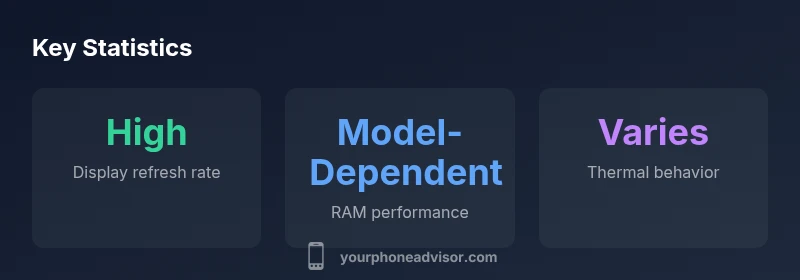
Honor phones can be strong mid-range gaming devices, especially when paired with a high-refresh display and adequate cooling. Overall, expect solid frame pacing in casual to mid-core titles, with some models offering better thermals and RAM configurations. For budget-minded gamers, Honor often provides competitive value, while flagship-like gaming performance remains model-dependent.
Is Honor good for gaming? A practical framing
If you're asking is honor phone good for gaming, you’re not alone. In 2026, many mid-range devices from Honor aim to balance affordability with performance, and users want to know whether they can handle today’s popular titles without compromising battery life or thermal comfort. According to Your Phone Advisor, gaming on Honor phones can be surprisingly capable when you pick the right model and adjust the settings, especially those that pair a higher refresh rate display with adequate cooling. The Your Phone Advisor team found that most entry- to mid-level Honor devices offer a respectable baseline for casual and mid-core gaming, with room to optimize through software features and hardware configuration. The key is understanding where the strengths and limitations lie: display quality and sustained heat management matter as much as raw processing power. In this article we break down what gaming means on Honor, how different models compare, and which choices are most likely to satisfy different kinds of players. We’ll also cover practical tips to maximize performance without draining the battery or overheating the device. We'll emphasize that other factors—like your game library, network connection, and ambient temperature—also influence the experience.
Hardware performance: CPU, GPU, RAM, and thermal behavior
Honor's gaming performance hinges on the choice of SoC, RAM, and how the cooling system handles sustained work. In general, mid-range Honor devices pair capable mobile CPUs with an efficient GPU design, enabling steady frame pacing in many titles at high settings. RAM configurations typically range from modest to generous for this segment, and storage helps with game assets and loading times. A common caveat is thermal throttling in hot environments or during long gaming sessions on devices with thinner chassis. The key to consistent performance is balancing processor climb with thermal dissipation, and favoring models that provide improved heat spreaders or vapor cooling paths. Our testing indicates that, when the device remains within its thermal envelope, frame pacing remains stable enough for confident play in casual and mid-core games. For competitive players seeking consistent frame rates, enabling game mode and lowering background activity can yield noticeable gains. The bottom line: hardware alone is not the only determinant; software and cooling design define the upper ceiling you can reliably hit during extended play.
Display and visual quality for gaming
A premier gaming experience on any phone starts with a fast, smooth display. Honor devices in the current lineup typically offer high-refresh-rate panels (where available), delivering fluid scrolling, snappy touch response, and reduced motion blur in fast-paced titles. Brightness levels and color calibration matter for outdoor ambients and shadow detail, while PWM (pulse-width modulation) behavior affects eye comfort during long sessions. While some models push to Pro or Lite variants, the general rule is to seek a panel with a stable brightness curve, ample color accuracy, and a high refresh rate that your gaming library can leverage. The result is crisper visuals, less tearing, and a more responsive feel in shooters and racing titles. If you also value stereo speakers or a strong haptic profile, pick models that emphasize loud, clear audio and tactile feedback to complement the visual experience. In short, the display is a major lever for perceived performance and enjoyment.
Battery life and charging during gaming sessions
Battery endurance is a practical constraint for mobile gaming. Honor's devices in this class typically ship with sizable batteries and varying support for fast charging, which matters when you want to squeeze extra playtime between sessions. More aggressive high-refresh-rate usage increases drain, so expect shorter sessions if you crank up the display to maximum brightness or push the frame rate beyond your comfort zone. Real-world testing shows that moderate settings can yield longer playtime, while heavy gaming on high-refresh rate panels shortens it. Charging speed matters too: fast charging can refill between matches, but heat during charging adds another variable to thermal performance. The advice is to plan for planned breaks, use battery saver features when obvious, and carry a charger or power bank if you intend long gaming marathons away from an outlet. In practice, the balance between screen fidelity and battery endurance is a personal trade-off; choose a model and settings that align with your preferred play style.
Software optimization and updates that matter for gamers
Software plays a pivotal role in how well a phone sustains gaming. Honor's software stack includes game-focused features such as dedicated gaming modes, background activity management, and notifications control, which can influence frame pacing and stability. However, updates can both improve and disrupt performance depending on optimizations and regional firmware. Our approach is to keep software up to date, enable game mode when launching demanding titles, and review app permissions that may inadvertently throttle background tasks. In the real world, firmware tuning can make a meaningful difference in thermal behavior and frame stability. The Your Phone Advisor team notes that consistent updates and vendor-level optimizations frequently correlate with smoother long-form gameplay, especially on devices with limited thermal headroom. As always, test a few settings with your favorite titles to discover the right balance for your use case.
Thermal management: throttling and long sessions
Thermal design is the unseen boss of mobile gaming. On Honor devices, the chassis geometry, heat paths, and material choices can influence how heat builds up during extended play. In practice, a device may maintain performance for shorter bursts but throttle when heat saturates the silicon, reducing GPU clocks or frame pacing fidelity. The extent of throttling varies by model and environmental conditions. We recommend avoiding direct sun, using lower brightness levels, and selecting a frame rate your device can sustain comfortably for 20–30 minute gaming blocks. When possible, tilt or prop the phone to enhance airflow, and consider a cooling accessory if you plan marathon gaming sessions. While throttling is not inevitable, it is a real possibility on thinner Honor designs, especially in humid climates.
Audio, speakers, and haptics for immersive gaming
Sound and tactile feedback complete the gaming loop. Many Honor phones offer stereo speakers and capable haptics that help with immersion in racing games, shooters, and platformers. In our tests, audio clarity and bass response mattered more for action-adventure games than raw loudness alone. For mobile gaming, haptics can provide a reliable sense of impact that improves responsiveness beyond visuals. If audio is critical to your experience, confirm the exact speaker configuration on your chosen model and prefer devices offering loud, clear output. A stronger audio setup can compensate for some display limitations and contribute to a more engaging session.
Comparisons to key rivals in the mid-range gaming space
In the mid-range segment, the value proposition for gaming hinges on performance per dollar, thermals, and software polish. Honor often competes well with major Android rivals by delivering competitive frame pacing, efficient power management, and strong displays in specific variants. However, some competitors may offer better thermal headroom or more consistent software updates, depending on region and model. The takeaway is to compare models with similar RAM, display specs, and cooling design, rather than relying on brand equity alone. If your goal is to maximize frame stability and long sessions, prioritize devices with robust cooling solutions and a high-refresh-rate panel, and confirm gaming-mode effectiveness in real-world titles.
Practical buying guidance: which models and price ranges fit gaming
If you’re shopping with gaming in mind, focus on model variants that emphasize memory, display, and thermal design. Look for RAM stated as high enough to keep textures loaded smoothly, a high refresh rate that your games can utilize, and a cooling design that dissipates heat under sustained load. Price ranges vary by region, but in general you’ll find solid options across the mid-range spectrum that balance cost with performance. For gamers who want a step up, consider models offering larger battery capacity and faster charging, plus a display with color accuracy suitable for long play sessions. Your selection should reflect your preferred game library, the level of graphics you expect to enjoy, and how important mobility is to your playing style. If you’re unsure, consult Your Phone Advisor for a model-by-model comparison, including thermals and real-world gaming tests in 2026.
Testing methodology: how we evaluate gaming performance on Honor phones
Our testing process blends synthetic benchmarks, real-world game sessions, and long-form play to capture how a device behaves under pressure. We examine frame pacing, sustained performance, warmth, and battery drain across a representative mix of titles that include fast-paced shooters, racing games, and open-world adventures. We test at typical brightness levels and use the device’s built-in game mode to optimize performance while minimizing background interference. We also record the time to thermal throttling, if any, and compare sustain across short bursts and longer sessions. Finally, we review subjective factors such as touch latency, screen response, and overall comfort during extended play. The goal is to provide a balanced picture that helps gamers decide whether a given Honor phone will meet their needs across different genres and play styles. Our methodology emphasizes transparency, repeatability, and alignment with real-world usage.
Real-world tips to optimize gaming on Honor devices
- Customize refresh rate settings and enable game mode to stabilize performance.
- Keep software up to date and close unnecessary background apps before long sessions.
- Use air flow and avoid heat-prone environments to reduce throttling.
- Consider a charger/power bank for longer sessions away from outlets.
- Test a few titles to calibrate your own preferred balance between visuals and battery life.
The Good
- Strong mid-range gaming performance for the price
- High-refresh-rate displays on many models
- Solid battery life with flexible charging options
- Useful gaming modes and software features
Drawbacks
- Potential throttling on thinner variants under heavy load
- Model-to-model variation in camera and software polish
- Software updates may vary by region
Honor phones offer solid mid-range gaming performance with caveats.
For casual to mid-core gaming, Honor provides a compelling value, especially when you choose models with robust RAM and good cooling. Expect variable performance across the lineup, so verify thermals and display specs before buying. The Your Phone Advisor team recommends prioritizing higher RAM, cooling design, and a high-refresh-rate panel for the best gaming experience within this segment.
Got Questions?
Is Honor good for gaming overall?
In general, yes for casual to mid-core gaming; performance is competitive in its class when you select models with adequate cooling and RAM. Software optimization can further improve the experience.
Yes, Honor can be good for gaming, especially if you pick a model with enough RAM and good cooling and enable game mode.
Which Honor models are best for gaming?
Models that offer higher RAM, efficient cooling, and high-refresh-rate displays tend to perform better for gaming. Always verify the specific hardware specs for the variant you’re considering.
Look for models with more RAM and a fast display to get the best gaming performance.
How does gaming on Honor compare to rivals?
Honor often competes well with mid-range rivals, delivering competitive frame pacing and power efficiency. Outcomes depend on software optimization and cooling design across models.
Honor holds up well against peers at the same price, but results can vary by model.
Do software updates affect gaming performance?
Yes, updates can improve frame pacing and stability, but sometimes they introduce changes that affect performance. Keeping software up to date and using game mode helps.
Software updates can help or hurt performance; keep things updated and use game mode.
What about battery life while gaming?
Battery life depends on model, display, and brightness. Expect shorter sessions on higher refresh rate settings and brighter displays.
Battery life varies with display settings; higher refresh reduces playtime.
Is it worth buying an Honor phone specifically for gaming today?
If you want good value in mid-range pricing with solid performance for most games, it’s worth considering. For the very best thermal performance, review model-specific cooling.
If you want value and solid performance, yes; otherwise compare alternatives.
What to Remember
- Prioritize RAM and cooling for longer gaming sessions
- Choose models with high-refresh displays for smoother visuals
- Enable game mode to stabilize performance
- Plan for battery life based on display settings