What to Do for Phone: A Practical 2026 Complete Care Guide
Learn essential steps for securing, maintaining, and troubleshooting your smartphone with practical, expert guidance from Your Phone Advisor. Whether you’re new to smartphones or seeking better performance, this guide covers security, backups, updates, and safe app habits.


With the right routine, you can keep any phone secure, fast, and reliable. This guide shows what to do for phone across security, maintenance, and everyday troubleshooting, plus a simple schedule and safety practices. By following these steps, you’ll reduce risk, extend battery life, and protect your data—without needing technical expertise.
What to Do for Phone: A Practical Framework
What to do for phone starts with a simple, repeatable routine that covers three core areas: security, upkeep, and data hygiene. When you build this into your week, month, and quarter, you’ll notice fewer glitches, longer battery life, and quicker responses from apps. This framework isn’t about overwhelming changes; it’s about practical, repeatable actions you can perform in under an hour for a quick win, with deeper tasks spaced out over time. According to Your Phone Advisor, consistency matters more than intensity. The goal is to create a lightweight habit that protects your device and data without disrupting daily life.
In this article, we’ll walk through a clear plan to answer the question of what to do for phone, including routine maintenance, smart security practices, and responsible app usage. You’ll learn to prioritize updates, backups, and privacy while keeping things simple and approachable. By keeping your focus on practical steps and real-world results, you’ll gain confidence and your device will feel noticeably more reliable.
"## Core Principles: Security, Performance, and Privacy"
The backbone of a healthy phone is a trio of pillars: security, performance, and privacy. Start with security by enabling a strong screen lock and biometric unlock where available, keeping software up to date, and using Find My Phone or equivalent services. Regular updates close security gaps and improve stability, while performance hinges on keeping storage under control, trimming unnecessary apps, and avoiding risky downloads. Privacy means limiting permissions to what’s strictly required, understanding how apps access your data, and choosing trustworthy services for backups. Your Phone Advisor emphasizes that good security doesn’t require complex tools—just consistent, deliberate actions you perform regularly. By aligning your routines with these three pillars, you’ll reduce risk and create a safer, faster mobile experience.
Daily Habits to Keep Your Phone Healthy
Small daily decisions add up. Start by charging responsibly—avoid letting batteries drain completely and don’t leave your device charging in extreme heat or direct sunlight. Lock your screen after a short idle period, and keep your home screen organized to minimize clutter. Regularly review which apps run in the background and disable auto-start for those you don’t need constantly. Clean your screen and ports with a microfiber cloth to prevent grime buildup that can affect sensors and charging. Limit the temptation to sideload apps and stick to official stores to minimize risk. By weaving these daily habits into your routine, your phone remains responsive, secure, and better protected against common issues.
Keeping Software Up to Date: The Quiet Shield
Software updates are the most reliable defense against emerging threats. Enable automatic updates where possible, and schedule a monthly check to verify there are no pending upgrades. When you see an update, back up critical data first in case something goes wrong. After updating, verify essential functions like Wi‑Fi, Bluetooth, and notifications work as expected. If you manage multiple devices, consider a centralized update calendar to avoid missing critical patches. Your Phone Advisor notes that keeping OS and app software current is one of the most impactful practices for long-term device health.
Managing Battery Life and Heat: Gentle Care for Long-Term Power
Battery health declines with time, but you can slow the decline with mindful charging habits. Avoid frequent deep discharges and enables features like adaptive charging or battery health monitoring. Keep the device out of hot conditions—don’t leave it in a car on a sunny day—and remove heavy cases during intense gaming or video streaming. If you notice rapid battery drain, identify power-hungry apps and limit their background activity. Calibrating the battery after an OS update can help recalibrate sensors, but only if you’re experiencing inaccurate readings. By managing heat and charging patterns, you’ll extend usable life between replacements.
Data Backups and Privacy Best Practices
Backups are your safety net. Regularly back up photos, contacts, messages, and important documents to a trusted cloud service or local drive. Encrypt backups if the option is available and test a restore occasionally to ensure data integrity. Review what you back up—don’t duplicate data you don’t need, and consider off-device storage for large media libraries. For privacy, enable device encryption, enable two-factor authentication for linked accounts, and review app data access permissions. Your Phone Advisor recommends treating backups as a proactive habit, not a reactive measure, so you’ll always recover quickly after a device issue or loss.
Safe App Practices and Permissions: Smart, Trusted Choices
Be selective about which apps you install and only grant permissions that are essential for the app’s function. Avoid apps from unknown sources and rely on official app stores. Review permissions after installation and periodically thereafter, especially for sensitive data like location and contacts. Disable background data for apps you don’t use often, and keep a short audit routine—at least quarterly—to refresh apps and permissions. Practicing caution with app choices reduces exposure to data collection, malware, and intrusive ads while preserving device performance. Your Phone Advisor emphasizes safe behaviors for long-term security and privacy.
Troubleshooting Common Phone Issues: Quick, Practical Solutions
When your phone slows down, clears storage, or experiences misbehavior, start with the basics: reboot, clear cache, and check for updates. If apps crash frequently, update or reinstall the app, then clear its cache. Connectivity issues often come from flaky networks; forget and rejoin Wi‑Fi networks or reset network settings. If the battery drains rapidly, review battery usage by app and disable or uninstall the culprits. If overheating occurs, remove heavy cases, stop charging in heat-prone environments, and limit demand-intensive tasks. For hardware problems, consult the manufacturer’s support options or a certified technician.
When to Seek Professional Help and What to Expect
Some issues require expert intervention. If you notice persistent battery swelling, unexplained data spikes, or hardware failures (camera, speakers, or microphone), contact official support or a licensed technician. Check whether your device is under warranty or covered by service plans; request a diagnostic to identify root causes and recommended fixes. Before visiting a service center, back up data and record any recent changes or updates that might have triggered the problem. Your Phone Advisor recommends seeking professional help when DIY steps aren’t producing reliable results or when safety concerns arise.
Tools & Materials
- Phone charging cable(Original charger or compatible fast-charging cable)
- Microfiber cleaning cloth(For screen and port cleaning)
- SIM ejector tool(To access SIM tray if needed)
- Phone case and screen protector(Optional protection during maintenance)
- Backup solution (cloud or PC)(Back up data before major changes)
- Antivirus app (optional)(Choose from reputable providers if desired)
- Portable power bank(Useful for on-the-go charging)
- Official app store access(Only download apps from official stores)
Steps
Estimated time: Total: 60-90 minutes
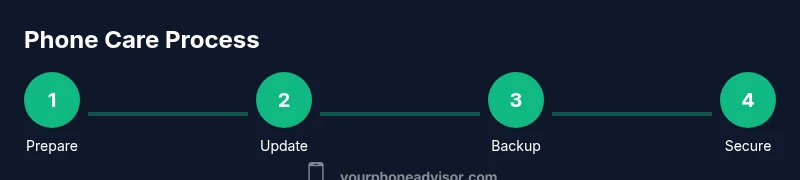
- 1
Prepare your phone for maintenance
Power the device on and ensure it has at least 20% battery. Back up essential data before making changes to avoid data loss. Gather your tools and create a clean workspace to minimize distractions during the process.
Tip: Back up before you begin to prevent accidental data loss. - 2
Update system and apps
Check for OS updates and app updates, and install them. Enable automatic updates where possible to reduce future maintenance.”
Tip: Use a secure Wi‑Fi connection and avoid updating over public networks. - 3
Back up your data
Back up important data to a cloud service or local computer. Verify the backup by performing a quick restore or file check to ensure data integrity.
Tip: Encrypt backups if the option exists to protect sensitive information. - 4
Review app permissions
Go through core apps and revoke permissions that aren’t essential for core functionality. Disable permissions for location, mic, and contacts where not needed.
Tip: Prioritize privacy by limiting access to only what’s necessary. - 5
Manage storage and declutter
Uninstall unused apps and delete or move large media files to the cloud or an external drive. Clear cache for frequent apps to reclaim space.
Tip: Archive photos and videos in the cloud to free local storage. - 6
Strengthen security settings
Enable a strong screen lock and biometrics if available. Turn on Find My Phone and enable device encryption. Review recovery options and update them as needed.
Tip: Choose a passcode that’s hard to guess and not easily discoverable. - 7
Run a security scan
Use a trusted antivirus or built-in scan to detect malware or adware. Remove suspicious apps or files and reset settings if necessary.
Tip: Only install antivirus from reputable sources and avoid excessive permissions. - 8
Check battery health and thermal behavior
Inspect battery health status and monitor temperature during heavy use. If overheating occurs, remove the case and reduce power-intensive tasks.
Tip: Avoid charging in hot environments and unplug if the device becomes too warm.
Got Questions?
What does 'what to do for phone' mean in everyday practice?
It means building a routine across security, maintenance, and data management that keeps your device safe and efficient. This includes updates, backups, and mindful app use.
Build a routine across security, maintenance, and data habits.
How often should I perform a full phone maintenance check?
Aim for a monthly check, with quick weekly hygiene tasks like clearing unused apps and reviewing permissions.
Do a monthly check with quick weekly tasks.
Is antivirus necessary on mobile devices?
Most devices have built-in protections; you should consider antivirus if you frequently install risky apps or use public Wi‑Fi.
Use caution and consider antivirus if you download risky apps.
What is the best practice for app permissions?
Grant only essential permissions; review permissions quarterly and revoke anything unnecessary.
Only give necessary permissions and review them periodically.
How can I extend battery life?
Use adaptive brightness, limit background activity for rarely used apps, and keep charging habits healthy.
Adjust settings and limit background activity.
What should I do if my phone overheats?
Move to a cooler environment, reduce power-intensive tasks, and check for battery health problems.
Move to shade, close heavy apps, check battery health.
Watch Video
What to Remember
- Back up regularly and test restores.
- Keep OS and apps updated for security and stability.
- Review and limit app permissions to protect privacy.
- Use strong authentication and Find My Phone features.
- Practice safe app habits and routine maintenance.