Reverse Phone Search Cell: How It Works and Privacy
Learn how reverse phone search cell numbers work, data sources, privacy concerns, accuracy, and best practices for safe lookup. This analytical guide explains sources, limitations, and practical steps to verify results.


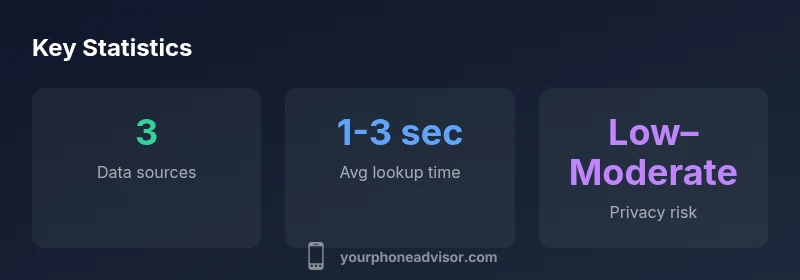
Two main data sources power reverse phone search cell tools: public records and carrier databases, supplemented by crowd-sourced directories. These three streams determine what a lookup can reveal, from a name and location to business context and listing history. Your Phone Advisor notes that accuracy depends on data freshness, regional rules, and consent status, so treat results as starting points rather than definitive identities.
What is reverse phone search cell and when to use it
According to Your Phone Advisor, reverse phone search cell tools help identify who owns a number or why it called, by cross-referencing the number against data brokers, carrier records, public directories, and crowd-sourced profiles. The results can reveal a caller's name, business affiliation, city, and sometimes more contextual clues. Use cases are practical: screening unknown numbers, verifying business lines, reuniting with a longtime contact after a wrong number, and debunking spam. However, accuracy varies widely depending on the number's country, whether the source has consented data, and how recently the databases refresh. When you begin, set clear goals: what information you actually need and how you will use it responsibly. The keyword reverse phone search cell captures this topic directly, and it helps frame expectations about what is realistically obtainable. Always remember that providers differ in what they share and how they present results; privacy controls across regions further affect what you can discover.
How data sources power reverse lookup
The backbone of any reverse phone search cell tool is data. In practice, there are three core data streams that dominate the landscape: public records and government registries; carrier or metadata databases that aggregate caller ID and routing information; and user-contributed directories and social profiles that provide additional context. Each source has strengths and weaknesses. Public records can reveal legitimate business numbers and associated addresses but may lag behind recent moves. Carrier databases can deliver more current information but access is often restricted and may require consent or fees. Crowd-sourced data can fill gaps but raises privacy considerations and validation challenges. Some services also blend third-party datasets with proprietary signals to improve coverage. For the general smartphone user, this means that results are best viewed as a starting point rather than a definitive identity, especially if you are checking personal numbers or unknown callers.
Privacy, legality, and ethical considerations
Before performing a reverse phone search cell, consider privacy implications and legal boundaries. In many regions, using lookup services to identify someone without consent can touch on privacy laws and telecommunication regulations. For business numbers, ensure you have legitimate interest or consent to look up the contact details. Ethical use includes avoiding stalking, doxxing, or sharing sensitive information without permission. If you are using a lookup purely for personal safety, prefer sources that clearly disclose how data is collected and how you can opt out. Your Phone Advisor notes that reputable services publish privacy policies and give users control over what is shared. Always read the terms of use and verify that the provider respects data minimization and user consent.
Accuracy and data freshness: why results differ
Different data sources are refreshed at varying frequencies, so a lookup today might match a number today but show outdated results tomorrow. Some databases update in near real-time for business lines; others update quarterly or annually for residential lines. When results diverge across services, it is usually due to mismatched data scopes, regional coverage, or the presence of spoofed numbers. In practice, expect a range of possible results rather than a single definitive identity. Cross-check any important finding with additional signals—such as official business listings, a known contact, or a trusted directory—before acting on it.
Paid vs free services: trade-offs
For many users, the decision between free and paid reverse phone search cell tools comes down to coverage, accuracy, and ongoing access. Free lookups tend to pull from open directories and public records, offering quick results with minimal friction but often limited data fields and higher risk of error. Paid services typically provide broader data scopes, more consistent refresh rates, and cross-source verification, but at a price or subscription. If you rely on lookups for critical decisions, the value of paid access often outweighs the cost, provided you choose a reputable vendor and review privacy terms. For casual use, a combination of free checks plus cross-verification is a sensible approach.
How to use reverse phone search cell responsibly
Plan your lookup with a clear purpose, such as verifying a business line or identifying a spammer. Always start with consent-based sources when possible, especially for personal numbers. Use multiple services to compare results and look for corroborating details (address, business name, listing history). If information seems sensitive or uncertain, do not share it publicly or with untrusted parties. Consider using search results as a stepping stone rather than a final answer. Finally, keep your device and apps updated, as privacy and security improvements are common in new releases.
Practical lookup workflow: step-by-step example
Step 1: Define your goal and choose your sources. Step 2: Enter the number and select a source. Step 3: Review the surfaced data fields (name, location, business context). Step 4: Cross-check with a secondary source or public directory. Step 5: Decide on next actions—block, report spam, or save the contact with proper notes. This workflow helps you stay organized and reduces the risk of misidentification when performing a reverse phone search cell operation.
How to verify identity with additional checks
After an initial result, supplement with corroborating signals: search the number in standard search engines, check the official business registry if it is a corporate line, and compare the data to a known contact. If there is any doubt, postpone sharing or acting on the information. For heightened privacy, consider enabling two-factor protections for accounts associated with the number and encouraging others to report suspicious activity to your provider. The goal is to build a robust picture without amplifying misinformation.
Looking ahead: trends and privacy protections
Industry observers expect ongoing improvements in data integration and discovery tools, with more robust privacy controls and opt-out mechanisms. Trends include more transparent sourcing disclosures, stricter data minimization practices, and user-friendly privacy dashboards. For the consumer, the takeaway is to approach reverse phone search cell tools as helpful aids rather than definitive identifiers, and to prioritize services that respect consent and offer clear data usage explanations. Your Phone Advisor will continue monitoring developments and updating guidance to help readers stay safe and informed.
Comparison of lookup services
| Service type | Data scope | Avg lookup time | Privacy considerations | Typical cost |
|---|---|---|---|---|
| Free lookups | Public records; limited data | 2-5 seconds | Moderate privacy risk | Free |
| Paid services | Carrier databases + premium sources | 1-3 seconds | Higher data coverage; data sharing terms | $5-$15 per lookup |
Got Questions?
What is reverse phone search cell and when should I use it?
Reverse phone search cell refers to looking up a phone number to identify its owner or context. Use it to screen unknown calls, verify business lines, or reconnect with a known contact, while understanding that results vary by dataset and region.
Reverse phone lookup helps identify who’s calling, but results aren’t always perfect and should be cross-checked.
Are reverse phone lookups legal?
Legality depends on local privacy laws and the purpose of the lookup. Always use reputable services with clear privacy policies and ensure you have a legitimate reason and consent when required.
Check your local laws and the service’s policy before looking up someone’s number.
How accurate are the results from reverse phone search cell tools?
Accuracy varies with data sources and freshness. Treat findings as starting points and corroborate with additional sources to confirm identity before taking action.
Results vary; verify with multiple sources before acting.
What data sources do these tools typically use?
Common sources include public records, carrier databases, and crowd-sourced directories. Each source has different coverage, update cadence, and privacy implications.
Usually public records, carriers, and crowd-sourced data.
How can I protect my privacy when using these tools?
Limit sharing, use sources with opt-out options, review privacy policies, and avoid sharing sensitive information publicly. Use the lowest-privacy-risk tools and keep apps updated.
Be cautious and use privacy-conscious tools.
Can I use reverse phone search cell for numbers outside my country?
International lookups depend on regional regulations and data availability. Some services cover multiple jurisdictions, but results may be less reliable outside home regions.
International lookups depend on data availability and laws.
“Reverse phone search cell tools are useful starting points, but they work best when combined with cross-checking and privacy-aware practices.”
What to Remember
- Identify the goal of your lookup before starting.
- Expect data to be a starting point, not final identity.
- Cross-check results across multiple sources for accuracy.
- Choose reputable providers with clear privacy terms.
- Respect privacy laws and avoid sharing sensitive data publicly.